Compact Dumbbell Racks: Layouts for Pull Downs With Dumbbells
Optimize your home gym layout with space-saving dumbbell racks. Learn how to design zones for pull downs with dumbbells and maximize floor space.

The Biomechanics of Space: Rethinking the Home Gym Layout
When designing a high-functioning home gym in a constrained footprint, every square inch of floor space is premium real estate. Bulky cable crossover machines and dedicated lat pulldown stations can easily consume 25 to 40 square feet, effectively suffocating a compact garage or basement gym. The solution for space-conscious lifters is free weight versatility. However, substituting cable movements with free weights—specifically executing pull downs with dumbbells (biomechanically achieved via dumbbell pullovers and chest-supported incline rows)—introduces unique spatial and clearance challenges that directly dictate your dumbbell rack and storage strategy.
Unlike a standard bicep curl or shoulder press where your wingspan remains relatively contained, simulating lat pulldowns with dumbbells requires you to lie perpendicular across a flat bench for pullovers, or maneuver heavy dumbbells from a low rack to an inclined bench for chest-supported rows. If your dumbbell storage rack is placed too close to your primary lifting zone, the lateral swing path of a 50-pound dumbbell during a pullover will collide with the rack's uprights. According to facility design guidelines emphasized by the National Strength and Conditioning Association (NSCA), maintaining proper clearance zones around free weight stations is not just about convenience; it is a critical safety requirement to prevent equipment collisions and joint hyperextension during eccentric loading phases.
Rack Typologies & Footprint Analysis
Choosing the right storage solution requires analyzing the physical footprint of the rack against the dynamic clearance required for your exercises. Below is a comparative analysis of the three dominant dumbbell rack configurations on the market in 2026, evaluated specifically for compact gym layouts.
| Rack Configuration | Model Example | Footprint (L x W) | Max Capacity | Avg. Price (2026) | Layout Impact |
|---|---|---|---|---|---|
| 3-Tier Horizontal | Rogue 3-Tier Dumbbell Rack | 47" x 17" | 1,000 lbs | $395 - $450 | High linear wall space; allows flush mounting. |
| A-Frame Vertical | BalanceFrom A-Frame Rack | 26" x 26" | 400 lbs | $60 - $85 | Minimal footprint; obstructs 360-degree movement. |
| Wall-Mounted Brackets | Titan Fitness Wall Hangers | 4" depth (per tier) | 300 lbs / tier | $120 - $160 | Zero floor footprint; requires structural studs. |
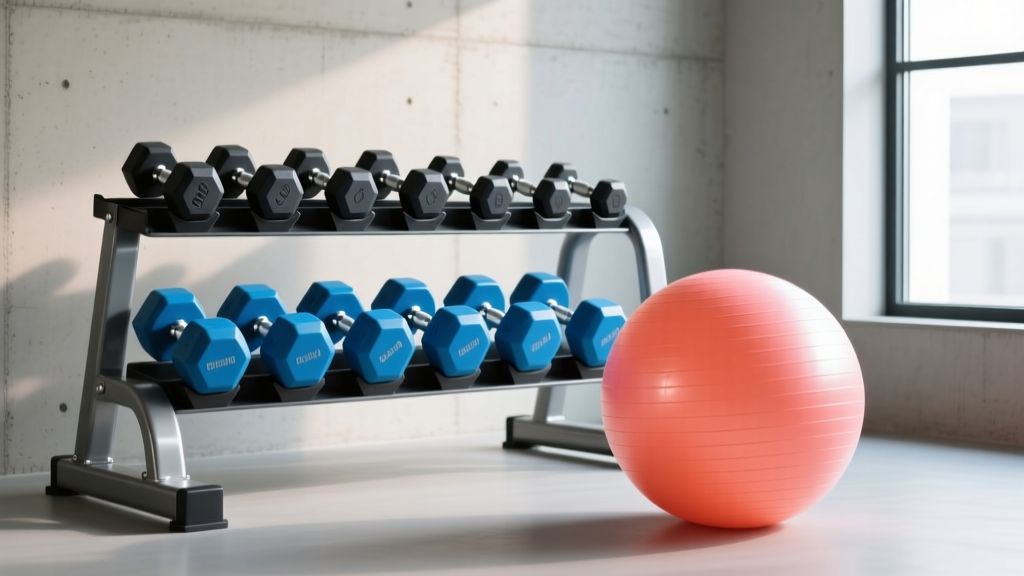
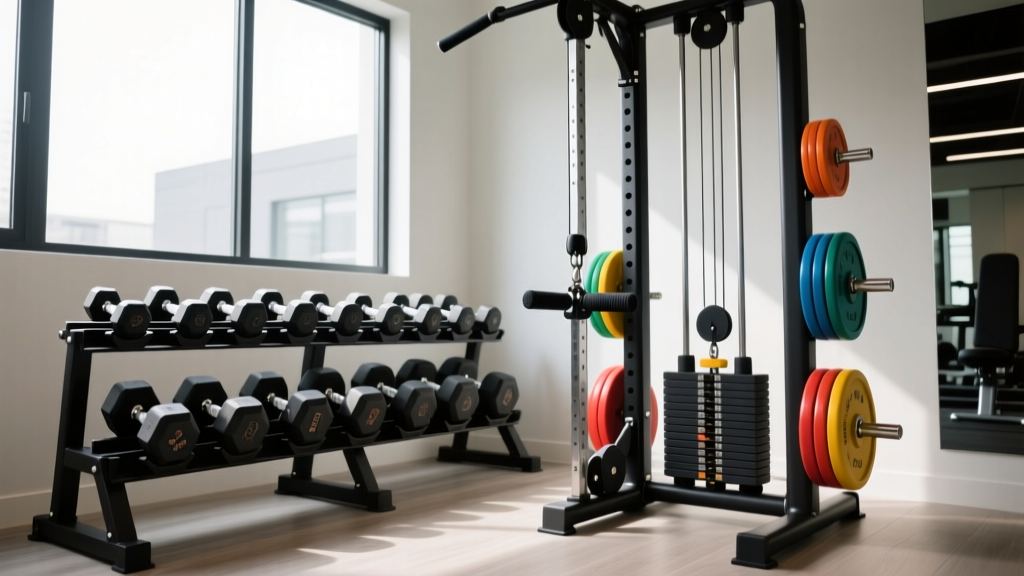
For lifters prioritizing the "pull downs with dumbbells" workflow, the 3-Tier Horizontal Rack is generally the superior choice. Because it pushes the weight storage flush against a wall, it leaves the center of the room entirely open for bench placement and lateral dumbbell movements. A-Frame racks, while boasting a smaller total square footage, create a tripping hazard and block the swing path if placed in the center of a small room.
Designing the "Cable-Free" Lat Zone
To effectively perform pull downs with dumbbells, you must establish a dedicated "Lat Zone" that integrates your storage rack, an adjustable bench, and precise clearance metrics. Here is the exact spatial mathematics required to build this zone without compromising safety or range of motion.
The Pullover Clearance Matrix
When performing a dumbbell pullover to mimic the sagittal plane shoulder extension of a cable pulldown, you lie with your upper back perpendicular across a standard 45-inch flat bench.
- Bench Length: 45 inches
- User Wingspan + Dumbbell: ~65 inches (holding a single heavy dumbbell by the inner plate)
- Required Lateral Clearance: You need a minimum of 48 inches of unobstructed space on both sides of the bench's center line.
Layout Rule: Your 3-tier dumbbell rack must be positioned at least 60 inches away from the lateral edges of your bench. If your room is 10 feet wide (120 inches), the bench must be placed dead-center, with the dumbbell rack pushed entirely into the corner or mounted on the far wall.
The Chest-Supported Row Setup
Alternatively, simulating a mid-row pulldown requires setting an adjustable bench (like the Rep Fitness PR-4100 or Rogue AB-3) to a 30-to-45-degree incline. You lie face down, reaching to the floor to grab the dumbbells.
⚠️ Expert Layout Warning: Never place your dumbbell rack directly behind the incline bench. When reaching down for heavy dumbbells (e.g., 70+ lbs) from a face-down position, your spatial awareness is severely limited. Store the dumbbells on a low-tier rack positioned parallel to the bench, allowing you to reach laterally rather than twisting your lumbar spine backward.Wall-Mounted Storage: Load-Bearing Realities
For ultra-compact spaces (e.g., a 10x10 spare bedroom), wall-mounted dumbbell storage is the ultimate space optimization hack, entirely eliminating the rack's floor footprint. However, storing hundreds of pounds of iron on drywall is a catastrophic failure point waiting to happen. The American Council on Exercise (ACE) consistently highlights the importance of equipment stability and environmental safety in home workout spaces.
If you opt for wall-mounted tiers, you must adhere to strict structural installation protocols:
- Locate the Studs: Standard US residential framing places studs 16 inches on-center (OC). Your mounting brackets must be lag-bolted directly into the center of wooden or metal studs.
- Hardware Specifications: Do not use standard drywall anchors or toggle bolts for dynamic loads. Use 3/8-inch x 3-inch structural lag screws (e.g., GRK RSS screws) that penetrate the stud by at least 2 inches.
- Shear Force Distribution: A fully loaded 3-tier wall mount can exceed 400 lbs. Mount a 3/4-inch thick plywood backer board (painted to match your wall) across three studs, then mount the metal brackets to the plywood. This distributes the shear force across a wider surface area and prevents the brackets from tearing through the drywall paper over time.
Real-World Layout Blueprints
To synthesize these concepts, here are two actionable layout blueprints for the most common home gym dimensions, optimized for free-weight lat work.
Blueprint A: The 10x10 Bedroom Gym (100 Sq Ft)
Goal: Maximize open floor space for yoga, stretching, and dumbbell pullovers.
Storage Solution: Wall-mounted 2-tier brackets on the primary 10-foot wall.
Bench Placement: Folding wall-mounted bench or a lightweight flat bench stored vertically in the corner.
The Flow: By mounting the storage and the bench to the walls, the center 8x8 foot area remains completely clear. When performing pull downs with dumbbells, pull the bench to the center of the room, grab your weights from the wall, and execute pullovers with zero risk of striking a freestanding rack.
Blueprint B: The 12x12 Garage Bay (144 Sq Ft)
Goal: Accommodate a full commercial-grade setup without clutter.
Storage Solution: Rogue 3-Tier Horizontal Rack placed flush against the back wall.
Bench Placement: Adjustable FID bench positioned 4 feet in front of the rack, parallel to the wall.
The Flow: This leaves an 8-foot deep open zone in the front of the garage for deadlifts or kettlebell swings. For lat work, the user simply pivots the bench 90 degrees, pulling the weights from the rack behind them. The 4-foot gap provides ample clearance to sit, hinge, and lift without knuckle-scraping the steel uprights.
Final Thoughts on Spatial Ergonomics
Optimizing a home gym is not merely about buying the most compact equipment; it is about understanding the kinetic envelope of your body during complex movements. By recognizing that executing pull downs with dumbbells demands specific lateral and vertical clearances, you can select a dumbbell rack that serves your biomechanics rather than obstructing them. Whether you choose a heavy-duty 3-tier horizontal rack for a garage setup or engineer a structurally sound wall-mount for a spare room, prioritizing the flow of movement will yield a safer, more efficient, and highly versatile training environment.
More gear to consider
All reviews
Loadable Dumbbell ROI: Budget Analysis & Exercises with Dumbbells PDF

Beyond the Dumbbell Fly Press: Barbell Weight & Knurling Guide
EZ Bar vs Straight Bar & Exercise Routines with Dumbbells: 2026 Data

Smart Dumbbell Rack Storage & the Best Calf Exercise with Dumbbells
Are Dumbbell Flys Good? Budget Dumbbell Racks & Storage Analysis