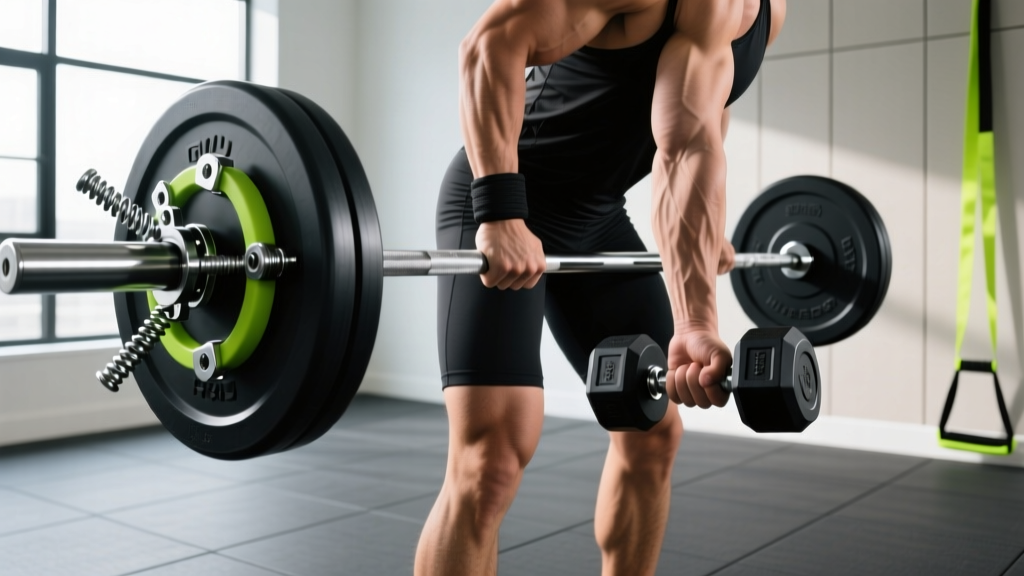
Barbell Collar Clamp Types: One Arm Dumbbell Curl Variations
Compare barbell collar and clamp types to secure sleeves for heavy lifts and one arm dumbbell curl barbell variations. Troubleshoot plate shift and torque.

The Hidden Danger of Sleeve Play in Unilateral Training
When lifters exhaust the heaviest dumbbells in the commercial gym, a common hypertrophy workaround is loading an Olympic barbell for unilateral isolation work. Transitioning from a standard one arm dumbbell curl to a heavy unilateral barbell curl allows for massive eccentric overload and bypasses the grip-width limitations of fixed dumbbells. However, this creates a severe mechanical vulnerability: rotational torque on the barbell sleeve. If your barbell collar or clamp fails to secure the plates flush against the sleeve shoulder, the resulting plate shift can alter the bar's center of gravity mid-rep, leading to catastrophic wrist supination failures or distal bicep tendon strains.
This 2026 troubleshooting guide breaks down barbell collar and clamp types, comparing their grip mechanisms, failure modes, and suitability for both bilateral heavy lifting and unbalanced unilateral setups.
Barbell Collar and Clamp Types: A Comparison Matrix
Not all collars are engineered equally. The market is saturated with cheap plastic knockoffs that fail under dynamic loading. Below is a comparison of the primary collar types used in commercial and home gyms today.
| Collar Type | Industry Standard Model | Grip Mechanism | Max Lateral Force Tolerance | Avg. Price (Pair) |
|---|---|---|---|---|
| Spring Clip | Generic Chrome Spring | Tension steel coils | Low (Fails on drops) | $12 - $18 |
| Lever-Lock Nylon | Lock-Jaw Pro | Plastic cam lever | Medium (Cracks over time) | $30 - $40 |
| Machined Aluminum Cam | Rogue HG 2.0 Collars | Aluminum cam lock + rubber pad | High (Survives heavy drops) | $45 - $55 |
| Calibrated Olympic | Eleiko 2.5kg Collars | Weighted magnetic/lock hybrid | Maximum (IWF Certified) | $160 - $190 |
| Spinlock (Threaded) | Standard 1' / 2' Nut | Threaded steel/plastic nut | High (But slow to adjust) | $15 - $25 |
Material Fatigue: Why Your Clamps Fail Over Time
Understanding material science is critical when troubleshooting equipment failure. Glass-filled nylon, the primary material used in popular lever-lock clamps, is highly susceptible to temperature degradation. In unheated garage gyms during winter months, nylon becomes brittle. A clamp that easily survives a dropped deadlift in July can shatter upon impact in January. Conversely, machined aluminum collars like the Rogue HG 2.0 Collars do not suffer from temperature brittleness, but their internal rubberized grip pads can wear smooth after three to four years of daily commercial use, drastically reducing their friction coefficient against the steel sleeve.
Common Mistakes When Securing Olympic Sleeves
⚠️ Critical Troubleshooting Alert: The most common mistake lifters make during unilateral barbell variations (like the barbell equivalent of the one arm dumbbell curl) is leaving a 2mm to 5mm gap between the inner plate and the sleeve shoulder. Even with a premium cam-lock collar secured tightly, this micro-gap allows the plate to accelerate and slam against the collar during the eccentric phase, generating enough kinetic energy to crack nylon clamps or bend spring clips.1. Using Spring Clips for Unilateral Loading
Spring clips rely entirely on outward radial tension. They provide virtually zero lateral clamping force. When you perform a heavy, off-center lift, the lever arm of the barbell creates rotational torque that easily pushes plates through the weak tension of a spring clip. Solution: Discard spring clips for any exercise involving uneven weight distribution or dynamic drops.
2. Ignoring Sleeve Tolerances
Olympic sleeves nominally measure 50mm, but manufacturing tolerances mean a budget barbell sleeve might measure 49.2mm, while a premium competition bar measures exactly 50.0mm. If you use a rigid nylon clamp designed for 50mm on a 49.2mm sleeve, the clamp will sit loose, allowing the plates to slide during a heavy curl. BarBend's extensive collar testing guide highlights how vital exact millimeter tolerances are for cam-lock collars to function safely.
3. Over-Tightening Aluminum Cams on Urethane Plates
While securing the sleeve is vital, aggressively slamming an aluminum cam-lock collar against soft urethane bumper plates can deform the plate's steel insert over time. The collar should be snug enough to prevent lateral movement, but not crushing the plate hub.
Troubleshooting Guide: Unilateral Loading & Bar Flips
Why do we care so much about collar security for an isolation movement? Because the biomechanics of the one arm dumbbell curl rely on pure sagittal plane flexion. When you substitute this with a barbell to lift heavier loads (e.g., a 45lb plate on one side of an unloaded 45lb barbell), you create a massive fulcrum effect.
- The Physics of the Flip: A standard Olympic barbell weighs 20kg (44lbs). If you load a single 25kg (55lb) plate on the right sleeve for a heavy unilateral curl, the center of mass shifts drastically to the right. If the collar slips, the plate moves just one inch outward, multiplying the torque and instantly flipping the bar out of your supinated grip.
- The Fix: Use a Machined Aluminum Cam collar. The rubberized inner grip pad bites into the steel sleeve, completely eliminating rotational slip, while the cam lever provides hundreds of pounds of lateral clamping force to lock the plate flush.
Step-by-Step: Securing the Sleeve for Heavy Isolation Work
- Seat the Plate Flush: Push the innermost plate completely against the sleeve shoulder. Tap it with your palm to ensure no air gaps remain.
- Align the Collar: Slide the collar onto the 50mm sleeve. Ensure the rubber grip pad is making full contact with the steel surface.
- Engage the Cam: Pull the lever outward. It should require moderate thumb pressure to snap flush against the collar body. If it closes too easily, the collar is too wide for your specific barbell's sleeve tolerance.
- The Shake Test: Grip the barbell in the exact hand position you would use for your one arm dumbbell curl variation. Lift it off the rack and give it a sharp, controlled shake. If you hear a metallic 'clack', the plates are not secured tightly enough. Re-seat and re-lock.
Real-World Failure Analysis: The Drop-Set Disaster
Incident Report: A lifter performing heavy unilateral barbell curls (as an overload alternative to the one arm dumbbell curl) experienced a sudden distal bicep strain. Post-analysis revealed that a cheap plastic lever-lock clamp had developed a micro-fracture from cold-weather garage storage. During the eccentric phase of the third rep, the clamp shattered. The 25kg plate slid two inches outward, instantly shifting the leverage point and forcing the lifter's wrist into extreme, uncompensated supination. Proper equipment maintenance and using temperature-resistant aluminum collars would have prevented this injury.
FAQ: Collars, Grips, and Equipment Longevity
Do I need 2.5kg calibrated collars for bodybuilding?
No. Calibrated collars, like Eleiko's certified Olympic collars, are designed to add exact weight to the bar and survive overhead drops from 2+ meters in competition. For hypertrophy work and isolation exercises, a $45 machined aluminum cam collar provides more than enough lateral security without the premium price tag.
Will plastic clamps damage my barbell sleeves?
Generally, no. Nylon and glass-filled plastic clamps are softer than the steel or chrome sleeves. However, aluminum collars with damaged or worn-out rubber pads can scratch bare steel sleeves. Inspect your collar pads annually and replace them if the rubber is torn or completely smoothed out.
Can I use a spinlock collar for unilateral barbell curls?
Yes, spinlock collars offer excellent lateral security because they thread down tightly against the plate. However, they are incredibly slow to adjust between drop-sets or supersets, making them highly impractical for modern hypertrophy programming where rest times and metabolic stress are strictly monitored.
More gear to consider
All reviews
Love Handles Exercises with Dumbbells vs. Kettlebells: Cast Iron Value Guide

Olympic Barbell Guide: Weight, Knurling & Lat Raise with Dumbbells
Neoprene Dumbbells: A 30-Minute Dumbbell Weightlifting Guide for Everyday Use
Best Adjustable Dumbbells for Incline Dumbbell Chest Press (2026)

Olympic vs Standard Plates & the Dumbbell Pullover Without a Bench
