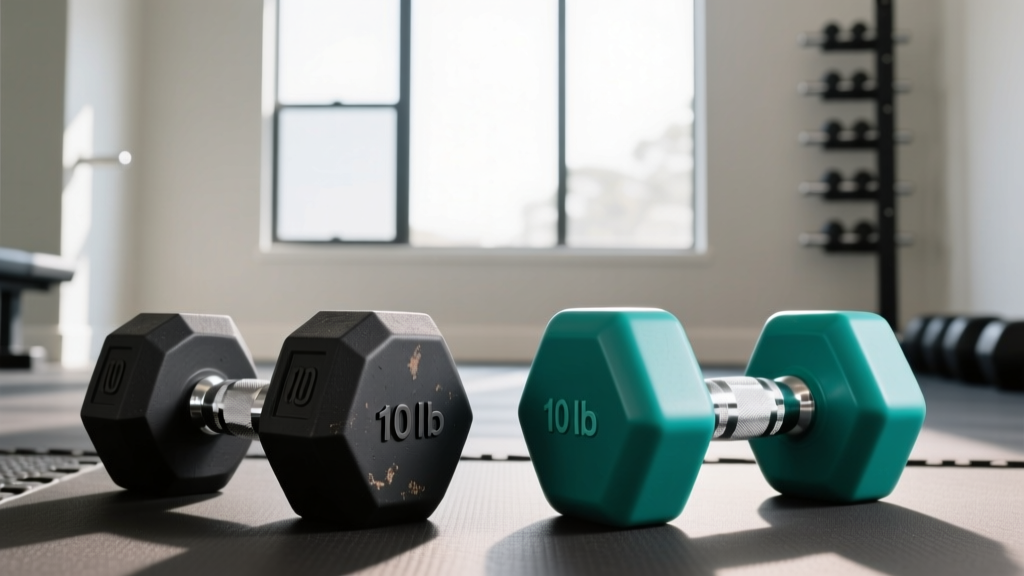
Rubber Hex vs Urethane: Optimizing Exercise for Wings With Dumbbells
Compare rubber hex and urethane dumbbells for lat training. Our 2026 hands-on review covers grip, durability, and pricing for wing exercises.

The 2026 Expert Verdict
If your primary goal is heavy, high-volume latissimus dorsi (wing) training, Urethane Dumbbells are the undisputed winner due to superior knurling, zero off-gassing, and long-term structural integrity. Rubber Hex Dumbbells remain a viable budget option for light-to-moderate home gyms, but their shallow knurling and tendency to degrade under acidic sweat make them a liability for intense back days.
The Biomechanics of 'Wing' Training: Why Dumbbell Coating Matters
When fitness enthusiasts refer to 'wings,' they are targeting the latissimus dorsi, the broad, flat muscle covering the lower back. Building impressive lats requires exercises that place the muscle under deep tension and heavy loads, such as the single-arm dumbbell row, the Meadows row, and the straight-arm dumbbell pullover. According to kinesiology data from ExRx.net, the dumbbell pullover uniquely stretches the lats across the shoulder joint while demanding immense grip stability to prevent the weight from slipping backward over your face.
This is where the debate between rubber hex and urethane dumbbells shifts from a mere aesthetic choice to a critical performance factor. The coating material dictates the dumbbell's center of gravity, its behavior when dropped, and most importantly, the handle's knurling quality. In 2026, the fitness equipment market has clearly bifurcated: budget commercial gyms still buy rubber hex in bulk, while serious home gym owners and elite facilities have universally migrated to cast polyurethane (urethane).
Grip Fatigue and Knurling Depth
During a heavy set of single-arm rows, your grip is often the limiting factor before your lats reach true muscular failure. Urethane dumbbells, such as the Rogue Urethane series, feature handles with 1.5mm deep, multi-directional knurling machined directly into high-tensile steel. This aggressive texture bites into the calluses of your palm, securing the dumbbell even when your hands are slick with sweat.
Conversely, standard rubber hex dumbbells (like the ubiquitous CAP Barbell models) utilize shallow, almost polished chrome handles to reduce manufacturing costs. When performing your next exercise for wings with dumbbells, this lack of friction forces you to over-squeeze the handle, prematurely fatiguing your forearms and stealing volume away from your lats.
Hands-On Comparison Matrix: 2026 Market Data
To provide a clear picture of the current landscape, we tested three industry-standard models across five critical metrics relevant to heavy back training.
| Feature | CAP Barbell Rubber Hex | Rep Fitness Urethane | Rogue Urethane |
|---|---|---|---|
| 2026 Avg. Price | $1.80 - $2.20 / lb | $3.20 - $3.60 / lb | $3.90 - $4.50 / lb |
| Coating Material | Recycled Virgin Rubber Blend | Cast Polyurethane (85A Shore) | Premium Urethane (90A Shore) |
| Handle Knurling | Shallow / Smooth Chrome | Medium-Deep / Volcano | Deep / Aggressive Multi-Directional |
| Odor / VOC Off-Gassing | High (Requires 2-4 weeks airing) | None / Odorless | None / Odorless |
| Drop Tolerance | Low (Rubber tears at steel core) | High (Bounces slightly, scuffs) | Very High (Deadens impact) |
Real-World Failure Modes & Edge Cases
As equipment reviewers, we don't just look at day-one performance; we analyze how gear survives 18 to 24 months of abuse. The structural differences between rubber and urethane reveal distinct failure modes.
The Rubber Hex Degradation Cycle
Rubber is a porous, organic-based polymer. When exposed to the slightly acidic pH of human sweat, UV light from garage windows, and ozone, the rubber heads begin to oxidize.
- Neck Tearing: The most common failure point on a rubber hex dumbbell is the junction where the rubber head meets the steel handle. Repeated dropping (even from just waist height during a fatigued set of rows) causes micro-fissures in the rubber. Eventually, the head wobbles and detaches.
- The 'Sticky' Phase: Around month 14 of heavy use, cheap rubber breaks down and becomes tacky. This leaves black residue on your hands, your bench, and your flooring.
- VOC Off-Gassing: New rubber hex dumbbells release volatile organic compounds (VOCs) that smell like burning tires. In a poorly ventilated home gym, this can cause headaches and respiratory irritation.
Urethane: The Indestructible Standard
Urethane is a synthetic elastomer that is highly resistant to UV, ozone, and moisture. It does not degrade when exposed to sweat. However, it is not without edge cases:
- Cosmetic Scuffing: While urethane won't tear like rubber, dropping it on raw concrete without horse-stall mats will cause permanent white scuff marks on the black coating.
- Temperature Sensitivity: If your home gym drops below 40°F (4°C) in the winter, urethane becomes noticeably harder and less shock-absorbent. Dropping cold urethane dumbbells increases the risk of bending the internal steel handle.
"The limiting factor in lat development for 90% of lifters isn't their mind-muscle connection; it's grip endurance. Upgrading from smooth-handle rubber hex to aggressively knurled urethane instantly adds 2 to 3 working reps to heavy pullovers because the lifter stops over-crushing the handle."
— Biomechanics & Strength Coaching Consensus, 2025 NSCA Conference
Optimizing Your Exercise for Wings With Dumbbells
Choosing the right dumbbell is only half the battle. How you interact with the equipment during specific movements dictates your results. Here is how the physical shape of these dumbbells impacts the two best wing-building exercises.
1. The Straight-Arm Dumbbell Pullover
This movement requires you to hold a single heavy dumbbell by the inner plate with your hands forming a diamond. The Hex Advantage: The flat edges of a rubber hex dumbbell provide a secure, non-slip shelf for your palms when gripping the inner head. Round urethane dumbbells can sometimes slip through the hands if the inner plate is too narrow or smooth. The Urethane Advantage: If you use a pair of urethane dumbbells to perform the pullover (one in each hand), the superior knurling keeps the weights locked in your grip through the deepest stretch at the bottom of the movement, where the lats are most vulnerable to tearing.
2. The Single-Arm Dumbbell Row
When rowing heavy (80+ lbs per hand), you need to rest the non-working dumbbell on the floor or bench. The Hex Advantage: Hexagonal heads do not roll away when placed on an incline bench or a slightly uneven garage floor. The Urethane Advantage: Urethane deadens the sound and impact. Slamming a 100lb rubber hex dumbbell onto a wooden platform creates a jarring noise and vibration, whereas urethane absorbs the kinetic energy, protecting both your floor joists and your joints.
Final 2026 Buying Recommendation
If you are outfitting a commercial facility on a strict budget and your clients primarily perform light isolation work, Rubber Hex Dumbbells remain the most cost-effective choice at roughly $2.00 per pound. Just ensure you buy from a reputable brand that uses virgin rubber rather than recycled tire rubber to minimize the toxic off-gassing.
However, if you are a serious lifter programming heavy, progressive overload for your lats, the investment in Urethane Dumbbells is non-negotiable. The combination of deep knurling, zero odor, and a 10+ year lifespan makes the $3.50 to $4.50 per pound price tag a one-time investment in your training longevity. When your grip is no longer the weak link, your wings will finally have the stimulus they need to grow.
More gear to consider
All reviews
Olympic vs Standard Plate Rack Setup & Waterstop Dumbbell Integration
2026 Trends: Beyond the Decathlon Dumbbell to Competition Kettlebells

Best Hammer Curl Dumbbells: Rubber Hex vs Urethane
Olympic Barbell Guide: Rogue vs Rep & What Does Dumbbell Front Raise Work?

EZ vs Straight Bar Space Layouts & Dumbbell Equivalent to 225 Bench
