
Latissimus Dorsi Exercises with Dumbbells: Hex vs Urethane (2026)
Compare rubber hex vs urethane dumbbells for latissimus dorsi exercises. Our 2026 budget breakdown reveals the true cost-per-pound and grip value.

The Biomechanics of Lat Training: Why Dumbbell Material Matters
Building a wide, thick back requires targeted isolation and heavy compound pulling. While barbells are excellent for overall mass, latissimus dorsi exercises with dumbbells allow for a greater range of motion, unilateral correction, and reduced lower back shear force. However, the physical tool you use to execute these movements directly impacts your biomechanical efficiency and, ultimately, your muscle growth. When programming latissimus dorsi exercises with dumbbells, grip endurance is almost always the limiting factor. The forearm flexors fatigue significantly faster than the massive latissimus dorsi muscle group.
If you are using poorly designed dumbbells with slick, unknurled handles, your grip will fail on a heavy single-arm row long before your lats reach mechanical failure. This is where the debate between rubber hex dumbbells and premium urethane dumbbells becomes critical for your home gym budget. In this 2026 value analysis, we break down the exact cost-per-pound, material degradation rates, and grip ergonomics to help you allocate your equipment budget effectively. For a comprehensive list of pulling movements and proper form mechanics, the ExRx.net exercise directory remains the gold standard for biomechanical reference.
Rubber Hex Dumbbells: The Budget-Friendly Workhorse
Rubber hex dumbbells have been the default choice for commercial and home gyms for decades. The hexagonal head prevents rolling, which is a mandatory safety feature for floor-based exercises. The rubber coating protects both the floor and the cast-iron core from impact damage. However, not all rubber is created equal. In 2026, the market is flooded with recycled rubber options that off-gas heavily, alongside premium virgin rubber models.
Pros and Cons of Rubber Hex
- Pros: Highly affordable (averaging $1.20 to $1.80 per pound in 2026), anti-roll hex geometry, widely available in incremental 5lb jumps.
- Cons: Prone to UV and thermal degradation, thick handles often lack knurling, heavy chemical odor in cheaper imported models.
When evaluating specific models, the Rogue Fitness Rubber Hex Dumbbells represent the upper echelon of this category. Priced around $1.75 per pound, they feature a high-quality virgin rubber coating that minimizes the infamous 'gym smell' and a moderately knurled chrome handle. Conversely, budget imports found on big-box retail sites often feature smooth, powder-coated handles that become dangerously slippery during high-rep lat pullovers or heavy bent-over rows when sweat accumulates.
Urethane Dumbbells: The Premium Grip Investment
Urethane is a high-density polyurethane polymer that has largely replaced rubber in premium commercial facilities. It is virtually odorless, highly resistant to abrasion, and impervious to the acidic corrosive effects of human sweat. For lifters who prioritize long-term equipment longevity and superior grip ergonomics, urethane is the undisputed champion.
Pros and Cons of Urethane
- Pros: Zero off-gassing, extreme drop tolerance, ergonomic handle contours, medium-to-deep knurling standard, resistant to UV and temperature fluctuations.
- Cons: High initial capital requirement (averaging $3.50 to $5.50+ per pound), heavier heads can alter the balance point on very light weights.
Models like the Rep Fitness Urethane Dumbbells (priced around $3.99 per pound) feature an ergonomic, multi-angle handle design. This contouring allows the dumbbell to sit more naturally in the palm, reducing the localized pressure on the calluses and fingers during heavy pulling movements. The knurling on premium urethane sets is typically cut to a medium depth, providing the exact amount of friction needed to secure a 90lb single-arm row without tearing the skin.
2026 Cost-Benefit Matrix: Rubber Hex vs. Urethane
To understand the true value, we must look beyond the sticker price and analyze the cost-to-performance ratio specifically for back training. Below is a comparative matrix based on current 2026 market pricing for a standard 50lb pair.
| Feature | Virgin Rubber Hex (e.g., Rogue) | Premium Urethane (e.g., Rep Fitness) |
|---|---|---|
| Avg Cost Per Pound | $1.50 - $1.85 | $3.50 - $4.50 |
| 50lb Pair Cost (Approx) | $165.00 | $400.00 |
| Handle Knurling Quality | Mild / Standard Chrome | Medium / Ergonomic Contour |
| Odor Profile | Low (Virgin) to High (Recycled) | Zero / Odorless |
| Drop & Abrasion Tolerance | Moderate (Can chip over time) | Exceptional (85A-90A Durometer) |
| Best Lat Exercise Match | Renegade Rows, Floor Pull-overs | Heavy Single-Arm Rows, Pullovers |
Exercise-Specific Value: Matching the Dumbbell to the Movement
The value of your dumbbell investment shifts depending on the specific latissimus dorsi exercises with dumbbells you program into your routine. Here is how the materials perform across the three most common back-building movements.
1. Single-Arm Dumbbell Rows
This is the king of unilateral lat development. Because you are pulling heavy loads (often 70lbs to 120lbs+ for advanced lifters), grip security is paramount. Winner: Urethane. The superior knurling and ergonomic handle thickness of urethane dumbbells delay forearm flexor fatigue, allowing the lats to be the primary point of failure. Using a smooth-handled rubber hex here will inevitably lead to the dumbbell slipping from your grasp mid-rep.
2. Renegade Rows (Plank Rows)
Renegade rows require you to hold a plank position while rowing the weight to your hip. This demands an anti-roll geometry to prevent the wrist from snapping upon loading. Winner: Rubber Hex. While urethane hex dumbbells do exist, they are prohibitively expensive (often exceeding $6.00/lb). A standard pair of 35lb or 45lb rubber hex dumbbells provides the necessary flat-edged stability for a fraction of the cost, making them the clear budget winner for floor-based core and lat integration.
3. Dumbbell Pullovers
Pullovers stretch the lats under a massive loaded lever arm. The dumbbell is held vertically, resting against the palms, and often grazes the face or ribs at the bottom of the eccentric stretch. Winner: Urethane. The smooth, non-snagging finish of urethane heads prevents catching on clothing or skin. Furthermore, the lack of chemical odor is crucial here, as bringing a pair of off-gassing recycled rubber dumbbells inches from your nose during a deep inhalation stretch is a highly unpleasant experience.
The 5-Year Depreciation & Replacement Model
When conducting a budget breakdown, amateur buyers only look at the day-one cost. Smart home gym owners calculate the amortized cost over the lifespan of the equipment. Rubber, particularly when exposed to the thermal expansion and contraction of an uninsulated garage gym, will eventually separate from the cast-iron core. The edges chip, the rubber degrades, and the structural integrity fails.
Data Highlight: The 'Annoyance Tax' of Cheap Rubber
A 50lb pair of budget imported rubber hex dumbbells ($120) may need replacing every 4 to 5 years due to core separation and handle rust. Over 10 years, you spend $240, plus the hidden 'annoyance tax' of dealing with persistent rubber odors and slippery handles.
A 50lb pair of premium urethane dumbbells ($400) will easily outlast the buyer, requiring zero maintenance and retaining 80% of its resale value on the secondary market. Amortized over a decade, the urethane set costs roughly $40 per year in depreciation, while providing a vastly superior training stimulus for heavy pulling movements.
Final Verdict: Allocating Your 2026 Gym Budget
If your primary goal is executing heavy, high-yield latissimus dorsi exercises with dumbbells, your budget should prioritize handle ergonomics and knurling quality above all else. The lats are simply too strong to be held back by a subpar grip interface.
The Optimal Hybrid Strategy: You do not need to buy an entire 5-100lb set in premium urethane. Instead, allocate your budget strategically. Purchase urethane dumbbells in the heavy ranges (50lbs to 100lbs+) where single-arm rows and heavy pullovers demand maximum grip security and durability. For the lighter ranges (5lbs to 45lbs) used for renegade rows, lateral raises, or warm-ups, invest in a high-quality virgin rubber hex set. This hybrid approach maximizes your biomechanical output on the exercises that drive the most lat hypertrophy, while keeping your overall 2026 equipment budget firmly under control.
"Grip failure is the enemy of back development. Invest in the handle that keeps you connected to the load, and the lats will follow."
More gear to consider
All reviews
Best Barbell Collars When Outgrowing Dumbbell Exercise for Upper Body

Standard vs Olympic Plates: Setup Guide & Dumbbell Calculator

Setup Guide: Olympic vs Standard Plates & Dumbbell Punching
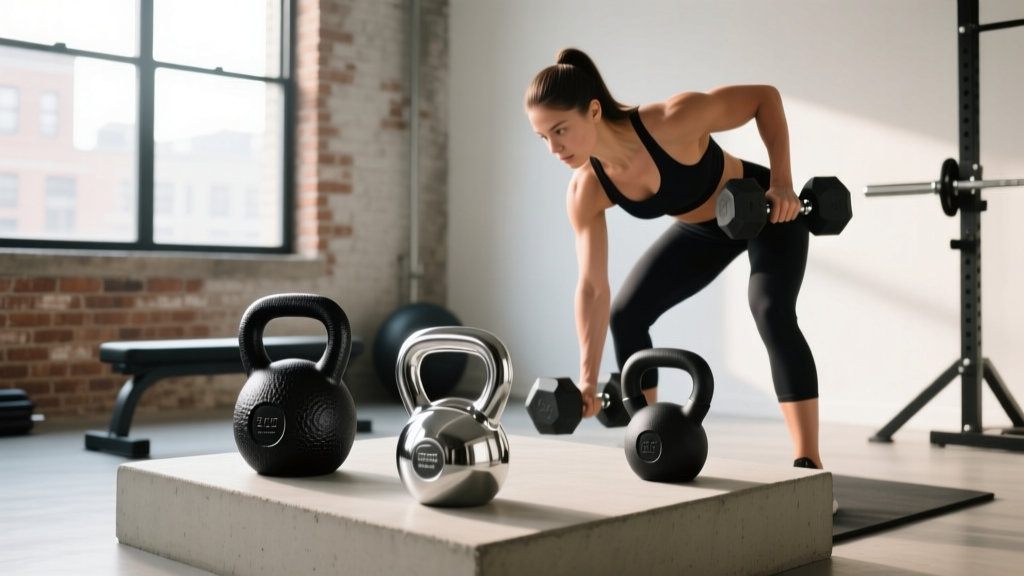
Kettlebell Guide: Cast Iron vs Competition & One-Arm Dumbbell Rows

How to Row Dumbbells: Neoprene Weight Mistakes and Fixes
