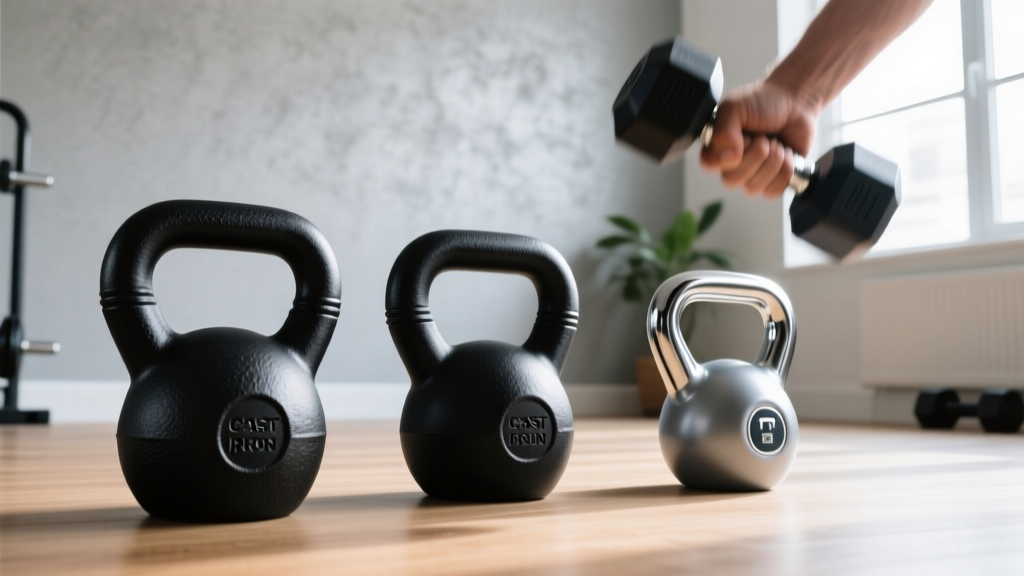
Cast Iron vs Competition: Beyond How to Train Triceps with Dumbbells
Expert 2026 review of cast iron vs competition kettlebells. Discover handle geometry, top picks, and why to upgrade from dumbbell triceps isolation.

The Biomechanical Shift: From Isolation to Ballistics
Most home gym owners begin their strength journey by mastering isolation movements—searching for how to train triceps with dumbbells to perfect their skull crushers, kickbacks, and overhead extensions. Dumbbells are unparalleled for symmetrical, sagittal-plane hypertrophy and targeted muscle isolation. However, as your training evolves toward ballistic power, offset-grip pressing, and full-body conditioning, the physical limitations of the dumbbell become glaringly apparent.
You cannot safely swing a dumbbell between your legs, and racking a heavy dumbbell for cleans is a wrist-breaking endeavor. Furthermore, attempting bottoms-up pressing with a dumbbell lacks the unique center-of-mass displacement that a kettlebell provides. This is where the kettlebell becomes a non-negotiable piece of equipment. But as you enter the market in 2026, you are immediately faced with a critical decision: Cast Iron or Competition?
According to StrongFirst's official guide to kettlebell anatomy, the geometry of the bell dictates the movement pattern. Choosing the wrong style can lead to torn calluses, bruised forearms, and stalled progress. Below, we break down the exact specifications, failure modes, and top hands-on picks for both categories.
Cast Iron vs. Competition: The Core Specifications
Before diving into specific brands, it is vital to understand the structural differences between these two tools. As detailed in BarBend's comprehensive breakdown of kettlebell types, the intended use case entirely dictates which style you should purchase.
| Feature | Cast Iron Kettlebells | Competition Kettlebells |
|---|---|---|
| Dimensions | Scales with weight (larger bell = heavier) | Uniform (280mm x 210mm across all weights) |
| Handle Diameter | Varies (33mm to 38mm+ on heavy bells) | Strict 33mm standard |
| Window Size | Shrinks on heavier weights | Large, optimized for two-handed & double cleans |
| Center of Mass | Shifts further from handle as weight increases | Consistent offset across all weights |
| 2026 Avg. Pricing | $1.30 - $1.70 per lb | $120 - $160 flat per bell |
| Coating | E-coat, Powder Coat, or Enamel | Painted Steel (Color-coded by weight) |
Hands-On Review: Top Cast Iron Kettlebells of 2026
Cast iron bells are the gold standard for general physical preparedness (GPP), heavy grinds, and home gyms where space and budget are primary concerns. Because the bell size scales with weight, they are more compact at lower weights, making them ideal for exercises like the Turkish Get-Up or overhead triceps extensions where a bulky competition bell might hit your forearm.
1. Rogue Fitness Cast Iron Kettlebells (E-Coat)
Price: ~$1.35/lb (e.g., 24kg is approx. $115)
Best For: Heavy grinds, outdoor gyms, and budget-conscious buyers.
Rogue's e-coat finish is a standout in the 2026 market. Unlike cheap enamel paints that chip and flake when dropped on rubber mats—exposing raw iron to humidity and rapid rusting—the electrostatic e-coat binds to the iron at a molecular level. The handle features a light machine knurling that provides excellent grip without shredding your hands during high-rep snatches. Failure Mode: The handle diameter on the 32kg and 40kg bells pushes past 35mm, which can cause grip fatigue during ballistic work.
2. REP Fitness KG1 Powder Coat Kettlebells
Price: ~$1.50/lb
Best For: Indoor home gyms and tactile grip preference.
REP's KG1 line features a flat, machined base that is noticeably wider than Rogue's, making it significantly more stable for renegade rows and handstand push-up parallette substitutes. The powder coat finish is slightly more porous than an e-coat, which means it holds chalk exceptionally well but requires occasional wire-brush maintenance if you sweat heavily on the handle.
Hands-On Review: Top Competition Kettlebells
Competition kettlebells are constructed from a hollow steel shell filled with scrap metal or ball bearings to achieve the target weight. Their dimensions are strictly regulated: 280mm tall, 210mm wide, with a 33mm handle diameter. This uniformity means your muscle memory for the clean and snatch remains identical whether you are lifting an 8kg or a 32kg bell.
1. Kettlebell USA Pro-Grade Competition Bells
Price: ~$135 per bell (regardless of weight)
Best For: Kettlebell sport, double cleans, and high-rep ballistics.
Kettlebell USA remains the benchmark for competition steel. The 'window' (the space between the handle and the bell) is generously sized, allowing two hands to fit comfortably for two-handed swings, or providing ample clearance for the wrist during double cleans. The 33mm handle is perfectly smooth, designed to rotate freely in the palm during the snatch drop without creating friction burns.
2. Onnit Competition Kettlebells
Price: ~$160 per bell
Best For: Premium commercial gyms and aesthetic-focused buyers.
Onnit's competition bells feature a striking, color-coded steel shell that eliminates the need to squint at tiny stamped numbers on the base. The weld quality on the handle-to-horn junction is seamless, eliminating the 'bump' found on cheaper imports that can bruise the forearm during the rack position.
⚠️ Expert Warning: The 35mm Handle TrapMany budget cast iron brands scale their handle thickness up to 35mm or 38mm on bells over 24kg. While this feels robust for heavy grinds like goblet squats, it is a primary failure mode for high-rep snatches. The thicker handle forces excessive grip tension, leading to rapid forearm pump and torn calluses. If you plan to train ballistics, prioritize a strict 33mm handle or invest in competition bells.
Translating Dumbbell Skills to Kettlebell Mechanics
Returning to the concept of upper-body isolation, many lifters wonder how to transition their accessory work. When learning how to train triceps with dumbbells, you likely rely on the stability of a flat bench and a neutral center of mass.
To replicate and enhance this with kettlebells, utilize the Bottoms-Up Kettlebell Overhead Extension. By gripping a competition kettlebell by the horns (or holding a lighter cast iron bell upside down by the handle), you force the triceps to stabilize a highly volatile center of mass while extending the elbow. This not only builds the lateral and long heads of the triceps but heavily recruits the rotator cuff and core stabilizers—a stimulus a standard dumbbell simply cannot provide.
Expert Decision Framework: Which Should You Buy?
Do not waste money on the wrong tool. Use this framework to finalize your 2026 equipment order:
- Buy Cast Iron If: You primarily train heavy grinds (squats, presses, rows), perform Turkish Get-Ups, want a space-saving footprint for lighter weights, or are on a strict per-pound budget.
- Buy Competition If: You train Kettlebell Sport (GS), focus heavily on high-rep snatches and cleans, practice double-kettlebell work, or want consistent handle geometry across your entire weight range.
- The Hybrid Approach: The ultimate home gym setup includes a pair of 16kg and 24kg Competition bells for ballistics and double work, supplemented by a heavy 32kg or 40kg Cast Iron bell for heavy grinds and goblet squats.
'The kettlebell is an extension of your body. If the handle geometry forces you to alter your natural wrist alignment during the rack position, the tool is failing you, not the other way around.' — Pavel Tsatsouline, Founder of StrongFirst
Upgrading your free weight arsenal is a significant investment. By understanding the precise dimensional differences and failure modes between cast iron and competition steel, you can build a rack that supports everything from heavy posterior chain development to advanced overhead triceps isolation.
More gear to consider
All reviews
Overhead Dumbbell Press Mistakes: Adjustable Dumbbell Comparison

EZ Curl Bar vs Straight Bar: Space Layouts & Dumbbell Exercise for Abs

Bowflex Dumbbells Stuck on One Side? Storage & Rack Layout Fixes

Barbell Collar & Clamp Types Comparison: Lying Dumbbell Pullover Setup

Neoprene Gear: Chest Exercises for Men with Dumbbells
