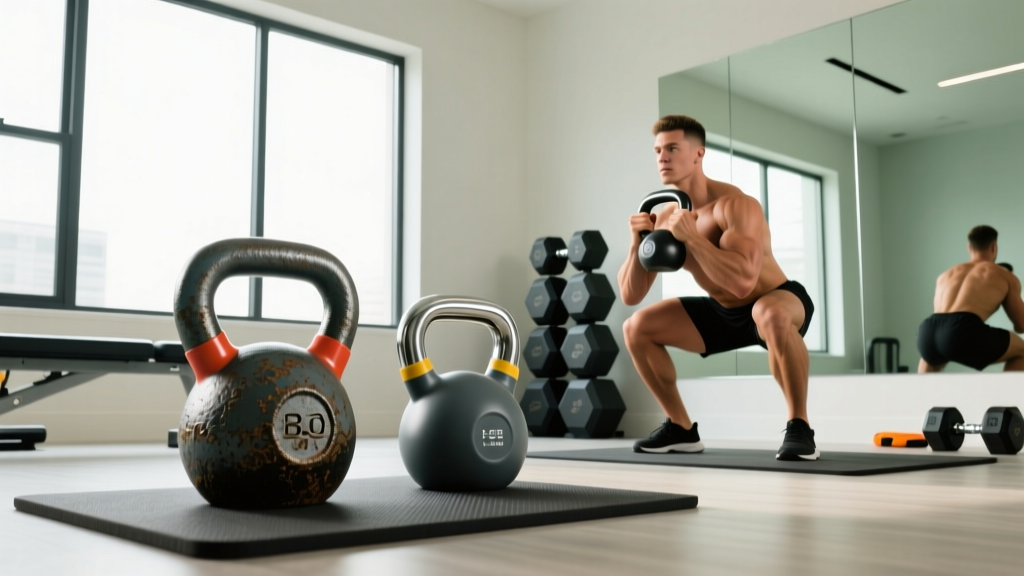
Kettlebell Care: Cast Iron vs Competition & Dumbbell Squat Exercises
Learn how to maintain cast iron and competition kettlebells for heavy lifts, goblet squats, and dumbbell squat exercises to maximize equipment longevity.

The Biomechanics of Wear: Kettlebells vs. Dumbbells
When building a resilient home or commercial gym, understanding the metallurgical and structural differences between free weights is critical for long-term equipment maintenance. Athletes frequently alternate between heavy kettlebell goblet squats and traditional dumbbell squat exercises. While both movements target the lower body, the physical toll on the equipment differs drastically. During dumbbell squat exercises, the aggressive knurling on hex or urethane dumbbell handles bites into the skin, trapping dead skin cells, sweat, and chalk deep within the metal grooves. Conversely, kettlebell handles—whether smooth competition steel or textured cast iron—experience high-friction rotational forces during swings and crushing static loads during goblet holds.
According to BarBend's comprehensive kettlebell buying guide, the choice between cast iron and competition kettlebells extends far beyond aesthetics; it dictates your long-term maintenance routine, rust prevention strategies, and floor protection protocols. This guide breaks down the exact maintenance care required to maximize the lifespan of both kettlebell types, especially when subjected to the rigorous demands of heavy squatting and ballistic lifts.
Cast Iron Kettlebells: Fighting the Oxidation War
Cast iron kettlebells are the workhorses of the fitness world. Typically ranging from $1.20 to $2.00 per pound, they are cost-effective but highly susceptible to environmental degradation. Cast iron is porous; without a proper barrier, ambient humidity and the acidic pH of human sweat (which averages between 4.5 and 7.0) will trigger rapid oxidation.
Understanding the Coatings
- Bare Cast Iron: Requires constant vigilance. Must be oiled monthly and kept in climate-controlled environments.
- Powder Coat: The most common finish (e.g., Kettlebell Kings Powder Coat). Highly durable, but aggressive wire brushing will strip the matte texture, leaving a slick, dangerous surface for heavy lifts.
- E-Coat (Electrophoretic Deposition): Used by premium brands like Rogue. This electrochemical process bonds the finish at a molecular level, offering superior rust resistance while maintaining a bare-steel feel.
Step-by-Step Rust Remediation
If your cast iron bells develop surface rust from humid garage environments, do not use steel wool. Steel wool leaves behind microscopic iron particles that will rust independently and pit the bell. Instead, follow this restorative protocol:
- Chemical Bath: Submerge the handle in Evapo-Rust (a safe, non-toxic chelating agent) for 4 to 6 hours. Avoid soaking the entire bell if it has a painted logo or powder coat, as prolonged submersion can lift the finish.
- Mechanical Agitation: Scrub the handle with a stiff brass wire brush. Brass is softer than steel and iron, meaning it will remove the oxidized layer without scratching the base metal.
- Neutralization & Sealing: Wipe down with a microfiber cloth dampened with white vinegar to neutralize the chemical, then apply a micro-thin layer of 3-in-One oil or mineral oil to displace moisture.
During high-rep sets, liquid and block chalk pack into the microscopic pores of powder-coated handles. If left uncleaned, chalk absorbs ambient moisture, creating a localized corrosive paste. Use a stiff nylon bristle brush and warm soapy water weekly to purge chalk from the handle and the underside of the horns.
Competition Kettlebells: Preserving the Hollow Steel Shell
Competition kettlebells are engineered to exacting International Union of Kettlebell Lifting (IUKL) standards. Regardless of the weight—from 8kg to 32kg—the physical dimensions remain identical: a 33mm handle diameter and a 280mm x 280mm base. Priced between $2.50 and $4.00+ per pound, they represent a significant financial investment. Unlike solid cast iron, competition bells are hollow steel shells filled with a steel shot or lead-zinc amalgam to achieve the target weight, sealed via a welded plug at the base.
Addressing the Window Burrs and Weld Seams
The most common failure point on a competition kettlebell is the inner edge of the handle window. During manufacturing, the steel is stamped and welded. If the manufacturer fails to grind the inner seam perfectly flush, the burr will tear calluses during high-volume snatches and cleans.
The Fix: Inspect the inner window seam with your thumb. If you feel a catch, use 400-grit followed by 800-grit automotive wet/dry sandpaper to gently polish the seam. Do not use a Dremel or power grinder, as removing too much material will alter the 33mm handle thickness and compromise the structural integrity of the bell.
Paint Chipping and Touch-Ups
Competition bells are color-coded by weight using thick automotive-style paint. Dropping a 24kg (Green) bell onto a concrete floor will inevitably chip the paint, exposing the raw steel beneath to rust.
To maintain longevity, keep a set of Dupli-Color Automotive Touch-Up Paint pens matched to standard competition colors (Yellow for 16kg, Green for 24kg, Red for 32kg). Clean the chip with isopropyl alcohol, apply a single drop of primer, and follow with the color coat. This seals the steel and prevents sub-surface rust from bubbling up and flaking off larger sections of the bell.
Maintenance Matrix: Cast Iron vs. Competition vs. Dumbbells
To contextualize your equipment care routine, compare the maintenance demands across different free weight modalities. While dumbbell squat exercises require strict knurling maintenance to prevent bacterial buildup and skin tearing, kettlebells demand a focus on surface oxidation and handle geometry.
| Equipment Type | Primary Maintenance Focus | Cleaning Frequency | Estimated Annual Upkeep Cost |
|---|---|---|---|
| Cast Iron Kettlebells | Rust prevention, powder coat preservation | Weekly (Chalk removal), Monthly (Oiling) | $15 - $25 (Oil, nylon brushes) |
| Competition Kettlebells | Seam sanding, paint touch-ups, plug sealing | Bi-Weekly (Wipe down), As-needed (Paint) | $30 - $50 (Sandpaper, touch-up paint) |
| Knurled Dumbbells | Knurling de-gunking, zinc oxidation, urethane tearing | Daily (Wipe), Weekly (Wire brush) | $20 - $40 (3-in-One oil, brass brushes) |
Floor and Rack Longevity: The Impact of Heavy Squats
When programming heavy lower-body sessions, the way you handle the equipment at the end of a set dictates the lifespan of your gym flooring. During intense sets of dumbbell squat exercises, athletes often drop dumbbells from the shoulders or let them hang at arm's length before releasing them. Urethane-coated dumbbells can absorb some shock, but the concentrated point-load of a dropped hex dumbbell corner will easily crack rubber horse-stall mats.
Kettlebells present a different geometric hazard. The spherical base of a cast iron or competition bell concentrates kinetic energy into a surface area of roughly 4x4 inches upon impact. Dropping a 32kg competition bell from waist height generates over 1,500 Newtons of impact force, enough to permanently compress 3/4-inch rubber flooring and dent the steel shell of the bell itself.
"Equipment longevity isn't just about wiping down sweat; it's about controlling the deceleration phase of every lift. A controlled descent to the floor during goblet squats or dumbbell squat exercises preserves both the structural integrity of the weight and the shock-absorption properties of your gym flooring." — Insights adapted from StrongFirst instructional methodologies on equipment and biomechanical care.
Frequently Asked Questions
Can I use WD-40 to clean my cast iron kettlebell handles?
Standard WD-40 is a solvent and water-displacer, not a long-term lubricant or protectant. While it will clean off surface grime and light rust, it evaporates quickly and leaves the bare iron vulnerable to flash-rusting within 48 hours. Always follow up with a dedicated mineral oil, 3-in-One oil, or a specialized barbell protectant like Cerakote's Barbell Cleanser to seal the pores.
Why do competition kettlebells feel more slippery during heavy goblet squats compared to dumbbells?
Competition bells feature a 33mm handle with a very mild, machine-smooth finish designed to prevent tearing during high-rep ballistic movements like snatches. When performing static holds like goblet squats—especially when compared to the aggressive knurling found on dumbbells used for dumbbell squat exercises—the smooth steel lacks mechanical grip. To compensate, use high-quality magnesium carbonate chalk, but ensure you brush the handle thoroughly post-workout to prevent moisture-trapping buildup.
How do I fix a loose base plug on a competition kettlebell?
If the welded or threaded plug at the base of your competition bell begins to rattle or shift, it compromises the internal weight distribution. For threaded plugs, apply a medium-strength threadlocker (like Loctite Blue 242) and torque it flush. If the factory weld has cracked, the bell must be taken to a professional TIG welder to reseal the steel shell; attempting to fix it with epoxy will fail under the dynamic impact of drops.
More gear to consider
All reviews
Barbell Collar Comparison: Fixing Dumbbell Set Walmart Mistakes
Olympic Barbell Weight, Knurling & Dumbbell Hammer Preacher Curl
Budget Dumbbell Racks: Value Analysis & Protecting the Dumbbell Pullovers Muscles Worked

Fake Dumbbells & Plate Security: Barbell Collar and Clamp Comparison

Barbell Guide: Weight, Knurling & Tricep Workout Using Dumbbells
