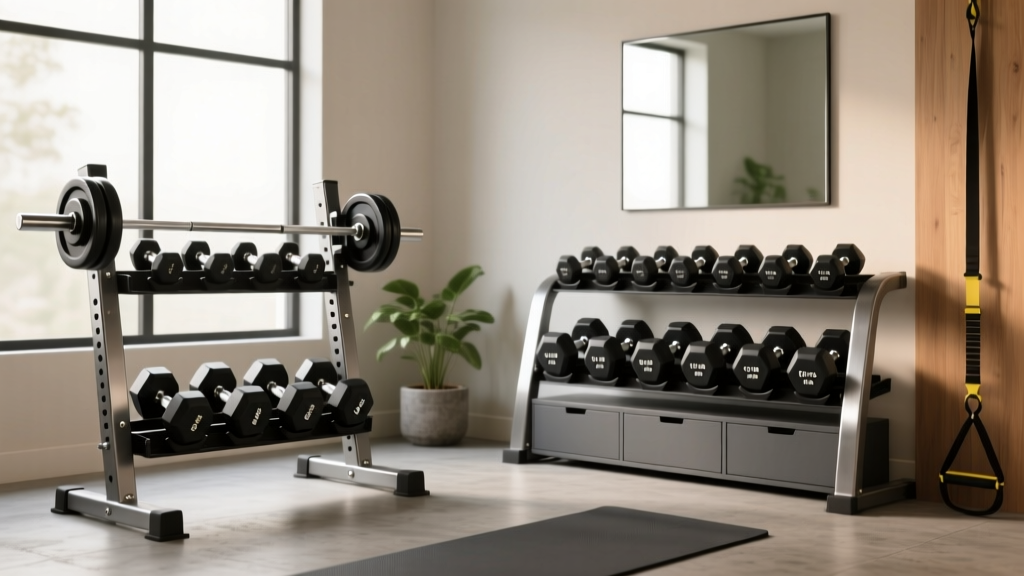
Cast Iron vs Competition Kettlebells & MX55 Dumbbells Guide
Expert hands-on review comparing cast iron vs competition kettlebells, plus how MX55 dumbbells complete your 2026 home gym free-weight arsenal.

The Biomechanics of the Bell: Cast Iron vs. Competition
When outfitting a premium home gym in 2026, the debate between cast iron and competition kettlebells remains a cornerstone of free-weight selection. While both tools share a common ancestry, their dimensional variances dictate entirely different training adaptations. According to the historical standards documented by Wikipedia’s Kettlebell Guidelines, the modern kettlebell evolved from Russian agricultural counterweights, but today’s market is strictly divided into two camps: the rugged, variable-geometry cast iron bell, and the precision-machined, uniform competition bell.
As an equipment reviewer who has tested over forty different free-weight systems this year, I can tell you that choosing the wrong style will actively hinder your progress. Cast iron bells feature a wider base and a larger handle window, making them ideal for two-handed swings, renegade rows, and floor presses. Competition bells, governed by international sport standards, maintain the exact same physical dimensions (210mm x 210mm x 280mm) regardless of weight, ensuring that your technique never has to adapt to a changing center of mass as you move up in kilograms.
| Feature | Cast Iron (Standard) | Competition (Sport) |
|---|---|---|
| Handle Diameter | Variable (33mm to 38mm+) | Standard 35mm |
| Bell Dimensions | Scales with weight | Uniform (210x210x280mm) |
| Base Stability | High (Wide flat bottom) | Moderate (Narrower flat base) |
| Primary Use Case | Hardstyle, Grinds, Rows | Sport, Snatches, Clean & Jerk |
| Average Cost (2026) | $1.20 - $1.80 per lb | $2.50 - $3.50 per lb |
Hands-On Review: Top Cast Iron Models
For general strength and conditioning, cast iron is the undisputed king of versatility. The Rogue Powder Coat Kettlebells remain our top pick for 2026. Priced around $1.50 per pound, they feature a aggressive powder coat that holds chalk exceptionally well, preventing the dangerous slippage that occurs with cheaper enamel-coated bells during high-rep swing sessions. Rogue Fitness machines the flat bottom of their bells to ensure they sit perfectly flush on the floor, a critical safety feature when performing renegade rows or weighted push-ups where a wobbling bell can lead to severe wrist sprains.
However, the primary drawback of cast iron is the handle scaling. A 16kg Rogue bell might feature a 33mm handle, while the 32kg beast jumps to a 38mm handle. This variance forces your grip to adapt, which can be detrimental if you are training for specific endurance or sport events. As noted by the instructors at StrongFirst, hardstyle training relies on maximum tension and heavy grinds, where the thicker handles of heavier cast iron bells actually serve as a built-in grip-strength trainer. But for high-rep ballistic snatches, that thick handle will tear your calluses to shreds.
Competition Kettlebells: The Case for Uniformity
If your training involves high-volume snatches, long-cycle clean and jerks, or you simply want to master the "rack position" without bruising your forearms every time you bump up the weight, competition kettlebells are mandatory. Brands like Kettlebell Kings and Onnit manufacture these bells from hollow steel, filling them with non-toxic steel fragments or lead to achieve the target weight while maintaining the exact same outer shell dimensions.
Expert Insight: The Rack Position GeometryThe 35mm handle on a competition bell is not arbitrary. It is specifically designed to rest flush against the outside of the forearm when held in the rack position. Because the bell’s body is uniformly sized, the point of contact on your wrist remains identical whether you are lifting a 12kg or a 24kg bell. This allows for seamless neuro-muscular adaptation and prevents the micro-traumas associated with adjusting to the shifting center of mass found in cast iron sets.
The downside? Competition bells are expensive, and their narrower bases make them slightly more prone to tipping if you set them down aggressively on an uneven garage floor. Furthermore, the handle window is noticeably smaller, making two-handed swings feel cramped for athletes with larger hands.
The Hypertrophy Gap: Integrating MX55 Dumbbells
Here is the reality that most kettlebell purists ignore: kettlebells are fundamentally suboptimal for strict, bilateral hypertrophy work. The offset center of mass and the bulky spherical body of the bell make movements like strict lateral raises, chest flyes, skull crushers, and heavy dumbbell floor presses incredibly awkward, if not biomechanically hazardous to the wrist joint.
This is exactly where the MX55 dumbbells become an indispensable companion to your kettlebell rack. The MX55 adjustable dumbbell system (ranging from 5 to 55 lbs per hand in 5 lb increments) bridges the gap between functional ballistic conditioning and traditional bodybuilding isolation.
Why the MX55 System Complements Kettlebells
- Footprint Efficiency: A complete set of cast iron kettlebells (8kg to 32kg) and a full rack of hex dumbbells (5lbs to 50lbs) will consume over 60 square feet of floor space and cost upwards of $1,500. The MX55 dumbbells, housed in their compact cradles, occupy less than 3 square feet, leaving room for your competition bells and a pull-up rig.
- Wrist Ergonomics: When performing a strict bicep curl or a lateral raise, the MX55’s symmetrical weight distribution and knurled steel handle allow for perfect joint alignment. A kettlebell will pull your wrist into ulnar deviation during a lateral raise, shifting the tension away from the medial deltoid and onto the connective tissue.
- Micro-Loading for Rehab and Warmups: The MX55 system starts at just 5 lbs. This is crucial for rotator cuff pre-hab, physical therapy, and precise warm-up sets before you transition to heavy 24kg kettlebell military presses.
Never drop the MX55 dumbbells. Unlike solid cast iron or steel competition bells, adjustable dumbbells rely on internal selector pins and ABS plastic housing. Dropping them from the rack position will shatter the tray mechanism and void the warranty. Treat them with the same respect you would a loaded barbell.
Decision Matrix: Building Your 2026 Arsenal
Do not buy every free weight on the market. Use this framework to allocate your budget based on your primary training modality:
- The Ballistic Athlete (Sport & Endurance): Invest 80% of your budget into a matched pair of Competition Kettlebells (16kg and 24kg). Use the remaining 20% for a single pair of MX55 dumbbells to handle accessory joint-prep and light isolation work.
- The Hardstyle Powerlifter (Strength & Grinds): Buy heavy Cast Iron Kettlebells (24kg, 32kg, 40kg) for heavy swings, goblet squats, and floor presses. Pair them with the MX55 dumbbells for high-rep hypertrophy accessory work (rows, presses, curls) where the heavy iron bells are too cumbersome to maneuver safely.
- The General Fitness Minimalist: Skip the competition bells entirely. Purchase one 16kg and one 24kg cast iron bell for lower-body hinges and carries, and rely on the MX55 dumbbells as your primary upper-body pushing and pulling tools.
Frequently Asked Questions
Can I use competition kettlebells for two-handed swings?
You can, but it is not recommended for athletes with wide shoulders or large hands. The handle window on a standard 35mm competition bell is relatively narrow, which can cause your hands to overlap or pinch during the backswing phase, leading to blisters and compromised power output.
Are the MX55 dumbbells suitable for heavy floor presses?
Yes, up to their 55 lb maximum per hand. The MX55 system features a secure locking mechanism that prevents weight plates from disengaging while you are lying supine. However, if you require more than 55 lbs per hand for chest development, you should transition to a barbell or invest in a heavier adjustable system like the Nuobell 80s.
How do I maintain the powder coat on cast iron bells?
Wipe them down with a dry microfiber cloth after every use to remove sweat and chalk. Once a month, apply a very light mist of 3-in-1 oil or mineral oil to a rag and rub it into the handle and bell to prevent oxidation and rust, especially if your gym is in a humid garage environment.
More gear to consider
All reviews
Cast Iron vs Competition Kettlebells and 18 Pound Dumbbells Review
Antique York Dumbbells & Standard vs Olympic Plate Mistakes

Budget Dumbbell Racks for a Quick 5 Minute Arm Workout with Dumbbells
Bulgarian Split Squat Dumbbell Weight: Neoprene Guide

EZ Curl Bar vs Straight Bar: Cost Analysis & Arm Dumbbell Row Value