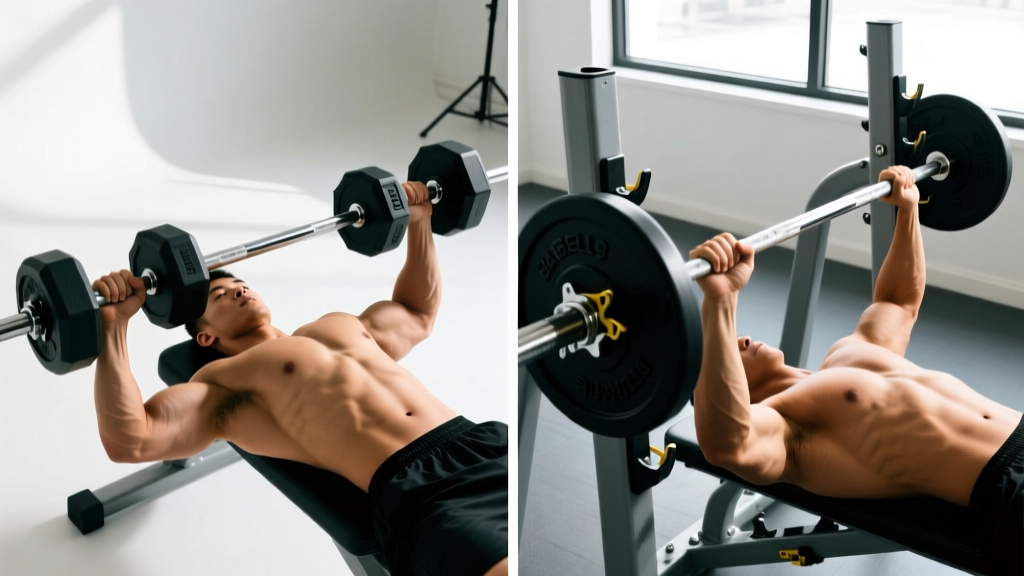
How to Train Chest with Dumbbells vs. Barbells: Collar Mistakes
Mastering how to train chest with dumbbells is step one. Learn the common barbell collar mistakes and clamp types to stay safe during heavy bench presses.

The Dumbbell-to-Barbell Transition: Why Collars Matter
When lifters first research how to train chest with dumbbells, the focus is almost entirely on biomechanics: achieving a deep stretch at the bottom of the movement, squeezing the pectorals at the top, and utilizing the extra range of motion to build stabilizer muscles. Dumbbells are phenomenal for hypertrophy and fixing left-to-right strength imbalances. However, as your chest strength progresses, you will inevitably transition to the barbell bench press to overload the central nervous system and move absolute maximum loads.
This transition introduces a critical, often overlooked variable in equipment safety: barbell collars and clamps. Moving from 80-pound dumbbells to a 315-pound barbell bench press changes the physics of your workout. If your weight plates shift mid-rep due to inadequate collars, the resulting asymmetric loading can cause catastrophic barbell flips, torn pectoral tendons, or severe rotator cuff injuries. In this troubleshooting guide, we break down the most common collar mistakes lifters make when upgrading their chest routines and compare the best clamp types available in 2026.
⚠️ Warning: The Biomechanics of Asymmetric Loading
If a 45-pound Olympic plate slides just two inches outward on one side of a 7-foot barbell, the moment arm on that side increases significantly. According to principles outlined in the ExRx Barbell Bench Press Guide, this creates a massive rotational torque. Your stronger side will attempt to compensate, leading to an immediate, violent tilt of the bar. This uneven force distribution is a primary culprit in distal pec tendon ruptures during heavy benching.
3 Catastrophic Collar Mistakes in Chest Training
Even experienced lifters fall into bad habits when fatigued. Here are the most frequent troubleshooting scenarios we see in commercial and home gyms.
1. Relying on Spring Clips for Heavy Overload
Spring clips (the standard metal pinch-clips found in most commercial gyms) are designed for speed, not security. They typically exert less than 40 pounds of lateral clamping force. When you are benching 275+ pounds, the horizontal deceleration at the top of the rep or the bounce off the chest can easily overcome this friction, causing the plates to slide. Spring clips are strictly for warm-up sets and empty-bar technique work.
2. Using Competition Clamps for Supersets
On the opposite end of the spectrum, some lifters use heavy-duty competition clamps for rapid dumbbell-to-barbell chest supersets. While incredibly safe, screw-type or lever-type competition clamps take 15 to 30 seconds to secure and remove. This destroys your rest intervals and disrupts the metabolic stress required for hypertrophy.
3. Ignoring Sleeve Tolerance and Chalk Buildup
Olympic barbell sleeves are nominally 50mm in diameter, but manufacturing tolerances mean a sleeve might be 49.8mm or 50.2mm. If you pair a loose-tolerance collar with a heavily chalked sleeve, the collar will spin freely. Furthermore, magnesium carbonate (gym chalk) acts as a dry lubricant on smooth zinc or chrome sleeves, drastically reducing the friction required for clamp collars to grip.
Barbell Collar & Clamp Types: The 2026 Comparison Matrix
To train safely, you must match the collar to the specific demands of your chest workout. Below is a comparison of the primary collar types, featuring current market pricing and performance metrics.
| Collar Type | Model Example | Lateral Clamping Force | Best Use Case | Avg. Price (Pair) |
|---|---|---|---|---|
| Spring Clips | Harbinger BioFit | ~40 lbs | Warm-ups, Empty Bar | $8 - $12 |
| Lock-Jaw / Clamp | Rogue Monster Clamps | ~150+ lbs | Heavy Bench, Hypertrophy | $35 - $45 |
| Competition Lever | Eleiko Olympic | ~300+ lbs | IPF Meets, 1RM Testing | $90 - $120 |
| Spin-Lock (1-inch) | CAP Barbell Cast Iron | Variable (Threaded) | Standard Home Gyms | $15 - $25 |
For the vast majority of lifters transitioning from dumbbell chest presses to heavy barbell work, Lock-Jaw style clamps (like those detailed in the Rogue Fitness Barbell Collars catalog) offer the perfect intersection of safety and speed. They utilize a cam-lever system that bites into the steel sleeve, providing immense lateral security while taking less than three seconds to apply or remove.
Troubleshooting Sleeve Slippage and Chalk Buildup
Even the best clamps will fail if the barbell sleeve is improperly maintained. Over time, dead skin, sweat, and gym chalk accumulate in the knurling and on the smooth sleeves, creating a slick surface that defeats the collar's friction.
Step-by-Step Sleeve Maintenance Protocol
Perform this maintenance routine once a month to ensure your collars grip effectively during heavy chest days:
- Dry Brush the Sleeve: Use a stiff nylon brush (never a wire brush, which will strip the zinc or chrome coating) to aggressively scrub the sleeve and the inner collar shoulder.
- Wipe with Isopropyl Alcohol: Dampen a microfiber cloth with 70% isopropyl alcohol and wipe down the sleeve to dissolve embedded oils and sweat residues.
- Inspect for Burrs: Run your fingers along the edge of the sleeve. If you feel metal burrs from dropping the barbell, lightly sand them with 400-grit sandpaper to prevent damage to the inner rubber lining of your clamps.
- Apply Synthetic Oil (Optional): If your sleeves are showing surface oxidation, apply two drops of synthetic barbell oil or 3-IN-ONE silicone spray, then buff completely dry with a clean cloth. Never leave the sleeve oily, or collars will slide off instantly.
Competition Standards and Safety Rules
If you are training for a powerlifting meet, your collar choice is dictated by the federation. According to the IPF Technical Rules, collars must be used at all times during the bench press and must weigh exactly 2.5 kg each in international competition. While commercial gym clamps don't need to meet this exact weight specification, adopting the mindset of a competitive lifter—where securing the load is treated as a mandatory pre-lift checklist item rather than an afterthought—will drastically reduce your injury risk.
FAQ: Chest Training Safety and Equipment
Do I need collars when doing floor presses or close-grip bench?
Yes. Any movement where the barbell is suspended over your body requires collars. Close-grip bench presses often involve uneven hand placement or fatigue-induced bar tilting, which increases the lateral force against the plates.
Can I use dumbbell collars on a barbell?
No. Dumbbell handles are typically 25mm to 30mm in diameter, while Olympic barbells are 50mm. Using improperly sized collars will result in zero clamping force and immediate plate slippage.
How do I safely dump a barbell if a plate shifts mid-rep?
If you feel the bar tilt violently due to a shifted plate, do not attempt to muscle it back to center. Immediately drop the bar to the safety pins in your power rack. If you are not using a rack, roll the bar down your chest to your hips and sit up, though this is highly discouraged for heavy loads. Always bench press heavy loads inside a rack with safety straps set just below your chest arch.
Why do my lock-jaw clamps leave marks on the barbell?
High-quality lock-jaw clamps use hardened plastic or aluminum teeth designed to bite slightly into the steel to prevent rotation and sliding. On chrome or bare steel bars, this may leave minor cosmetic scuffs, but it will not compromise the structural integrity of a high-quality Olympic barbell.
More gear to consider
All reviews
Power Rack vs Squat Stand for Benching with Dumbbells

Skip the 25 lb Dumbbell Walmart Run: Best Loadable Handles 2026
Squat Rack vs Power Rack Setup: Oblique Workouts with Dumbbells

Beyond the 15 Minute Dumbbell Workout: 2026 Kettlebell Market Guide
Incline Dumbbell Chest Setup: Power Rack vs Squat Rack Mistakes
