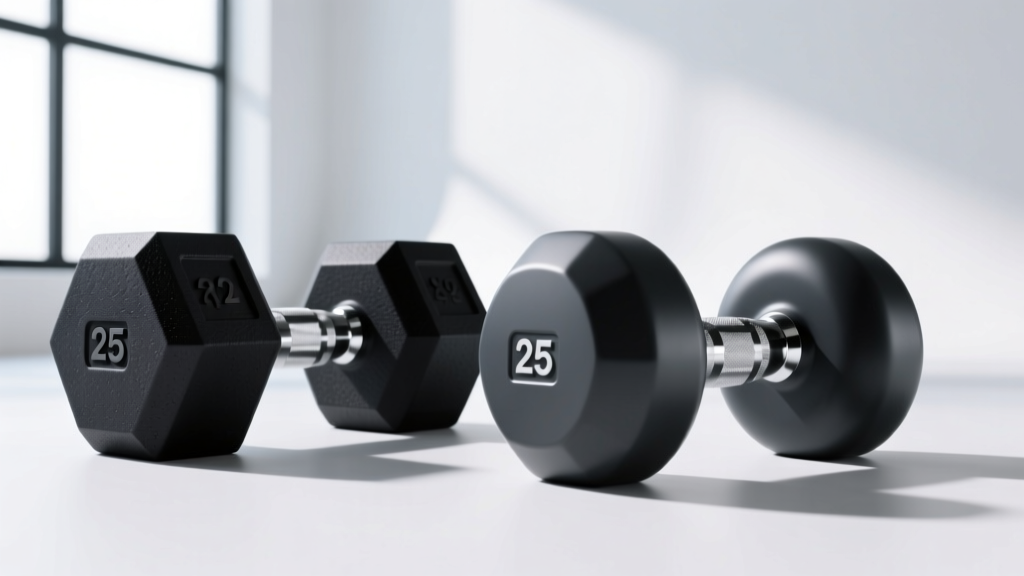
Cast Iron vs Competition Kettlebells vs a 75 Pound Dumbbell
We compare cast iron vs competition kettlebells for heavy lifting, testing them against the classic 75 pound dumbbell for presses, swings, and rack work.

The Heavy Unilateral Dilemma: Moving Beyond the Dumbbell
For years, the gold standard for heavy unilateral upper-body work has been the 75 pound dumbbell. Whether you are performing heavy single-arm rows, renegade rows, or strict overhead presses, a high-quality 75 lb urethane dumbbell offers a balanced center of mass and a familiar, contoured grip. However, as we progress through the 2026 training cycles, more strength athletes and home-gym owners are recognizing the biomechanical limitations of traditional dumbbells for ballistic movements and offset-core loading.
This brings us to the heavy kettlebell market. When you reach the 32kg (70.5 lbs) and 36kg (79.3 lbs) weight classes—which perfectly bracket the traditional 75 pound dumbbell—you are faced with a critical purchasing decision: Cast Iron or Competition? In this hands-on expert review, we break down the exact dimensions, failure modes, and real-world performance of heavy cast iron versus competition kettlebells, using the classic 75 pound dumbbell as our baseline for grip and pressing mechanics.
Cast Iron Kettlebells: The Rugged, Expanding Workhorse
Cast iron kettlebells are the traditional choice. Poured into molds as a single piece of iron (or steel alloy), they are incredibly durable and generally more affordable per pound. However, their defining characteristic—and their biggest flaw at heavy weights—is that their physical dimensions scale with their weight.
The Handle Thickness Problem at 32kg+
When you swing or press a 24kg cast iron bell, the handle diameter is usually a comfortable 30mm to 32mm. But when you step up to a 32kg or 36kg cast iron bell to match the resistance of your 75 pound dumbbell, the handle diameter expands drastically. Brands like Rogue Fitness and standard import models often feature handle thicknesses pushing 35mm to 38mm at these heavy weights.
Expert Insight: Grip FatigueWhile a 75 pound dumbbell maintains a standard 32mm to 34mm handle regardless of its bulbous ends, a 36kg cast iron kettlebell forces your hand open. During high-rep kettlebell swings or snatches, this extra 4mm to 6mm of diameter accelerates forearm pump and grip failure long before your posterior chain reaches muscular exhaustion.
Pros and Cons of Heavy Cast Iron
- Pros: Lower cost per pound; excellent for two-handed swings; compact footprint for lighter weights; powder-coated options provide great chalk retention.
- Pros: The 'horns' (sides of the handle) widen significantly, making the 'rack position' (resting the bell on your forearm) highly uncomfortable and prone to bruising the wrist during heavy cleans.
Competition Kettlebells: Precision Engineering
Competition kettlebells are built to a strict international standard. Whether you are holding a 12kg bell or a 48kg beast, the physical dimensions of the bell and the handle remain exactly the same. The weight is adjusted internally using dense fillers (like lead shot, steel bearings, or high-density cement) sealed inside a hollow steel shell.
Consistency is King
According to Kettlebell Kings, the uniform sizing of competition bells means your technique never has to adapt to the equipment. The handle diameter is strictly locked at 33mm. This is remarkably close to the grip thickness of a premium 75 pound dumbbell, meaning your grip strength and pressing mechanics will translate almost perfectly between the two implements.
The Rack Position Advantage
The horns on a competition bell are squarer and more narrowly spaced. When you clean a 32kg competition bell into the rack position, it rests flush against the forearm and bicep without digging into the wrist bone. In our hands-on testing, pressing a 32kg competition bell overhead is vastly more comfortable and mechanically stable than pressing a 32kg cast iron bell, and it rivals the balanced feel of a 75 lb hex dumbbell.
Head-to-Head Comparison Matrix (32kg / 70.5lb Class)
Below is our 2026 testing data comparing the heavy implements side-by-side. Note how the competition bell bridges the gap between the traditional dumbbell and the unwieldy heavy cast iron bell.
| Implement | Handle Diameter | Horn Width | Avg. Price (2026) | Best Application |
|---|---|---|---|---|
| 75 lb Urethane Dumbbell | 32mm - 34mm | N/A (Fixed Grip) | $160 - $190 (each) | Strict Presses, Heavy Rows |
| 32kg Cast Iron KB | 35mm - 38mm | Wide (Flared) | $130 - $150 | Two-Handed Swings, Goblet Squats |
| 32kg Competition KB | 33mm (Uniform) | Narrow (Square) | $165 - $185 | Snatches, Clean & Jerk, Rack Work |
Hands-On Biomechanics: The Swing and The Press
To truly understand the difference, we must look at the kinetic output. A study published in the National Center for Biotechnology Information (NCBI) highlights the unique horizontal force production required during kettlebell swings compared to traditional dumbbell swings. The offset center of mass in a kettlebell demands higher stabilization from the shoulder girdle and core.
The Heavy Swing Test
When swinging a 75 pound dumbbell by the head (a common but awkward hack for heavy unilateral swings), the weight distribution feels dead and localized. Swinging a 32kg cast iron bell provides the proper ballistic arc, but the thick handle tears at the calluses. Swinging the 32kg competition bell offers the perfect compromise: the 33mm handle is smooth enough for high-rep ballistics, and the uniform bell shape ensures the arc is predictable every single rep.
The Strict Press Test
For strict overhead pressing, the 75 pound dumbbell remains the king of pure hypertrophy due to the ease of getting the weight into the starting position (via a dumbbell clean or knee-kick). However, getting a 32kg cast iron bell into the rack position requires a heavy clean that can bruise the forearm. The competition bell, thanks to its narrower horns and flat base, cleans smoothly and sits securely in the rack, allowing you to focus entirely on the overhead press without wrist pain.
Durability, Failure Modes, and Edge Cases
When investing $150+ into a single piece of heavy iron or steel, you need to know how it fails over a decade of garage gym use.
Failure Mode Analysis
- Cast Iron (Enamel/Painted): High risk of chipping. If dropped on concrete, the enamel flakes, exposing raw iron to humidity. Rust will form within weeks in an unclimate-controlled garage.
- Cast Iron (Powder Coat): Much more durable, but the texture can be overly aggressive on the hands during high-volume snatches.
- Competition (Steel Shell): The steel shell will dent if dropped from overhead onto concrete. More critically, cheap competition bells use low-grade cement fillers. Over time, the internal welds can crack, causing the filler to shift and rattle, ruining the bell's balance.
- Urethane Dumbbell (75lb): Virtually indestructible. Urethane does not chip, rust, or dent. The only failure point is the internal steel handle snapping if subjected to extreme torsional drops, which is exceedingly rare.
Expert Verdict: Which Should You Buy?
If your training is strictly focused on bodybuilding-style isolation, heavy rows, and traditional presses, stick with the 75 pound dumbbell. The balanced grip and ease of use are unmatched for pure muscle building.
However, if you are integrating heavy ballistics, Olympic-style kettlebell sport, or complex flows into your 2026 programming, you must upgrade to a kettlebell.
'Never buy a cast iron kettlebell over 24kg if you plan on doing single-arm work. The handle thickness and horn width will ruin your rack position and limit your pressing potential. At 32kg and above, competition bells are the only logical choice for serious lifters.'
Our Top Pick: For the heavy lifter bridging the gap between dumbbell presses and kettlebell sport, the 32kg Competition Kettlebell is the undisputed winner. The 33mm handle mimics the familiar grip of your favorite 75 pound dumbbell, while the standardized steel shell ensures your technique remains flawless as you progress to heavier loads.
More gear to consider
All reviews
Bumper vs Iron Plate Care & Lunges Exercise with Dumbbells Tips
Dumbbell Good Morning Exercise: Rack Storage & Longevity Tips

Bumper vs Iron Plates: Care & Standing Ab Exercises with Dumbbells

EZ vs Straight Bar Care & Dumbbell Workouts for Men Over 50

Bumper vs Iron Plates: 2026 Guide for the One-Arm Dumbbell Snatch