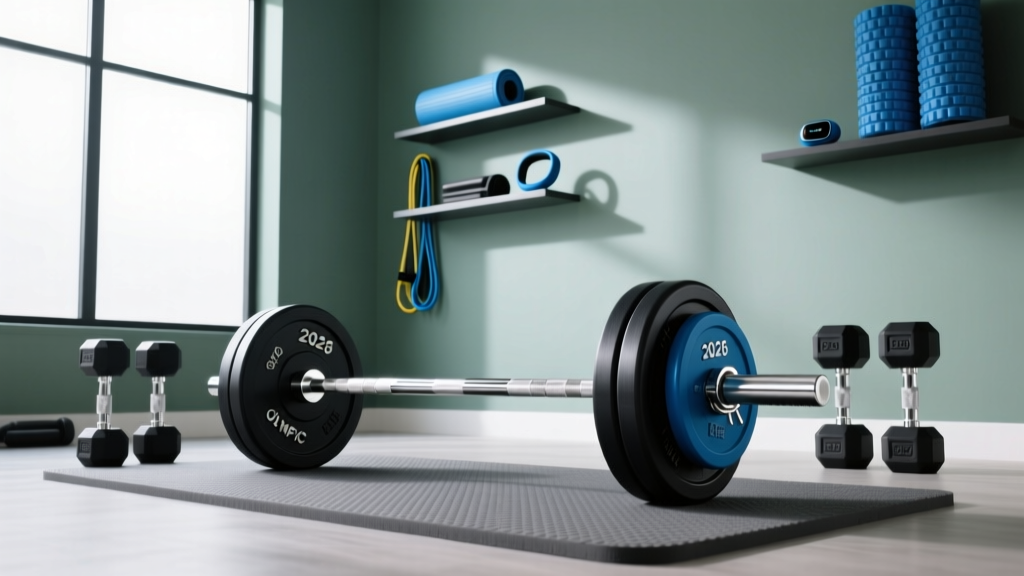
Beyond the Chest and Biceps Workout with Dumbbells: Barbell Guide
Upgrade from a basic chest and biceps workout with dumbbells. Our 2026 Olympic barbell buying guide covers weight tolerances, knurling, and top picks.

Why Upgrade From a Chest and Biceps Workout with Dumbbells?
While a targeted chest and biceps workout with dumbbells is excellent for unilateral symmetry, joint-friendly isolation, and stabilizer recruitment, intermediate and advanced lifters inevitably hit a progressive overload ceiling. Commercial gyms rarely stock hex or urethane dumbbells past 100 or 120 lbs. Furthermore, the sheer neurological demand of stabilizing heavy dumbbells during incline presses or bent-over biceps rows limits the absolute mechanical tension you can apply to the target muscle.
To break through hypertrophy plateaus and safely move maximal loads in 2026, integrating a high-quality Olympic barbell into your home or garage gym is non-negotiable. A barbell allows for micro-loading via fractional plates, superior central nervous system (CNS) recruitment, and safer failure points on compound chest movements. But not all bars are created equal. This in-depth buying guide dissects barbell weight tolerances, steel quality, and knurling patterns to help you select the perfect shaft for heavy pressing and rowing.
Barbell Weight, Steel, and Tensile Strength
The foundation of any Olympic barbell is its steel. When evaluating bars for heavy bench pressing and barbell biceps curls, you must look past the basic 20kg (44 lbs) or 15kg (33 lbs) weight classifications and examine the tensile strength, measured in Pounds per Square Inch (PSI).
- Budget Tier (Under $150 | 150k - 165k PSI): These bars are prone to permanent deformation (bending) if you regularly load them past 350 lbs. They are acceptable for beginners, but will fail under the heavy eccentric loads of advanced chest hypertrophy blocks.
- Mid-Tier Multipurpose ($250 - $399 | 190k PSI): The gold standard for home gyms. Bars like the Rogue Ohio Bar utilize high-grade spring steel that flexes under load but always returns to true center.
- Elite Tier ($500+ | 210k - 215k+ PSI): Reserved for competitive powerlifters and specialized weightlifters. These bars offer virtually zero permanent yield, even under 800+ lb loads.
Expert Insight: Yield vs. Tensile Strength
Many manufacturers market 'tensile strength' (the point where steel snaps), but as a consumer, you should care more about yield strength (the point where steel bends permanently). A 190k PSI tensile bar typically yields around 160k-170k PSI, which is more than enough to handle the heaviest raw bench presses in the world without taking a permanent set.
Decoding Knurling: The Grip Factor for Hypertrophy
If you are transitioning from a chest and biceps workout with dumbbells—where the handle is usually a smooth, contoured rubber or neoprene grip—the raw steel knurl of a barbell will be a shock to your hands. Knurling is the machined pattern on the shaft that provides friction. For hypertrophy-focused training (high volume, moderate-to-heavy weight), the wrong knurl will tear your calluses and ruin your workout.
1. Mountain Knurl (Aggressive)
Mountain knurling features sharp, prominent peaks that dig deeply into the skin. It is designed for heavy, low-rep powerlifting deadlifts where grip failure is the primary enemy. Verdict: Avoid for high-rep chest and biceps routines. The aggressive bite will shred your palms during barbell curls and skull crushers.
2. Hill Knurl (Passive)
Hill knurling is characterized by shallow, rounded peaks. It feels smooth and is highly forgiving on the hands, making it ideal for high-rep Olympic weightlifting or beginners. Verdict: Too slick for heavy, sweaty bench press sessions where the bar might slip during the concentric lockout.
3. Volcano Knurl (The 2026 Gold Standard)
Volcano knurling features a deep, sharp rim with a flat, machined top. It provides the 'bite' of a mountain knurl but distributes the pressure across the flat top, preventing skin tearing. According to extensive testing by Garage Gym Reviews, volcano knurling is currently the premier choice for multipurpose bars used in bodybuilding and powerbuilding splits.
2026 Olympic Barbell Comparison Matrix
Below is a structured comparison of the top multipurpose barbells ideal for replacing your dumbbell routines with heavy barbell compounds.
| Barbell Model | Tensile Strength | Knurl Type | Shaft Diameter | Est. Price (2026) |
|---|---|---|---|---|
| Rogue Ohio Bar (Stainless) | 190k PSI | Volcano/Mountain Hybrid | 28.5mm | $395 |
| Rep Fitness Excalibur | 190k PSI | True Volcano | 28.5mm | $349 |
| Kabuki Strength Transformer | 200k+ PSI | Deep Volcano | 28.5mm | $699 |
| American Barbell Elite | 190k PSI | Smooth Hill | 28.0mm | $285 |
Sleeve Construction: Bushings vs. Bearings
When performing a chest and biceps workout with dumbbells, the weights rotate freely in your hands, reducing torque on your wrists. Barbells achieve this rotation via the sleeve construction. However, the speed of that rotation matters immensely.
'For slow, controlled hypertrophy movements like the bench press, barbell row, or heavy biceps curl, you want a barbell with bronze bushings, not needle bearings. Bearings allow the sleeve to spin violently fast, which can cause the bar to roll out of your grip during a slow eccentric lowering phase.'
Needle bearings are strictly necessary for Olympic weightlifting (snatches, cleans). For a powerbuilding or bodybuilding focus, composite or bronze bushings provide the perfect, controlled resistance that keeps the bar stable in your palms during heavy presses.
Shaft Diameter and Whip
The diameter of the barbell shaft dictates how the bar feels in your grip and how much 'whip' (flex) it exhibits under load.
- 28mm: Standard for Olympic weightlifting. Highly flexible. The excessive whip can make heavy bench presses feel unstable at the lockout.
- 28.5mm: The ultimate multipurpose diameter. It fills the hand perfectly for heavy rows and curls while maintaining enough rigidity for a stable bench press.
- 29mm: Standard for powerlifting. Extremely stiff and thick. While excellent for squats and deadlifts, a 29mm shaft can cause forearm fatigue and grip failure during high-volume biceps workouts.
Based on ExRx biomechanical standards for grip width and wrist extension, a 28.5mm shaft allows for optimal wrist stacking during the bench press, minimizing joint strain while maximizing force transfer to the pectorals.
Maintenance Protocol for Bare and Stainless Steel
Upgrading from rubber-coated dumbbells to a raw steel Olympic barbell requires a shift in your maintenance routine. Even high-end stainless steel bars accumulate dead skin, chalk, and ambient moisture in the knurling valleys.
The 5-Minute Weekly Barbell Care Routine
- Brush: Use a stiff brass brush (never steel, which damages the zinc or stainless finish) to aggressively sweep out chalk and skin from the knurl.
- Wipe: Apply a light mist of 3-in-One oil or a specialized barbell cleaner to a microfiber cloth.
- Buff: Wipe down the entire shaft and sleeves. This displaces moisture and prevents oxidation, ensuring the bar's spin remains frictionless for years.
Final Verdict: Making the Transition
Transitioning from a chest and biceps workout with dumbbells to a barbell-centric program will dramatically increase your mechanical tension and overall muscle fiber recruitment. By prioritizing a 190k PSI tensile strength, a 28.5mm shaft, and a volcano knurl pattern, you secure a piece of equipment that will support your hypertrophy goals for decades. Dumbbells will always have a place in your arsenal for isolation and stretch-focused movements, but the Olympic barbell remains the undisputed king of foundational mass building.
More gear to consider
All reviews
Bumper vs Iron Plates: Trends & Incline Dumbbell Press Without Bench

Rubber Hex vs Urethane: Best for Dumbbell Sumo Squats for Glutes
Optimize Your Training Program with Dumbbells: Rubber Hex vs Urethane
Wrist Exercises With Dumbbells: Neoprene Grip Mistakes & Fixes
EZ vs Straight Bar Space Guide: Why Is a Dumbbell Called a Dumbbell?
