
How Many Times Should I Lift Dumbbells a Day? Neoprene Beginner Guide
Discover how many times you should lift dumbbells a day. This beginner guide covers weekly frequency, routines, and choosing neoprene weights for home.

The Truth About "How Many Times Should I Lift Dumbbells a Day"
When you first bring a set of colorful, soft-grip weights into your living room, enthusiasm is high. It is incredibly common for beginners to ask: how many times should I lift dumbbells a day? The short answer is that you should not be lifting multiple times a day. Instead, the focus must shift to how many days a week you train, and the daily volume (sets and reps) you perform during a single session.
Lifting weights triggers micro-tears in your muscle fibers. According to Mayo Clinic's strength training guidelines, muscles require roughly 48 hours to recover and rebuild stronger. If you perform a full-body dumbbell routine in the morning and attempt to do it again in the evening, you interrupt the muscle protein synthesis process, leading to central nervous system fatigue and a higher risk of joint strain.
Beginner Rule of Thumb: Aim for 2 to 3 full-body dumbbell sessions per week, spaced out by at least one rest day. A single session should last 30 to 45 minutes.In this step-by-step guide, we will map out exactly how to structure your weekly frequency and how to maximize your results using neoprene-coated dumbbells, the most popular entry-level free weight for home gyms.
Step 1: Selecting the Right Neoprene Dumbbells for Home Use
Neoprene (polychloroprene) is a synthetic rubber that provides a soft, slightly textured grip. For beginners working out in apartments or home gyms with hardwood floors, neoprene is ideal because it is relatively quiet and less likely to scuff flooring compared to bare cast iron.
When shopping in 2026, you will primarily encounter three reputable brands in the neoprene space:
- CAP Barbell Neoprene Hex Dumbbells: The gold standard for home use. The hexagonal head prevents the weight from rolling away between sets. As of early 2026, a pair of 10 lb CAP neoprene dumbbells averages $32 to $36.
- Yes4All Neoprene Coated Dumbbells: A budget-friendly alternative with a slightly thinner handle diameter, which is excellent for users with smaller hands. A 10 lb pair typically costs around $24 to $28.
- Tone Fitness Neoprene Sets: Often sold in multi-pair racks (e.g., 3, 5, and 8 lb sets). Great for circuit training, though the neoprene coating is slightly more prone to cosmetic peeling over time.
Pro-Tip on Sizing: Neoprene dumbbells generally max out at 15 to 20 pounds. If you are buying your first pair, start with a weight that allows you to complete 12 repetitions with the last 3 reps feeling challenging. For most untrained adults, this means starting with 8 lb to 12 lb dumbbells for lower body movements, and 5 lb to 8 lb dumbbells for upper body pressing.
Step 2: Understanding Neoprene vs. Other Coatings
Why choose neoprene over other materials? Here is a quick comparison matrix to help you understand where your gear fits in the broader free weights market.
| Material | Pros | Cons | Best For |
|---|---|---|---|
| Neoprene | Soft grip, color-coded, floor-friendly, affordable. | Degrades in UV light, gets slick with heavy sweat, low max weight. | Beginners, apartment living, light circuit training. |
| Virgin Rubber | Highly durable, available in heavy weights, strong grip. | Can have a strong initial odor, harder on floors if dropped. | Intermediate lifters, garage gyms. |
| Urethane | Virtually indestructible, odorless, premium knurled handles. | Very expensive, overkill for light home use. | Commercial gyms, advanced home gyms. |
Step 3: Your 3-Day Beginner Neoprene Routine
To answer the question of how many times you should lift, we apply the 3-day split. This routine targets the entire body, ensuring balanced muscle development. Perform this routine on Monday, Wednesday, and Friday (or any non-consecutive days).
The Warm-Up (5 Minutes)
Never lift cold. Do 2 minutes of jumping jacks, followed by 15 bodyweight squats and 10 arm circles to lubricate the shoulder joints.
The Core Workout
For each exercise, use a 2-1-2 tempo: 2 seconds lowering the weight, 1 second pause at the bottom, and 2 seconds lifting. This eliminates momentum and forces the muscle to do the work.
- Goblet Squat (Lower Body)
- Setup: Hold one 10 lb or 12 lb neoprene dumbbell vertically against your chest, cupping the top head with both hands.
- Action: Push your hips back and descend until your thighs are parallel to the floor. Keep your chest proud.
- Volume: 3 sets of 10-12 repetitions. Rest 60 seconds between sets.
- Dumbbell Floor Press (Chest & Triceps)
- Setup: Lie on your back on a yoga mat, knees bent, feet flat. Hold a neoprene dumbbell in each hand (8 lbs to 12 lbs each).
- Action: Press the weights up until your arms are straight. Lower them until your triceps gently touch the floor.
- Volume: 3 sets of 10-12 repetitions. Rest 60 seconds.
- Bent-Over Row (Back & Biceps)
- Setup: Hinge at your hips, keeping your back flat at a 45-degree angle. Let the dumbbells hang.
- Action: Pull the weights toward your hip pockets, squeezing your shoulder blades together at the top.
- Volume: 3 sets of 10-12 repetitions. Rest 60 seconds.
- Overhead Shoulder Press (Shoulders)
- Setup: Stand tall or sit on a sturdy chair. Hold lighter dumbbells (5 lbs to 8 lbs) at shoulder height.
- Action: Press straight overhead without arching your lower back.
- Volume: 2 sets of 12-15 repetitions. Rest 45 seconds.
Step 4: Caring for Your Neoprene Gear and Knowing When to Upgrade
Neoprene is highly durable indoors, but it has two specific failure modes you must avoid:
Warning: Never store your neoprene dumbbells in direct sunlight or outside on a patio. UV radiation breaks down the polychloroprene polymer chains, causing the coating to dry out, crack, and flake off onto your hands and floors within a matter of months.
Additionally, neoprene can become slippery when exposed to heavy sweat. Always wipe your dumbbells down with a damp microfiber cloth after use. Avoid using harsh chemical cleaners like bleach or ammonia-based sprays, as these will strip the moisture from the synthetic rubber.
When to Upgrade: As noted by Harvard Health Publishing, progressive overload is required to continue building strength. Once you can easily complete 3 sets of 15 repetitions on your floor presses and goblet squats with your heaviest neoprene pair (usually 15 or 20 lbs) without breaking form, you have outgrown them. At this stage, transition to adjustable steel dumbbells or rubber-coated hex dumbbells that allow you to scale up to 30, 40, or 50 pounds.
Frequently Asked Questions
Can I do ab exercises with neoprene dumbbells every day?
While your core muscles recover slightly faster than large muscle groups like the quads or chest, doing weighted dumbbell side bends or Russian twists every single day is unnecessary and can lead to lower back strain. Stick to training your core 2 to 3 times a week, aligning with your main dumbbell routine.
Will lifting light neoprene dumbbells tone my arms?
The term "toning" is a fitness myth; you are actually building a small amount of muscle while losing body fat. Light neoprene dumbbells (3-5 lbs) are excellent for muscular endurance and physical therapy, but to change the actual shape of your arms, you must eventually challenge the muscles with weights that cause fatigue by the 12th repetition.
Is it better to lift dumbbells in the morning or evening?
Physiologically, core body temperature and joint mobility peak in the late afternoon, which can slightly improve strength output. However, the "best" time is simply the time you can consistently adhere to. Consistency over weeks and months will always outperform minor circadian advantages.
More gear to consider
All reviews
Maintaining Beginner Dumbbells for Women: Rubber Hex vs Urethane

Clear Floor Space for the Dumbbell V Up: Best Storage Racks
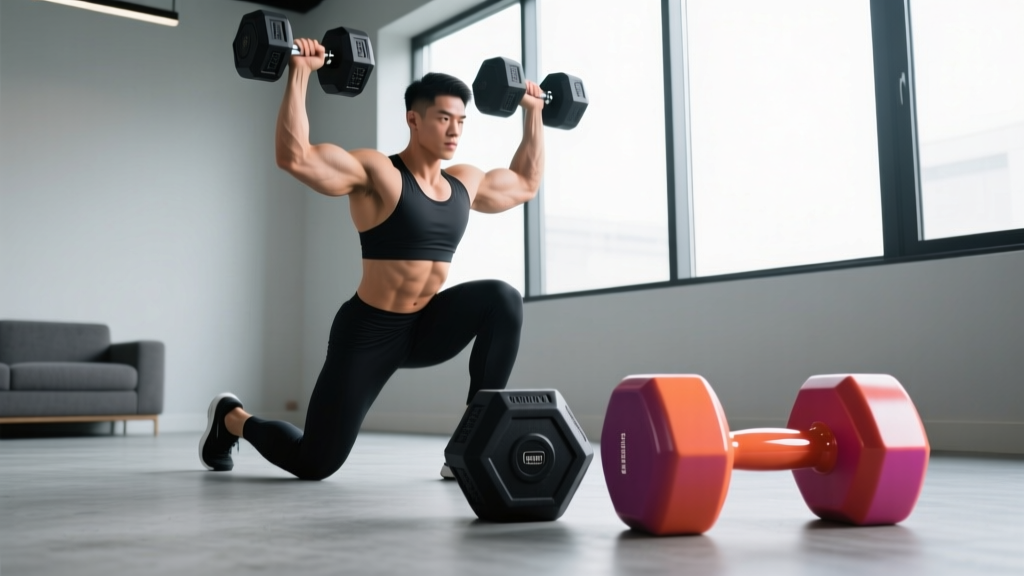
Half Kneeling Dumbbell Shoulder Press: Rubber Hex vs Urethane Dumbbells

Best Storage for Dumbbell Workouts for Chest Without a Bench

Collar Clamp Types Compared: Incline Dumbbell Skull Crushers & Squats
