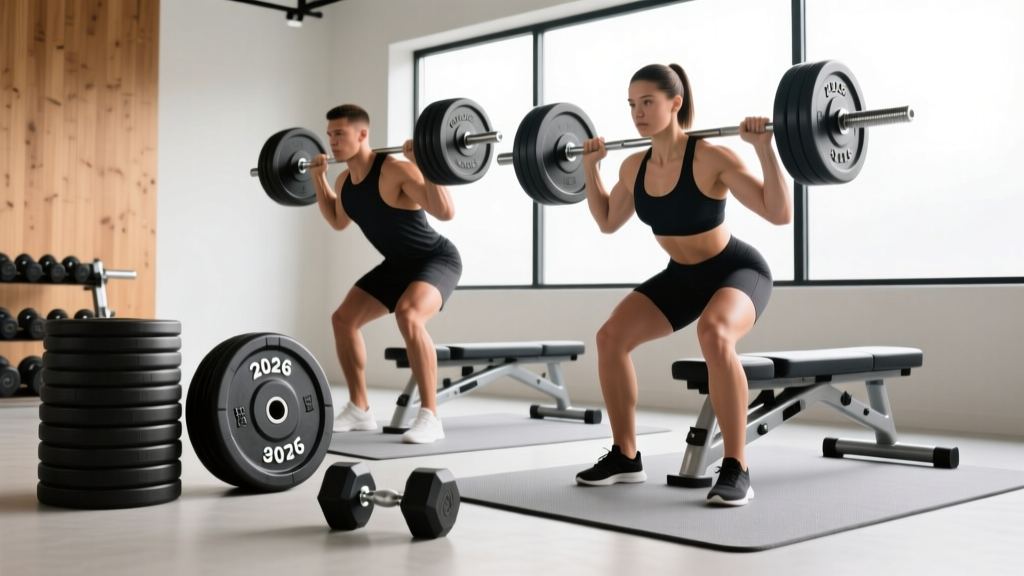
Bumper vs Iron Plates: 2026 Trends & Lateral Dumbbell Raises Form
Analyze 2026 bumper vs iron plate market trends, pricing, and how plate thickness impacts biomechanics and lateral dumbbell raises form.

The 2026 Free Weight Market: Bumper vs. Iron Plate Shifts
The home and commercial gym equipment market has undergone a radical bifurcation as we move through 2026. While the functional fitness boom of the previous decade cemented rubber bumper plates as the undisputed king of the weight room, a massive counter-trend is currently reshaping the residential and hypertrophy-focused commercial sectors. Today, precision-machined cast iron plates are experiencing a fierce renaissance. According to the Mordor Intelligence Fitness Equipment Market Report, the broader fitness equipment sector is projecting a steady CAGR of 5.4% through 2030, but the sub-segment for precision free weights and adjustable plate-loaded systems is outpacing standard rubberized equipment by nearly 2-to-1 in residential sales.
Why the shift? The modern lifter is no longer just dropping barbells from overhead; they are optimizing for biomechanical efficiency, space constraints, and highly specific isolation movements. This market evolution forces a critical re-evaluation of the classic bumper plate vs iron plate comparison, especially when we analyze how plate dimensions directly dictate the ergonomics of accessory work—most notably, how plate thickness alters your lateral dumbbell raises form when using loadable dumbbell handles.
Material Economics: Cost Per Pound and Durability Metrics
Before diving into biomechanics, we must address the economic realities of the 2026 free weight market. Manufacturing bottlenecks for vulcanized rubber have stabilized, but the cost of raw steel and CNC machining time continues to dictate premium pricing for calibrated iron. Below is a comparative market analysis of the dominant plate materials available this year.
| Material Type | Avg. Cost (USD/lb) | Shore A Durometer / Density | Width (per 45lb Plate) | Primary Use Case |
|---|---|---|---|---|
| Crumb Rubber (Hi-Temp) | $1.25 - $1.50 | Low Density (High Bounce) | 3.1 inches | Outdoor / Garage Drop Zones |
| Virgin Rubber Bumper | $1.75 - $2.25 | 85-90 Shore A (Dead Bounce) | 2.1 inches | CrossFit / Olympic Lifting |
| Urethane Competition | $3.50 - $5.00+ | 90+ Shore A (Zero Bounce) | 1.5 inches | Commercial / Elite Facilities |
| Standard Cast Iron | $1.10 - $1.40 | N/A (Solid Metal) | 1.3 inches | Powerlifting / Bodybuilding |
| CNC Machined Steel | $1.50 - $2.00 | N/A (Precision Calibrated) | 1.1 inches | Equipped Lifters / Home Gyms |
As the data illustrates, iron plates offer a distinct spatial advantage. A standard 45lb cast iron plate is nearly a full inch thinner than a virgin rubber bumper, and almost two inches thinner than a crumb rubber Hi-Temp plate. When loading a standard Olympic barbell, this dictates how much weight you can fit on the sleeve. But when loading a plate-loaded dumbbell handle, this thickness discrepancy becomes a profound biomechanical variable.
The Biomechanical Crossover: Plate-Loaded Dumbbells and Isolation
The surge in popularity of loadable dumbbell handles—such as the Rogue Loadable Dumbbell Handles or the Titan Fitness Plate-Loaded Dumbbell Horns—has bridged the gap between barbell plate inventories and dumbbell isolation work. Lifters are increasingly using their barbell plate sets to load dumbbells for heavy, micro-loaded isolation movements. However, the physical dimensions of the plates you choose will drastically alter the center of mass, directly impacting your joint mechanics.
How Plate Thickness Alters Lateral Dumbbell Raises Form
The lateral raise is an exercise where the moment arm (the distance from the axis of rotation in the shoulder to the center of mass of the weight) is exceptionally long. Proper lateral dumbbell raises form requires the weight to act as a direct extension of the arm, minimizing unwanted torque on the rotator cuff and maximizing tension on the medial deltoid. According to biomechanical breakdowns provided by ExRx Kinesiology Resources, any lateral shift in the dumbbell's center of mass exponentially increases the shear force on the glenohumeral joint.
⚠️ BIOMECHANICAL WARNING: Loading 10lb or 15lb Hi-Temp crumb rubber bumpers onto a plate-loaded dumbbell handle creates a dumbbell that is over 12 inches wide. This pushes the bulk of the mass far away from your wrist. When you attempt a lateral raise, the extreme lateral center of mass forces your wrist into ulnar deviation and places dangerous rotational torque on the shoulder capsule, completely compromising your lateral dumbbell raises form and increasing injury risk.Conversely, utilizing machined iron plates solves this issue entirely. A pair of 10lb machined iron plates adds only about 2.6 inches of total width to the dumbbell handle. The mass remains tightly clustered around the grip, mimicking the ergonomics of a high-quality fixed hex dumbbell. This allows the lifter to maintain a neutral wrist, lead with the elbow, and execute strict lateral dumbbell raises form without fighting the rotational inertia of thick rubber bumpers.
Market Sub-Trends: The Hypertrophy Home Gym
The 2026 consumer data reveals a fascinating behavioral shift among home gym owners. During the 2020-2023 fitness boom, buyers prioritized versatility and floor protection, leading to massive sales in thick, drop-safe crumb rubber bumpers. Today, the market is driven by the "Hybrid Hypertrophy" demographic—lifters who combine heavy barbell compound movements with highly optimized, machine-like dumbbell isolation work.
- The Space-Constrained Urban Lifter: Opting for thin, CNC-machined steel plates. These allow for maximum weight on shorter sleeves and provide the tight center-of-mass required for strict isolation form.
- The Garage CrossFitter: Still reliant on virgin rubber bumpers (88 Shore A durometer) for dead-bounce safety during high-rep Olympic lifts, but increasingly purchasing a separate set of fixed urethane dumbbells for accessory work to avoid the biomechanical compromises of plate-loaded handles.
- The Powerbuilding Enthusiast: Driving the resurgence of traditional cast iron. The lower cost-per-pound allows them to buy massive 45lb and 100lb iron plates for squats and deadlifts, while using fractional iron plates (1.25lb and 2.5lb) on loadable handles for precise progressive overload on lateral raises and tricep extensions.
Micro-Loading and the Iron Advantage
Another critical factor in the bumper vs iron plate comparison is the availability and cost of fractional plates. Perfecting lateral dumbbell raises form often requires micro-loading in increments of 1.25 lbs or 2.5 lbs per hand. The market for fractional iron plates is vast and inexpensive (often under $15 for a pair of 1.25lb change plates). In contrast, fractional bumper plates are virtually non-existent below 5lbs due to the physical limitations of molding rubber around a steel collar. If you are chasing hypertrophy and need to progress your lateral raises from 20lbs to 22.5lbs per hand, an iron plate ecosystem is the only mathematically and physically viable route on a loadable handle.
Consumer Purchasing Framework: Building the Hybrid Home Gym
If you are outfitting a home gym in 2026 and want to balance heavy barbell work with strict dumbbell isolation, we recommend a tiered purchasing strategy that leverages the strengths of both materials.
- Base Layer (Barbell Work): Invest in a set of Virgin Rubber Bumpers (10lb to 45lb). The 85+ Shore A durometer ensures safe drops from the shoulder or overhead without destroying your platform, while the thinner profile (compared to crumb rubber) allows you to fit up to 400+ lbs on a standard barbell sleeve.
- Isolation Layer (Dumbbell Work): Purchase a dedicated set of Machined Iron Fractional Plates (1.25lb, 2.5lb, 5lb, and 10lb). When loaded onto 15-inch loadable dumbbell handles, these iron plates keep the center of mass tight to the grip. This is the secret to maintaining flawless lateral dumbbell raises form, heavy skull crushers, and strict Bulgarian split squats without the wobbling inertia caused by thick rubber.
- Collar Selection: When using iron plates on loadable dumbbell handles for lateral raises, always use low-profile aluminum lock collars rather than bulky spring clips. Spring clips add lateral width and can dig into your forearms during movements that require the dumbbell to rest against your body, such as goblet squats or hammer curls.
Expert Verdict & Market Forecast
The narrative that bumper plates have entirely replaced iron is a relic of the past decade. As the 2026 market matures, consumers are becoming highly educated on biomechanics, spatial efficiency, and material science. Bumper plates remain the undisputed champion for dynamic, ground-based barbell movements where drop-safety and noise reduction are paramount. However, for the intricate, torque-heavy world of dumbbell isolation work, iron has reclaimed its throne.
Understanding the physical dimensions of your equipment is just as important as the weight stamped on the side. By recognizing how plate thickness alters the center of mass, lifters can protect their joints, optimize their leverage, and finally perfect their lateral dumbbell raises form. Whether you are buying Rogue Machined Iron Plates or sourcing vintage cast iron, prioritizing spatial density for your accessory work will yield vastly superior hypertrophy outcomes and joint longevity in the years to come.
More gear to consider
All reviews
2026 Bumper Plate vs Iron Plate Trends & Dumbbell Rows Machine

Olympic Barbell Weight & Knurling: Beyond the Monkey Foot Dumbbell
Beyond the Dumbbell Thruster Workout: Olympic Barbell Knurling Guide
EZ Curl Bar vs Straight Bar: Curls & Dumbbell Chest Press Good Weight

Rubber Hex vs Urethane Dumbbells: Value & Dumbbell Bracelet for Men
