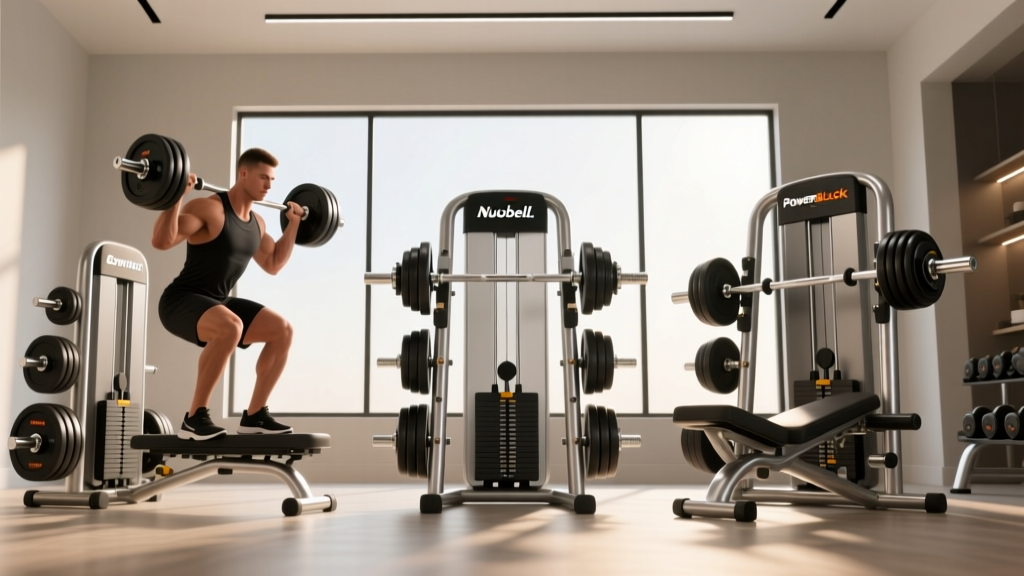
Overhead Dumbbell Hold Errors: Adjustable Dumbbell Fixes
Fix common overhead dumbbell hold mistakes and wrist pain. We compare top adjustable dumbbells to find the best grip and balance for overhead pressing.

The Biomechanics of a Flawless Overhead Dumbbell Hold
The overhead dumbbell hold is a deceptively brutal isometric exercise. Whether you are using it as a finisher for shoulder hypertrophy, a stabilizer for Olympic lifting carryover, or a pause at the top of a strict press, the biomechanical stack required is unforgiving. According to the ExRx Exercise Directory, a proper overhead position demands that the wrist, elbow, and shoulder align in a single vertical plane to minimize shear force on the rotator cuff and radiocarpal joints.
However, when transitioning from traditional fixed hex dumbbells to adjustable dumbbells, lifters frequently encounter new failure modes. The handle geometry, weight distribution, and physical footprint of adjustable models can sabotage your wrist alignment and shoulder stability. In this troubleshooting guide, we break down the most common overhead dumbbell hold mistakes and evaluate how the top adjustable dumbbells on the market in 2026 either exacerbate or solve these issues.
3 Common Overhead Dumbbell Hold Mistakes (And Equipment Culprits)
1. Wrist Extension (The 'Broken Wrist' Error)
The most frequent error during an overhead dumbbell hold is allowing the wrist to fall into hyperextension (bending backward at a 45-degree angle or more). This shifts the center of mass away from the forearm bones, placing immense strain on the palmar fascia and wrist flexors.
- The Equipment Culprit: Oversized handle diameters and short handle lengths. If the dumbbell handle is too thick (over 1.4 inches), lifters with smaller hands cannot wrap their fingers fully, forcing them to push with the heel of the hand and causing the wrist to bend backward.
2. Center of Mass Drift and Cage Interference
During an isometric hold, micro-fatigue sets in around the 15-second mark. If the dumbbell's weight is not evenly distributed around the grip, the lifter must expend extra energy fighting rotational torque. Furthermore, some adjustable dumbbells feature bulky external cages that physically clash with the forearm when the wrist attempts to find a neutral, stacked position.
3. Grip Supination Imbalance
Ideally, the palms should face forward (pronated) or slightly inward (neutral) during an overhead hold. Many dial-based adjustable dumbbells have wide, blocky ends that force the hands into an externally rotated position if the lifter attempts a neutral grip, causing elbow valgus stress.
⚠️ Troubleshooting Warning: If you feel a pinching sensation at the top of your shoulder during the hold, you are likely experiencing subacromial impingement. The Mayo Clinic Fitness Guidelines recommend immediately lowering the weight and assessing your scapular upward rotation rather than pushing through joint pain.2026 Adjustable Dumbbell Comparison: Overhead Suitability Matrix
Not all adjustable dumbbells are created equal when it comes to overhead mechanics. Below is a data-driven comparison of the three most popular models in home gyms today, evaluated specifically for their suitability during overhead holds and presses.
| Model | Handle Specs | Weight Distribution | Overhead Hold Rating | 2026 Street Price |
|---|---|---|---|---|
| Nuobell 80 | 1.3' dia, 6.0' length | Excellent (Mimics fixed DB) | ⭐⭐⭐⭐⭐ (Best in Class) | $429 |
| PowerBlock Elite EXP | 1.2' dia, Cage restricted | Good (Compact block) | ⭐⭐⭐⭐ (Great for Neutral) | $369 |
| Bowflex SelectTech 552 | 1.45' dia, 5.5' length | Poor (End-heavy at max) | ⭐⭐ (Causes Wrist Strain) | $399 |
Troubleshooting Guide: Fixing Your Hold by Equipment
If you are locked into a specific brand of adjustable dumbbells, you must adapt your technique to mitigate the hardware's inherent flaws. Here is your step-by-step troubleshooting protocol based on the equipment you own.
Scenario A: You Own Bowflex SelectTech 552
The SelectTech 552 is notorious for its thick, short handle and bulky weight plates that extend far past the grip. During an overhead hold, the wide plates can bump against each other or force your hands wider than your shoulder width, compromising the vertical stack.
- Switch to a Neutral Grip: Abandon the fully pronated (palms forward) hold. Turn the dumbbells inward so your palms face your ears. This clears the bulky ends from colliding and naturally aligns the radius and ulna bones.
- Use Wrist Wraps: Because the 1.45-inch handle diameter forces wrist extension for lifters with hands under 7.5 inches in circumference, invest in 24-inch stiff cotton wrist wraps. Apply them tightly directly over the radiocarpal joint to physically block hyperextension.
Scenario B: You Own PowerBlock Elite EXP
PowerBlocks feature a unique caged, rectangular design. The handle is relatively thin (1.2 inches), which is excellent for grip, but the internal cage width limits hand placement to about 5.5 inches.
- Beware the 'False Grip': Because the cage restricts wrist movement, lifters often try to open their hands slightly, resting the dumbbell on the calluses rather than wrapping the thumb. Never use a thumbless grip overhead. The cage provides a false sense of security; a slip will result in the heavy steel block dropping directly onto your face or clavicle.
- Embrace the Neutral Press: The PowerBlock is arguably the best adjustable dumbbell for neutral-grip overhead holds. The compact square footprint means the center of mass sits perfectly over the elbow joint, virtually eliminating rotational torque.
Scenario C: You Own Nuobell (or similar dial-systems like Core Home Fitness)
The Nuobell uses a twisting handle mechanism that locks standard-shaped steel plates together. It feels the most like a traditional fixed dumbbell.
- Check the Locking Collar: Before every overhead set, physically tug the weight plates. The twisting mechanism can occasionally fail to seat fully if a plate is slightly misaligned on the rack. A 5-pound plate slipping mid-hold will instantly tear a rotator cuff.
- Standard Pronated Hold: Because the handle length is a standard 6.0 inches and the diameter is a manageable 1.3 inches, you can safely perform traditional palms-forward overhead holds without excessive wrist strain.
Programming the Overhead Hold for Shoulder Health
According to research published by the National Strength and Conditioning Association (NSCA), isometric holds are highly effective for tendon rehabilitation and motor unit recruitment without the muscle damage associated by eccentric loading. To integrate the overhead dumbbell hold into your 2026 training split, use the following parameters:
- For Hypertrophy (Finisher): 3 sets of 20-30 second holds at 60% of your 1-Rep Max press. Rest 60 seconds. Focus on active shrugging (upper trap engagement) at the very top of the movement.
- For Joint Health & Rehab: 4 sets of 10-15 second holds using very light weight (10-15 lbs). Focus entirely on the 'stack'—ensuring the bicep is grazing the ear and the ribcage is pulled down to prevent lumbar hyperextension.
- For Core Integration: Perform a unilateral (single-arm) overhead dumbbell hold while executing a slow reverse lunge. The asymmetrical load forces the obliques and quadratus lumborum to fight lateral flexion.
'The overhead hold is not just a test of shoulder strength; it is a diagnostic tool. If your lower back arches excessively during the hold, you lack thoracic extension or shoulder flexion mobility. Dropping the weight and addressing the mobility deficit is always the correct troubleshooting step.'
Frequently Asked Questions
How long should I maintain the overhead dumbbell hold before failure?
For most intermediate lifters, form breakdown occurs between 25 and 40 seconds. Once the ribs begin to flare upward or the elbows start to bend, the set is over. Pushing past this point shifts the load from the deltoids and stabilizers onto the passive ligaments of the shoulder capsule.
Do wrist wraps actually help with adjustable dumbbells?
Yes, but only if applied correctly. Wrist wraps do not strengthen the wrist; they act as an artificial ligament to limit the range of motion into extension. When using thick-handled adjustable dumbbells like the Bowflex 552, wraps are practically mandatory for heavy overhead holds to prevent palmar fasciitis and wrist sprains.
Can I use an adjustable dumbbell for bottom-up kettlebell-style holds?
No. Attempting to hold an adjustable dumbbell by the weight plates (rather than the handle) to simulate a bottom-up kettlebell hold is incredibly dangerous. The plates on dial and pin-lock systems are not designed to bear load from that angle, and the locking mechanisms will disengage, dropping the steel plates directly onto your wrists or floor.
Final Verdict: Which Adjustable Dumbbell Wins for Overhead Work?
If your training heavily features overhead pressing, isometric holds, and shoulder stability work, the Nuobell 80 is the superior choice for 2026. Its traditional handle geometry allows for natural wrist stacking and accommodates both pronated and neutral grips without the cage interference of the PowerBlock or the excessive bulk of the Bowflex. However, if you strictly prefer neutral-grip pressing and prioritize a compact center of mass, the PowerBlock Elite EXP remains a highly effective, space-saving alternative. Regardless of your equipment, mastering the vertical stack and respecting the mechanical limits of your adjustable dumbbells will keep your shoulders healthy and your overhead numbers climbing.
More gear to consider
All reviews
Neoprene Dumbbell Setup & Dumbbell Shape Water Bottle Guide
Dumbbell Fly Standing Variations: 2026 Loadable Market Trends
EZ Curl Bar vs Straight Bar Value & Traps Exercises with Dumbbells

Rubber Hex vs Urethane: Best Gear for the Dumbbell Step Up Exercise
Olympic Barbell Weight & Knurling Guide: Plus Dumbbell Organizer Setups