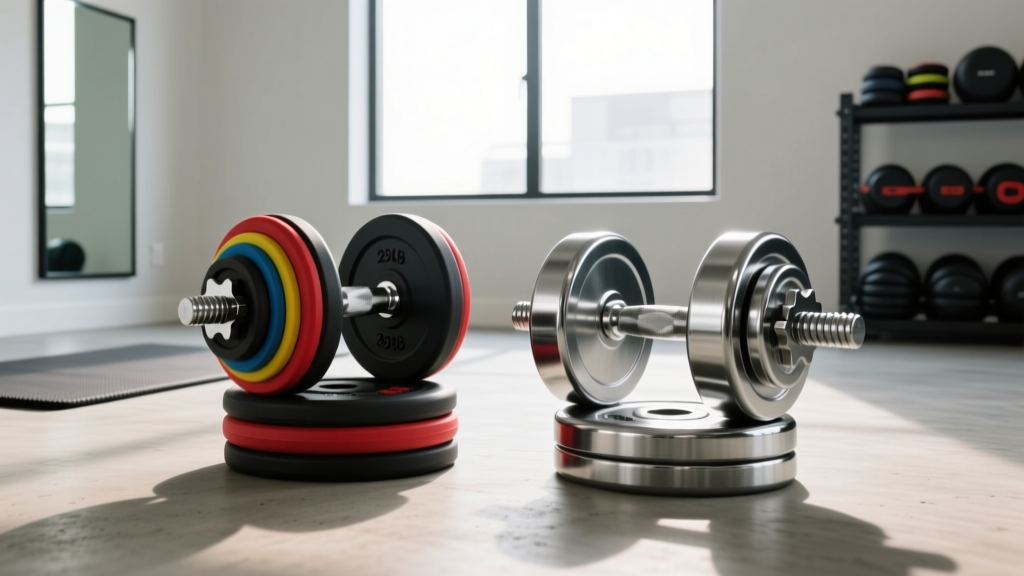
Bumper vs Iron Plates for a Dumbbell Chest and Back Workout Setup
Compare bumper vs iron plates for your home gym. Discover how your choice impacts flooring, noise, and your heavy dumbbell chest and back workout routines.

The 2026 Home Gym Dilemma: Bumper vs. Cast Iron Plates
As we navigate the 2026 home fitness landscape, the debate between bumper plates and traditional cast iron plates remains a cornerstone of garage gym design. While barbell purists often default to iron for its density and classic aesthetic, the modern hybrid gym requires a more nuanced approach. Your choice of weight plates extends far beyond the barbell sleeve; it dictates floor longevity, acoustic management, and the safety of your surrounding equipment. This is especially critical when designing a space optimized for heavy, high-impact routines.
At FitGearPulse, we have spent the last six months drop-testing, measuring durometer ratings, and analyzing the spatial footprint of the leading plate models on the market. Below, we break down the material science, cost-benefit ratios, and practical applications of both plate types to help you build the ultimate lifting environment.
Material Science and Drop Tolerance Matrix
Understanding the physical properties of your plates is the first step in making an informed purchase. Bumper plates are not a monolith; they range from low-grade crumb rubber to high-density urethane. Iron plates, conversely, are typically cast from gray iron and finished with enamel, rubber-coating, or machined steel.
| Feature | Virgin Rubber Bumpers | Urethane Bumpers | Cast Iron Plates |
|---|---|---|---|
| Durometer (Shore A) | 85-90 (Moderate Bounce) | 90+ (Dead Bounce) | N/A (Rigid / Zero Give) |
| Avg. Price per lb (2026) | $2.25 - $2.80 | $3.50 - $4.50 | $1.20 - $1.80 |
| 45lb Plate Thickness | 3.25 inches | 2.75 inches | 1.35 inches |
| Drop Tolerance | High (Repeated Drops) | Very High (Elite Drop Rated) | Low (Chips / Floor Damage) |
| Odor Profile | Moderate (Off-gasses 2-4 weeks) | None / Minimal | None (Enamel/Machined) |
How Plate Choice Impacts Your Dumbbell Chest and Back Workout
You might be wondering: Why does my barbell plate choice matter for a dumbbell routine? The reality of a well-rounded home gym is that equipment shares the same footprint, flooring, and acoustic environment. When you are deep into a high-volume dumbbell chest and back workout, fatigue sets in, and the way you handle your equipment changes.
Floor Presses and Drop Zones
Heavy dumbbell floor presses are a staple for chest hypertrophy and shoulder health. When you finish a grueling set with 100lb+ dumbbells, you rarely place them down gently; you drop them to the floor. If your gym floor is already stressed by iron plates being loaded and unloaded, the cumulative shockwave from dropped dumbbells can crack concrete slabs or tear through standard EVA foam mats. Bumper plates act as localized shock absorbers. Even if you aren't dropping the bumpers themselves, having them stored on the floor creates a dampening perimeter that protects your subfloor from the collateral impact of your dumbbell chest and back workout.
Makeshift Inclines and Backrests
Garage gym athletes are masters of adaptation. It is incredibly common to use 45lb plates stacked together to elevate your feet for decline work, or to lean a sturdy plate against a wall to create a makeshift incline for chest-supported dumbbell rows during your back training. Cast iron plates feature sharp, machined edges and rigid profiles that can easily scratch hardwood, tear upholstery, or even scrape your skin during setup. Bumper plates feature smooth, rounded, and uniform edges, making them vastly superior for these improvisational setup hacks.
Acoustic Management for Early Morning Lifts
If you share a wall or live in a multi-story home, the metallic 'clank' of iron plates sliding onto a barbell sleeve or being set on the floor during rest periods can be disruptive. Urethane and virgin rubber bumpers eliminate this metallic friction, allowing you to execute your 5:00 AM dumbbell chest and back workout without waking the household.
Hands-On Review: Top 2026 Plate Picks for Hybrid Gyms
After rigorous testing, our editorial team has selected the top performers that balance durability, price, and spatial efficiency.
1. Rogue Echo Bumper Plates (Best Overall Virgin Rubber)
The Rogue Echo Bumper Plates remain the gold standard for home gyms in 2026. Cast from high-quality virgin rubber, they feature a durometer rating that offers enough bounce to save your barbell on heavy cleans, but enough deadness to stay put during deadlifts. The stainless steel insert is a massive upgrade over cheaper brass inserts, preventing the 'stuck plate' issue that plagues budget bumpers. At roughly $2.25 per pound, they are an investment, but their lifespan is practically infinite.
- Pros: IWF standard diameter (450mm), excellent drop rating, premium steel insert.
- Cons: 3.25-inch thickness limits max barbell loading for elite powerlifters.
2. Titan Fitness Elite Urethane Bumpers (Best for High-End Durability)
Urethane is the premium tier of bumper plates. It does not off-gas, it resists UV degradation (perfect for garage gyms with open doors), and it offers a 'dead bounce' that keeps the bar exactly where it lands. Titan's Elite series features a remarkably thin profile for a bumper, allowing you to load more weight on the bar. If your budget allows for the $3.50+ per pound price tag, these are the last plates you will ever buy.
3. Rogue Deep Dish Iron Plates (Best Traditional / Space-Saving Option)
If you have a dedicated lifting platform, proper horse-stall mats, and zero intention of dropping weights from overhead, cast iron is unbeatable for space conservation. The Eleiko and Rogue iron plate collections showcase the beauty of machined cast iron. A 45lb Deep Dish plate is only 1.35 inches thick, meaning you can easily store a 500lb set in a compact vertical tree. They are ideal for controlled, slow-tempo lifting where the barbell is always returned to the rack or floor gently.
'The best plate for your gym is dictated by your worst habit. If you drop weights when you're tired, buy bumpers. If you respect the floor and value space, buy iron.' — FitGearPulse Equipment Testing Team
Cost, Maintenance, and Floor Protection Realities
When budgeting for your home gym, do not look at the plates in isolation. The 'hidden cost' of cast iron plates is the floor protection they demand. To safely use iron plates, you must invest in a high-quality, 3/4-inch thick vulcanized rubber lifting platform or heavy-duty horse stall mats, which can add $300 to $600 to your initial setup cost. Bumper plates, while more expensive upfront, can safely be used on thinner, more affordable flooring solutions (like 1/2-inch high-density EVA or standard rubber tiles) because the plate itself absorbs the kinetic energy of the drop.
Maintenance Framework
- Iron Plates: Require occasional wiping with a microfiber cloth to prevent dust buildup. If the enamel chips, you must apply a rust-inhibitor spray (like WD-40 Specialist Corrosion Inhibitor) to prevent oxidation, especially in humid or non-climate-controlled garages.
- Rubber Bumpers: Require zero rust maintenance, but should be cleaned with a mild, non-toxic surface cleaner. Avoid harsh chemical degreasers, which can break down the rubber polymers over time.
- Urethane Bumpers: Virtually maintenance-free. A simple damp cloth wipe-down is all that is required to keep them looking factory-new.
The Final Verdict: Building Your Ecosystem
Choosing between bumper and iron plates is not about which is objectively 'better,' but rather which serves the specific ecosystem of your training space. If your programming heavily features Olympic lifts, CrossFit-style metcons, or if your dumbbell chest and back workout routines involve heavy floor presses where weights are frequently dropped, virgin rubber or urethane bumpers are a non-negotiable necessity. They protect your investment, your floor, and your sanity.
However, if you are a strict bodybuilder or powerlifter who utilizes a dedicated rack with safety spotter arms, values maximizing barbell sleeve real estate, and operates on a tighter budget, machined cast iron plates offer an unmatched, classic lifting experience. Assess your flooring, evaluate your drop-tolerance needs, and select the plates that will keep you lifting safely for decades to come.
More gear to consider
All reviews
EZ vs Straight Bar Maintenance & One Arm Dumbbell Snatch Tips
Neoprene Dumbbell Buying Guide & Exercises with 10 lb Dumbbells
Optimize Dumbbell HIIT Training With Top 2026 Rack Picks
Olympic vs Standard Plates: Buying Guide & Dumbbell RDL for Glutes

Olympic vs Standard Plates for Your Dumbbell Triceps Press
