
Bumper vs Iron Plates: Layouts for Bent Over Dumbbell Flys
Optimize your home gym layout by comparing bumper vs iron plates. Learn spatial zoning for heavy drops and the bent over dumbbell fly.

The Dimensional Divide: Thickness, Diameter, and Floor Space
When designing a high-performance home gym in 2026, the debate between bumper plates and cast iron plates extends far beyond noise reduction and drop safety. It is fundamentally a spatial geometry problem. Every square foot of your training facility must be justified, and the physical dimensions of your weight plates dictate your storage footprint, rack clearance, and the viability of specific movement corridors.
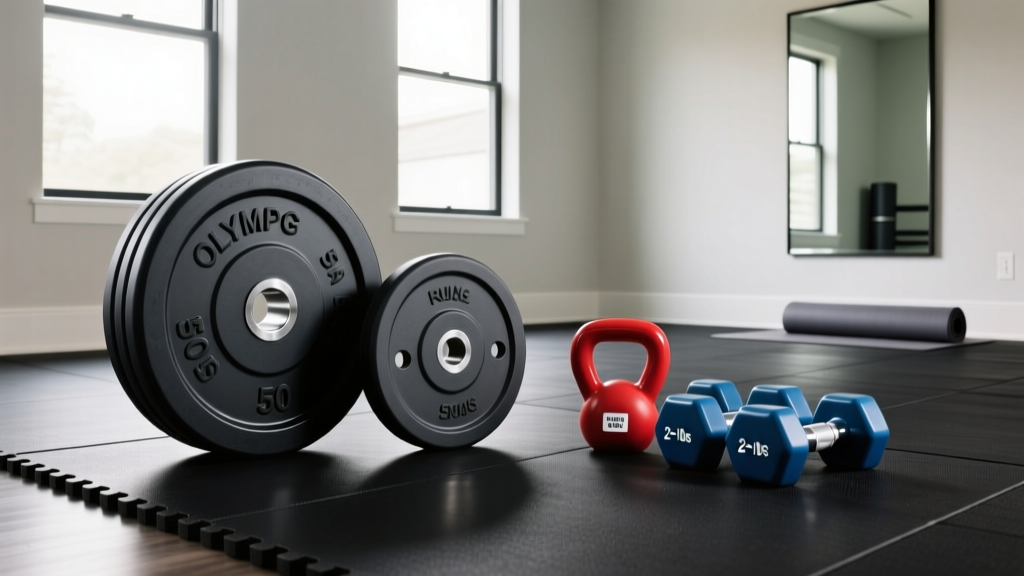
According to the International Weightlifting Federation (IWF) Technical and Competition Rules, all standard Olympic bumper plates must share a uniform diameter of 450mm (17.7 inches), regardless of weight. However, the thickness varies wildly. A 45lb Rogue Echo Bumper measures 3.25 inches thick. In stark contrast, a standard 45lb cast iron plate typically measures just 1.3 inches thick. This 2.5x difference in depth creates a cascading effect on how you design your gym layout, particularly when balancing heavy barbell drop zones with dedicated free-weight isolation areas.
Comparison Matrix: Spatial and Functional Metrics
Before mapping your floor plan, you must understand the raw data governing these two plate categories. The following matrix breaks down the critical spatial and functional differences that impact gym layout.
| Metric | Standard Bumper Plates (45lb) | Cast Iron Plates (45lb) |
|---|---|---|
| Diameter | 450mm (17.7 in) | 445mm - 450mm (17.5 - 17.7 in) |
| Thickness | 3.25 inches | 1.3 inches |
| Storage Density (per 500lb set) | ~24 inches of vertical sleeve space | ~11 inches of vertical sleeve space |
| Average Cost (2026) | $3.50 - $4.50 per lb | $1.50 - $2.25 per lb |
| Drop Safety | High (absorbs kinetic energy) | Low (shatters, damages flooring) |
| Best Gym Zone | Central Platform / Olympic Lifting Area | Perimeter Racks / Isolation Zones |
Zoning Your Gym: Drop Zones vs. Isolation Corridors
A common mistake in home gym design is treating the training space as a single, multi-purpose void. True space optimization requires strict zoning based on equipment kinematics. Bumper plates necessitate a dedicated 'Drop Zone'—typically a 4x8 foot reinforced platform. Iron plates, however, belong in the 'Perimeter Zone' surrounding power racks and cable attachments.
This zoning directly impacts where you can safely perform expansive isolation movements. Consider the bent over dumbbell fly (often utilized for rear deltoid and rhomboid development). When executing a standing, hinged bent over dumbbell fly, the lifter requires massive lateral clearance.
Spatial Math: The Bent Over Dumbbell Fly
The average male lifter (5'10") has a wingspan of roughly 70 inches. When holding two 25lb hex dumbbells, you must add approximately 12 inches of lateral implement length. During the eccentric phase of the bent over dumbbell fly, the arms sweep wide, requiring a minimum lateral corridor of 94 inches (nearly 8 feet) to avoid striking adjacent equipment.
If you place a bulky, floor-standing bumper plate A-frame tree near your free-weight bench area, you instantly choke this corridor. Iron plates, conversely, can be stored on compact, wall-mounted vertical racks or slim corner trees, preserving the 8-foot lateral sweep required for the bent over dumbbell fly without risking a collision with a 450mm rubber plate.
Storage Density and Failure Modes
How you store your plates when they are not on the barbell is just as critical as how they perform during the lift. Space optimization requires evaluating the failure modes of storage solutions.
The Bumper Plate Warping Hazard
Bumper plates are constructed with a steel hub encased in a vulcanized rubber matrix. A frequent spatial shortcut is leaving loaded bumper plates on a barbell inside a squat rack to 'save time' and avoid moving them to a tree. However, leaving a 45lb or 55lb bumper plate resting on a barbell sleeve for more than 48 hours causes gravitational creep. The steel insert slowly deforms the rubber matrix, leading to a warped plate that will no longer sit flush on the floor. Therefore, bumpers must be stored vertically on heavy-duty A-frames or horizontal wall cradles, both of which demand significant floor or wall real estate.
Iron Plate Rust and Clearance
Cast iron plates, like those detailed in the Eleiko Olympic Weightlifting Plates catalog (which offers both calibrated iron and competition bumpers), are incredibly space-efficient. A standard 500lb iron plate tree occupies a footprint of just 24x24 inches. The primary failure mode for iron is environmental: if your gym space lacks climate control and humidity exceeds 60%, uncoated or poorly painted iron plates will oxidize, transferring rust to your barbell sleeves and flooring. Iron plates demand a perimeter layout with at least 12 inches of clearance from exterior walls to allow for airflow and dehumidifier placement.
Step-by-Step Layout Framework: The 2026 Hybrid Gym
To maximize a standard 2-car garage (roughly 400 square feet) while accommodating both heavy Olympic drops and wide-sweep isolation movements like the bent over dumbbell fly, follow this structural framework:
- Establish the Central Drop Zone: Place a 4x8 foot horse-stall mat platform dead center against the longest unbroken wall. This is your bumper plate territory. Mount horizontal plate storage cradles directly on the wall above the platform to keep the floor clear.
- Anchor the Power Rack: Position your power rack adjacent to the platform, leaving a 36-inch walkway (the minimum safety standard for commercial and home facilities). Load this rack exclusively with cast iron plates to keep the sleeve profile slim and prevent accidental drops from damaging the platform edge.
- Create the Isolation Corridor: On the opposite side of the gym, place your adjustable FID (Flat/Incline/Decline) bench and dumbbell rack. This is your designated zone for the bent over dumbbell fly, lateral raises, and chest-supported rows. Ensure the wall behind this zone is completely flush—no protruding plate trees or fan poles.
- Deploy Corner Storage: Use the remaining 90-degree corners for vertical iron plate A-frames. By pushing the dense, slim iron storage into the corners, you preserve the open 8-foot lateral corridors in the center of the room.
'Space optimization is not about fitting the most equipment into a room; it is about engineering unobstructed movement corridors for your most spatially demanding exercises.' — Facility Design Principles, NSCA Guidelines.
Final Verdict: Budgeting Space and Capital
Ultimately, the choice between bumper and iron plates is a dual investment of capital and square footage. If your training heavily features power cleans, snatches, or high-volume deadlift drops, the $1,500+ investment for a 300lb set of bumpers is mandatory, but you must sacrifice floor space for heavy-duty storage trees. If your programming leans toward powerlifting, hypertrophy, and isolation work—where the bent over dumbbell fly and strict pressing take precedence—cast iron plates offer superior storage density, lower cost (roughly $600 for a 300lb set), and the spatial freedom to design wide, unobstructed movement corridors. Map your exercises first, measure your wingspan second, and purchase your plates third.
More gear to consider
All reviews
EZ vs Straight Bar Maintenance: Caring for Captain America Dumbbells

Best Adjustable Dumbbells for Incline Dumbbell Rows (2026)

Dumbbell Squat to Overhead Press: Cast Iron vs Competition
Olympic vs Standard Plates Setup and Light Dumbbell Training Guide

Beyond the Davidoff Dumbbell Perfume Hype: Olympic Barbell Knurling & Weight Compared
