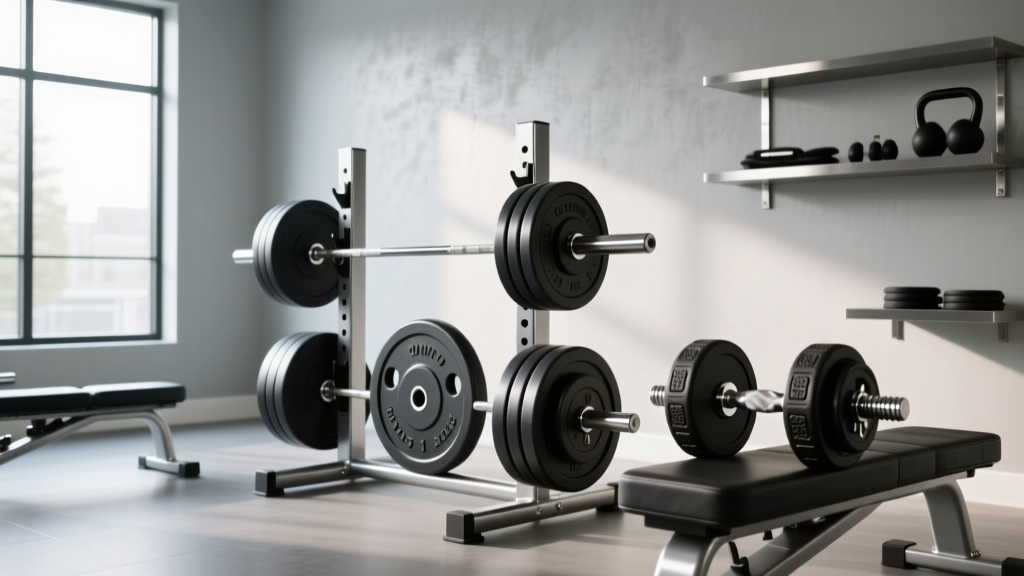
Olympic vs Standard Plates: Setup for Military Press Dumbbells
Master your home gym setup with our walkthrough on Olympic vs standard plates, rack installation, and optimizing for heavy military press dumbbells.

The Foundation: Choosing Your Weight Plate Ecosystem
When designing a comprehensive free-weight zone in 2026, the most critical infrastructure decision you will make is choosing between Olympic (2-inch / 50mm) and Standard (1-inch / 25mm) weight plate ecosystems. This choice dictates not only your barbell and plate storage tree requirements but also your ability to safely perform heavy overhead movements. For lifters prioritizing shoulder development, the ecosystem you select directly impacts your setup for heavy military press dumbbells, particularly if you utilize plate-loaded dumbbell handles rather than fixed-weight racks.
This complete setup and installation walkthrough will guide you through the spatial, structural, and biomechanical requirements of building a safe, high-capacity free-weight station, ensuring your equipment can handle the rigorous demands of overhead pressing.
Warning: Never mix 1-inch standard plates on a 2-inch Olympic sleeve using plastic adapter rings for heavy overhead lifts. The adapter rings introduce lateral play, creating a severe pinch-point and balance hazard when pressing heavy dumbbells overhead.The Core Dilemma: 50mm Olympic vs 25mm Standard Specs
Before unboxing your gear, you must understand the mechanical limitations of each plate type. Standard plates feature a 25mm (or occasionally 30mm) center hole, designed for lightweight, entry-level spinlock dumbbell handles and basic solid-steel barbells. Olympic plates feature a 50.4mm center hole, engineered to mate with rotating barbell sleeves and heavy-duty loadable dumbbell handles equipped with bushings or bearings.
Why Plate Choice Dictates Overhead Safety
According to ExRx.net's biomechanical breakdown of the dumbbell military press, the overhead press requires strict stabilization from the anterior deltoids and triceps while managing the independent center of gravity of each dumbbell. If you are using loadable dumbbell handles to simulate heavy fixed military press dumbbells, the locking mechanism is paramount.
- Standard Spinlock Handles: Rely on threaded steel nuts. Under the torque of a heavy 70lb+ military press, these nuts can loosen, causing plates to slide and potentially resulting in a catastrophic drop.
- Olympic Loadable Handles: Utilize smooth 50mm sleeves secured by heavy-duty spring collars or clamp collars (e.g., Rogue HG 2.0 Collars). This provides a flush, secure fit that will not vibrate loose during the lockout phase of a military press.
Step-by-Step Rack and Plate Tree Installation Walkthrough
Proper installation of your power rack and accompanying weight storage tree is non-negotiable for safety. Follow these precise steps to anchor your equipment.
Step 1: Spatial Mapping and Overhead Clearance
Measure your ceiling height. A standard 6-foot-tall lifter performing a standing military press with dumbbells requires a minimum of 96 inches (8 feet) of vertical clearance to achieve full lockout without striking the ceiling. Position your power rack or squat stand so that the center of the lifting platform is at least 48 inches away from any plate storage trees to prevent elbow strikes during lateral movements.
Step 2: Concrete Anchoring Protocol
If your rack does not feature a massive footprint with weight-storage horns acting as a counterbalance, it must be bolted down.
- Verify Concrete PSI: Ensure your garage or basement floor is poured concrete with a minimum compressive strength of 3,000 PSI. Do not anchor into cinderblock or decorative overlays.
- Drill Pilot Holes: Use a rotary hammer drill with a 1/2-inch masonry bit to drill holes 3.5 inches deep through the rack's base plate holes.
- Insert Wedge Anchors: Drop 1/2-inch x 3-3/4-inch zinc-plated steel wedge anchors into the holes.
- Torque to Spec: Using a calibrated torque wrench, tighten the nuts to 45-50 ft-lbs. This expands the wedge at the base of the anchor, securing the rack against the lateral forces generated when racking heavy dumbbells.
Step 3: Weight Storage Tree Assembly and Load Distribution
When assembling a vertical plate tree, always install the heaviest prongs at the bottom. For an Olympic tree, the bottom prongs should be rated for 45lb bumper plates. Loading 45lb plates on the top prongs raises the center of gravity, creating a tipping hazard when pulling plates off the tree to load your military press dumbbells.
Configuring Your Station for Heavy Overhead Lifts
Transitioning from barbell work to dumbbell work requires specific spatial configurations. When setting up your station for military press dumbbells, you need a dedicated staging area. The American Council on Exercise (ACE) emphasizes that equipment layout must allow for safe pickup and racking of heavy free weights without awkward spinal flexion.
Pro-Tip for Loadable Dumbbells: If you are using Olympic loadable dumbbell handles (like the 14.5-inch Rogue Loadable Dumbbell Handles, retailing around $145/pair in 2026), store your fractional Olympic plates (1.25lb and 2.5lb) in a small parts bin directly on the rack's upright. This allows for rapid micro-loading between military press sets without walking back to the main plate tree.Equipment Matrix: Olympic vs Standard Setup Costs & Specs
The table below illustrates the 2026 market realities of building out either ecosystem. While standard plates offer a lower barrier to entry, the functional ceiling for exercises like the military press makes Olympic the undisputed choice for serious lifters.
| Feature | Olympic Ecosystem (2" / 50mm) | Standard Ecosystem (1" / 25mm) |
|---|---|---|
| Sleeve Diameter | 50mm (1.97 inches) | 25mm (1 inch) |
| Max Load per Dumbbell Handle | 100+ lbs (depending on sleeve length) | ~50 lbs (sleeve space limitation) |
| 2026 Avg Cost per LB (Cast Iron) | $1.80 - $2.50 / lb | $1.20 - $1.60 / lb |
| Collar Security for Overhead | High (Spring/Clamp Collars) | Low (Threaded Spinlock Nuts) |
| Suitability for Heavy Military Press | Excellent (Accommodates advanced loading) | Poor (Fails at intermediate strength levels) |
Safety Protocols and Maintenance
Maintaining your plate ecosystem ensures longevity and safety. Urethane and rubber Olympic plates should be wiped down with a mild, non-corrosive cleaner (avoid bleach-based products, which degrade the rubber polymers over time). For the sleeves of your loadable dumbbell handles and barbell, apply a light coat of 3-in-One oil or synthetic sleeve lubricant every 90 days to ensure the bearings spin freely and the plates slide on without scoring the steel.
"The overhead press demands absolute equipment stability. When utilizing loadable dumbbell handles, the wider 50mm Olympic sleeve and secure spring collars prevent the catastrophic plate shifting that frequently occurs with standard threaded spinlock collars at the apex of the lift."
Frequently Asked Questions
Can I use standard plates for military presses if I am a beginner?
Yes, if your current dumbbell military press weight is under 40 lbs per hand, standard 1-inch spinlock dumbbell handles are sufficient. However, as your anterior deltoid and tricep strength increases, you will quickly run out of sleeve space on standard handles, forcing an upgrade to Olympic loadable handles or fixed hex dumbbells.
Do bumper plates work well for loadable dumbbell military presses?
Standard 45lb bumper plates are too wide (typically 17-18 inches in diameter) to be practical on dumbbell handles, as they will clash together at the top of the movement. If you prefer bumper plates, you must purchase fractional bumper plates (10lb, 15lb, 25lb) which share the 50mm Olympic center hole but have a much narrower profile, allowing them to fit side-by-side on a loadable dumbbell sleeve.
What is the best flooring for dropping heavy dumbbells?
If you are pushing heavy military press dumbbells to failure and need to drop them, standard EVA foam tiles are insufficient. Install 3/4-inch (40mm to 43mm) thick vulcanized rubber stall mats over a sealed concrete subfloor to absorb the kinetic energy and protect both your equipment and your foundation.
More gear to consider
All reviews
Incline Bench Dumbbell Trends 2026: Urethane vs Rubber Hex

How Many Times Should I Lift Dumbbells a Day? Neoprene Beginner Guide

Olympic vs Standard Plates: Butterfly Exercise With Dumbbells Setup

Best Neoprene Dumbbells for the Dumbbell Squat to Press: 2026 Guide
Budget Racks for Your Dumbbell Pullover Chest Workout Weights
