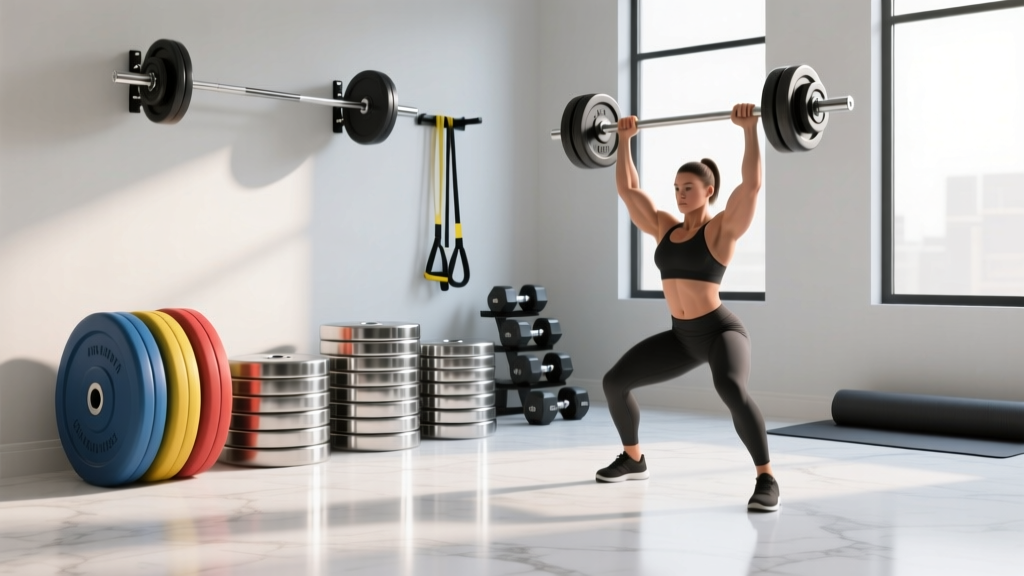
Bumper Plate vs Iron Plate: Home Gym Guide & Z Press with Dumbbells
We compare bumper plate vs iron plate for your 2026 home gym, covering costs, durability, and floor setups for heavy lifts and the Z press with dumbbells.

The Great Plate Debate: Bumper vs. Cast Iron
Building a functional, future-proof home gym in 2026 requires navigating the perennial bumper plate vs iron plate comparison. Your choice dictates not only the aesthetic of your lifting space but also the structural integrity of your subfloor, the acoustic footprint of your workouts, and the versatility of your exercise selection. While Olympic lifters have long sworn by rubber-coated bumpers, traditional powerlifters often prefer the dense, no-nonsense profile of cast iron. But what happens when your programming demands both heavy barbell drops and grounded, floor-based accessory work?
In this hands-on expert review, we break down the exact material specifications, real-world pricing, and failure modes of both plate types. Furthermore, we will explore how your plate ecosystem impacts floor-based movements—specifically, the demanding setup required for the Z press with dumbbells, an exercise where your drop zone and surrounding equipment clearance are absolutely critical.
Expert Quick Take
Buy Cast Iron if: You primarily powerlift, have a dedicated reinforced concrete platform, need maximum weight on the barbell sleeve, and operate on a strict budget ($1.50–$2.50/lb).
Buy Bumper Plates if: You perform Olympic lifts, do CrossFit-style WODs, have a standard garage floor with basic horse-stall matting, and value noise reduction ($2.00–$3.50/lb).
Material, Bounce, and Density: A Technical Breakdown
To understand which plate belongs on your barbell, we must look at the manufacturing standards. According to extensive durability testing by Garage Gym Labs, the primary differentiator is the Shore A Durometer rating—a measure of rubber hardness. Standard bumpers sit around 70-75 (moderate bounce), while competition bumpers push 85-90 (dead bounce). Cast iron, naturally, has zero bounce and maximum density.
| Feature | Cast Iron Plates | Standard Bumper Plates | Competition Bumpers |
|---|---|---|---|
| Material | Cast Iron (Enameled or Bare) | Virgin Rubber | High-Density Crumb Rubber |
| Thickness (45lb) | ~1.5 inches | ~2.15 to 2.5 inches | ~1.15 inches (IWF Spec) |
| Price per lb (2026) | $1.50 - $2.50 | $2.00 - $3.50 | $5.00 - $8.00+ |
| Drop Rating | Low (Chips floors/plates) | High (2.0m drops) | Very High (3.0m+ drops) |
| Hub Type | Standard Chrome/Steel | Stainless Steel / Brass | Precision Steel (50.4mm) |
Cast Iron Plates: The Traditionalist's Choice
Cast iron plates are the backbone of commercial gyms and serious powerlifting dungeons. Their primary advantage is density. A 45-pound iron plate is roughly 1.5 inches thick, allowing you to load over 500 pounds on a standard Olympic barbell sleeve before running out of room.
Pros and Cons of Iron
- Pro: Unbeatable price-per-pound ratio.
- Pro: Slim profile allows for maximum sleeve loading and better barbell whip dynamics during heavy squats.
- Con: Catastrophic failure modes when dropped. Dropping a loaded barbell with iron plates on standard concrete will spall the concrete, crack the plate, and potentially bend your barbell.
- Con: Prone to rust if the enamel chips and humidity is uncontrolled.
As noted in BarBend's comprehensive iron plate guide, modern enameled irons (like the Rogue Deep Dish or York Legacy) have largely solved the rust issue, but they remain unforgiving on flooring. If you drop iron, you must have a specialized shock-absorbing lifting platform featuring layered plywood and high-density rubber crumb.
Bumper Plates: Durometer, Dead Bounce, and Edge Cases
Bumper plates were engineered for the Olympic lifts (snatch and clean & jerk), where the barbell is routinely dropped from overhead. The rubber casing absorbs the kinetic energy, protecting both the equipment and the lifter's joints from reverberating shock.
The "Taco Effect" Warning: Never drop a barbell loaded only with 10lb or 15lb bumper plates. Because the rubber is thick but the weight is light, the plates will deform ("taco") upon impact, transferring the bending force directly into the barbell shaft and the plate's steel hub, leading to catastrophic hub blowouts.
Real-World Pricing and Storage
Expect to pay between $2.00 and $3.50 per pound for high-quality virgin rubber bumpers in 2026. The Rep Fitness Black Bumpers and Rogue Echo Bumpers remain the gold standards for home gyms. However, their thickness is a legitimate drawback. A pair of 45lb bumpers takes up nearly 5 inches of sleeve space. If you are maxing out deadlifts, you will need a bar with extended sleeves or you must switch to thinner competition bumpers.
Floor Dynamics: Heavy Drops and the Z Press with Dumbbells
How does the bumper vs. iron debate affect exercises that don't use a barbell? The answer lies in your floor ecosystem and drop zones. Consider the Z press, a brutal overhead pressing movement performed seated flat on the floor with legs splayed in a V-shape. It eliminates leg drive, forcing the anterior deltoids, upper pecs, and core to do all the work.
Setting Up the Z Press with Dumbbells
While the Z press is traditionally done with a barbell inside a power rack, performing the Z press with dumbbells is an incredible variation for fixing bilateral imbalances and improving thoracic mobility. Because you are seated directly on the floor, your environment matters immensely:
- The Strike Zone: When failing a heavy dumbbell Z press, you cannot safely rack the weights; you must dump them to your sides. If you have cast iron plates stacked on the floor nearby, a stray dumbbell striking an iron plate will chip the enamel, dent the dumbbell head, and create a dangerous ricochet.
- Subfloor Protection: Dropping 50lb+ dumbbells onto bare concrete or thin mats will eventually crack the slab. If your gym is a hybrid space where you drop barbells (requiring bumpers) and perform grounded dumbbell work, maintaining a clear, rubber-matted "strike zone" free of stacked iron plates is vital for safety.
- Anchor Points: Advanced lifters sometimes use heavy bumper plates laid flat on the floor as a backrest boundary or hamstring stretch anchor during the Z press setup. The flat, wide profile of a 45lb bumper is far more stable and forgiving on the spine than a narrow stack of iron plates.
Expert Top Picks for 2026
Based on our hands-on testing, here are the top plates for different home gym profiles this year:
1. Best Overall Bumper: Rep Fitness Black Bumpers
Price: ~$2.20/lb | Durometer: 75 (Low Bounce)
Featuring a stainless steel insert and a dead-bounce rubber compound, these are the workhorses of the modern garage gym. The minimal odor and precise weight tolerance (within 1%) make them ideal for mixed-use floors.
2. Best Cast Iron: Rogue Deep Dish Iron Plates
Price: ~$2.15/lb | Finish: E-Coat
For the powerlifter who needs maximum sleeve space and a classic aesthetic. The e-coat finish resists rust far better than traditional hammered paint, and the machined edges ensure they sit perfectly flush on a weight tree.
3. Best Budget Hybrid: Titan Fitness Elite Bumpers
Price: ~$1.85/lb | Durometer: 70
A slightly higher bounce than the Rep Fitness, but the price-to-durability ratio is unmatched for beginners building their first 300lb plate sets.
Final Verdict: Which Should You Buy?
If your training revolves around Olympic weightlifting, CrossFit, or you lack a dedicated reinforced lifting platform, bumper plates are non-negotiable. They protect your investment and your flooring. However, if you are a strict powerlifter, prioritize the dense, slim profile of cast iron to maximize barbell sleeve real estate and save money.
For the versatile home gym athlete who transitions from heavy barbell floor presses to the Z press with dumbbells, a hybrid approach works best: Buy a full set of bumpers for your barbell work, and supplement with a pair of 2.5lb, 5lb, and 10lb iron fractionals to fine-tune your dumbbell and accessory progressions without taking up excessive storage space.
More gear to consider
All reviews
EZ Bar vs Straight Bar: Beyond the Best Dumbbell Exercises for Biceps

Power vs Squat Rack vs Stand & One Arm Dumbbell Row Muscles Worked

Skip the 25 lb Dumbbell Walmart Run: Best Loadable Handles 2026

Rack Care & Storage for Standing Dumbbell Ab Exercises

Power Rack vs Squat Stand: How Dumbbell Dimensions Guide Your Choice
