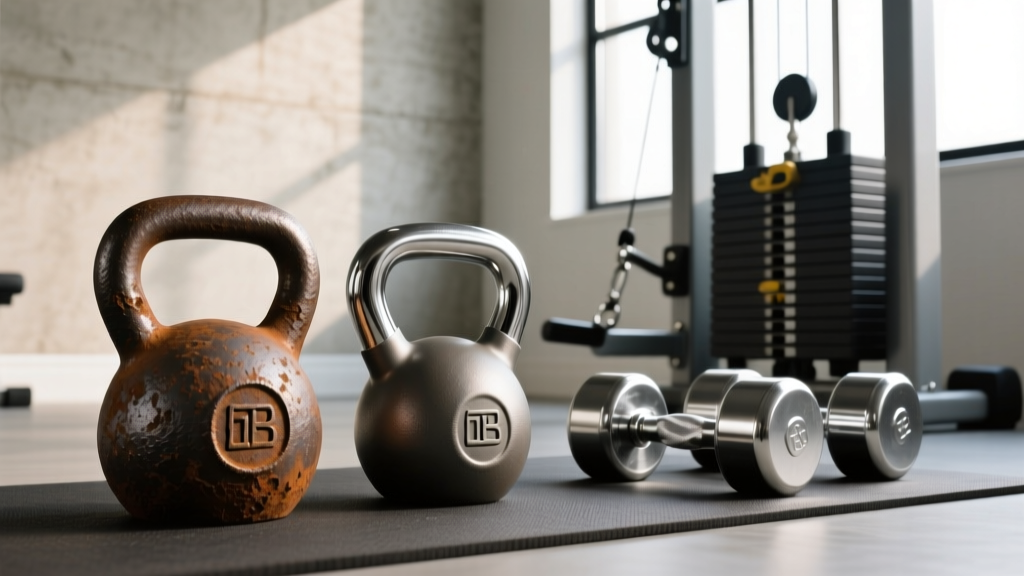
Dumbbell Squeeze Mechanics: Bumper vs Iron Plate Maintenance
Discover how bumper vs iron plates affect dumbbell squeeze mechanics, collar stress, and gear longevity. Expert maintenance tips for plate-loaded handles.

The Biomechanics of the Dumbbell Squeeze and Gear Stress
The dumbbell squeeze press—often referred to as the hex press—is a staple hypertrophy movement designed to maintain constant tension on the pectoralis major by forcing the medial edges of the dumbbells together throughout the entire range of motion. While fixed-weight rubber hex dumbbells are commonly used, serious lifters and home gym owners frequently turn to plate-loaded dumbbell handles (like the Rogue Loadable Dumbbell Handle or Titan Fitness Plate-Loaded Dumbbells) to accommodate heavier loads and micro-loading. However, performing the dumbbell squeeze with plate-loaded handles introduces a unique mechanical stressor: the continuous, high-friction collision of the weight plates themselves.
When you press the weights together, the plates grind against one another under significant lateral shear force. The choice between loading your handles with bumper plates versus traditional cast iron plates drastically alters the maintenance requirements, collar security, and overall longevity of your equipment. Understanding the material science and friction dynamics of these plates is critical for preserving your gear in 2026 and beyond.
Bumper Plates vs. Iron Plates: The Collision Matrix
Before diving into specific maintenance routines, it is essential to understand how bumper and iron plates react to the medial compression inherent in the dumbbell squeeze. Below is a comparative analysis of how each plate type impacts your plate-loaded dumbbell system.
| Feature | Cast Iron / Machined Steel Plates | Virgin Rubber Bumper Plates | Crumb Rubber Bumper Plates |
|---|---|---|---|
| Medial Friction Type | Metal-on-metal grinding; paint shearing | High-grip rubber friction; heat generation | Abrasive shearing; surface delamination |
| Collar Stress (Lateral) | Low to Moderate (narrower profile) | High (wider lever arm increases torque) | High (wider lever arm increases torque) |
| Residue Generated | Metallic dust and paint chips | Minimal (if virgin rubber) | Heavy black rubber dust |
| Sleeve / Bushing Risk | High (metal dust infiltrates bushings) | Low (rubber dust is non-abrasive) | Moderate (crumb particles can jam collars) |
| Clearance for Squeeze | Excellent (compact diameter) | Poor (17.7" diameter limits ROM) | Poor (17.7" diameter limits ROM) |
Iron Plate Longevity: Managing Metal-on-Metal Friction
When executing a heavy dumbbell squeeze with cast iron or machined steel plates, the medial edges are forced together with hundreds of pounds of cumulative pressure. This metal-on-metal contact creates two primary failure modes: cosmetic degradation and invasive particulate generation.
Rust, Chipping, and Sleeve Scoring
Standard cast iron plates (such as those from CAP Barbell or Yes4All) are typically finished with a baked enamel or powder coat. The repetitive grinding of the squeeze press will quickly wear through this protective layer on the inner edges, exposing raw iron to ambient humidity and sweat aerosolization. Once exposed, oxidation (rust) begins within 48 hours. More critically, the friction generates microscopic metallic dust. If you are using a plate-loaded dumbbell handle with bronze bushings or needle bearings for sleeve rotation, this metallic dust can migrate past the collar and infiltrate the sleeve assembly, causing severe scoring and permanent seizing of the rotating mechanism.
Maintenance Solution: After every session involving iron plate squeeze presses, wipe the medial edges of the plates with a microfiber cloth lightly dampened with a water-displacing lubricant like 3-in-One oil. Avoid standard WD-40, as it is a solvent that strips existing protective oils and attracts dust. For the dumbbell handle sleeves, apply a single drop of white lithium grease to the collar threads or snap-ring grooves to create a barrier against metallic particulate infiltration.
Bumper Plate Degradation: Hub Warping and Rubber Shearing
Using bumper plates for dumbbell squeeze presses presents an entirely different set of mechanical challenges. Bumper plates are manufactured to a standard 450mm (17.7-inch) diameter, regardless of weight (though some 10lb and 15lb technical bumpers are smaller). This massive diameter creates a significant lever arm when loaded onto a dumbbell sleeve that is typically only 8.5 to 10.25 inches long.
The Lever Arm Problem and Collar Defeat
When you press two 25lb bumper plates together in a squeeze press, the lateral torque applied to the outer edge of the plate translates into immense outward shear force against the dumbbell collar. Standard spring collars or basic spinlock nuts will frequently fail under this specific biomechanical load, allowing the plates to slide outward and compromising the squeeze tension. Furthermore, the rubber-on-rubber friction generates localized heat. According to Rogue Fitness material specifications, virgin rubber bumpers possess a Shore A durometer rating that balances bounce and durability, but sustained frictional heat can soften the rubber matrix, leading to medial edge tearing over time.
⚠️ Expert Warning: The 10lb Bumper Plate Failure ModeNever use 10lb or 15lb crumb rubber bumper plates for dumbbell squeeze presses. These thinner plates lack the structural integrity of heavier bumpers and are prone to 'hub pull-out,' where the steel center hub tears through the rubber under the lateral torque of the squeeze movement. Always use 25lb or 35lb virgin rubber bumpers if you must use bumpers for this exercise, as their thicker rubber matrix better distributes the shear force.
Maintenance Solution: To preserve bumper plates used in high-friction movements, clean the medial edges weekly with a mild, non-petroleum-based cleaner. Petroleum distillates break down the vulcanization bonds in rubber. Instead, use a diluted simple green solution or a dedicated silicone-based rubber protectant. This prevents the rubber from drying out and micro-tearing during the squeeze press. Additionally, inspect the steel center hubs monthly for any signs of separation from the rubber matrix.
Collar Selection: Securing the Squeeze
The longevity of your plates and handles is moot if the collars fail, allowing plates to grind against the sleeve threads or snap-rings. The dumbbell squeeze generates unique multi-directional forces that defeat standard collars.
- Spinlock Nuts: Excellent for preventing lateral slide, but the threads are highly susceptible to cross-threading and stripping if metallic dust from iron plates infiltrates the grooves. Clean threads with a brass wire brush monthly.
- Spring Collars: Completely inadequate for the dumbbell squeeze. The lateral shear force will compress the spring and allow the wide bumper plates to shift, altering your center of gravity mid-rep.
- Clamp Collars (e.g., Lock-Jaw, OSO Pro): The optimal choice for plate-loaded dumbbell squeeze presses. These collars use high-tension polymers and internal gripping teeth that bite into the steel sleeve, resisting the outward torque generated by wide bumper plates without damaging the sleeve finish.
Step-by-Step Post-Workout Maintenance Protocol
To maximize the lifespan of your plate-loaded dumbbells and plates when frequently performing the dumbbell squeeze, implement this 4-step maintenance protocol aligned with NSCA facility equipment standards for high-friction gear.
- Particulate Purge (Immediate): Immediately after racking the dumbbells, use a dry, stiff-bristled nylon brush to sweep away metallic dust (from iron) or rubber residue (from crumb bumpers) from the dumbbell sleeves and plate hubs.
- Edge Wiping (Post-Session): Wipe the medial contact edges of the plates with a microfiber towel. If using iron plates, apply a micro-thin layer of 3-in-One oil to the bare metal edges to halt oxidation.
- Collar Sanitization (Weekly): Remove clamp collars or spinlock nuts. Wipe the internal gripping mechanisms with isopropyl alcohol to remove sweat salts and fine dust that reduce friction and cause slippage.
- Sleeve Lubrication (Monthly): Apply a specialized synthetic barbell sleeve oil or white lithium grease to the dumbbell handle sleeves. Rotate the sleeve (if applicable) to distribute the lubricant evenly, ensuring smooth loading and unloading while protecting against invasive particulates.
The Expert Verdict
For the dedicated dumbbell squeeze press, machined steel or cast iron plates remain the superior choice purely from a biomechanical and clearance standpoint. Their compact diameter allows for a full range of motion without the awkward spatial clash of 17.7-inch bumper plates, and they place significantly less lateral torque on your dumbbell collars. However, iron demands rigorous, consistent cleaning to prevent metallic dust from destroying your handle's internal bushings. If you must use bumper plates due to flooring constraints or noise restrictions, opt exclusively for thick, virgin rubber bumpers and invest in heavy-duty clamp collars to manage the extreme shear forces generated by the squeeze.
More gear to consider
All reviews
EZ vs Straight Bar: Beyond the Dumbbell Bench Press Exercise Image
Loadable Dumbbells: Space-Saving Dumbbell Exercises for Home Workout
Power Rack vs Squat Rack: Beyond Dumbbell Exercises at Home No Bench

EZ Curl vs Straight Bar: Space Layouts & Dumbbell Rear Flyes
2026 Dumbbell Rack Trends: Storage for Men's Health Dumbbell Exercises