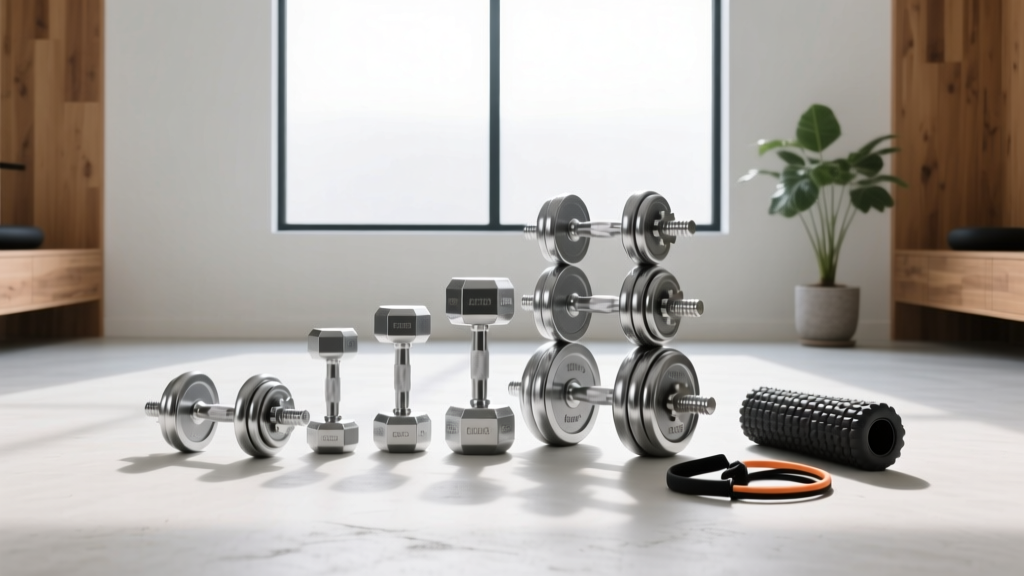
Loadable Dumbbell Value: Budgeting Good Dumbbell Exercises for Arms
Discover the true cost of loadable dumbbells with interchangeable plates. We break down the budget and value for optimal arm isolation workouts.

The Economics of Arm Hypertrophy: Fixed vs. Loadable Dumbbells
Building a comprehensive home gym in 2026 requires ruthless capital allocation, especially when targeting smaller muscle groups. While compound lifts like squats and deadlifts justify the high cost of Olympic barbells and bumper plates, arm training presents a unique economic challenge. Outfitting a rack with a full set of fixed hex rubber dumbbells ranging from 10 to 50 pounds in 5-pound increments requires purchasing 18 individual dumbbells. At the current industry average of $1.75 to $2.50 per pound for commercial-grade urethane or rubber hex dumbbells, a complete set will cost between $1,500 and $2,200, excluding the $300+ required for a multi-tier storage rack.
Enter the loadable dumbbell with interchangeable plates. By utilizing a single pair of handles and a shared pool of cast iron or steel fractional plates, lifters can achieve the same weight spectrum for a fraction of the cost. But does this budget-friendly approach compromise the execution of good dumbbell exercises for arms? To answer this, we must break down the actual costs, biomechanical requirements, and long-term value of loadable systems.
Cost Matrix: Fixed Hex Sets vs. Loadable Systems
| Equipment Configuration | Upfront Cost (Approx.) | Cost Per Pound | Weight Increments | Space Footprint |
|---|---|---|---|---|
| Fixed Hex Dumbbells (10-50 lbs, 9 pairs) | $1,600 - $2,200 | $2.00 - $2.50 / lb | 5 lbs | Large (Requires 3-tier rack) |
| Standard 1-inch Spinlock Set (up to 40 lbs) | $90 - $140 | $1.10 / lb | Variable (1.25 - 10 lbs) | Small (Plates stack on floor) |
| Premium Quick-Lock Loadable (up to 45 lbs) | $350 - $450 | $2.80 / lb (handle cost) | Variable (1.25 - 5 lbs) | Medium (Compact tray) |
| Olympic 2-inch Loadable Handles + Plates | $250 - $350 | $1.50 / lb | Variable (2.5 - 10 lbs) | Large (Bulky plates) |
Biomechanics and the Micro-Loading Imperative
When programming good dumbbell exercises for arms, such as strict supinating curls or lying tricep extensions, the ability to micro-load is non-negotiable. The biceps brachii, brachialis, and triceps brachii are relatively small muscle groups compared to the glutes or pectorals. A standard 5-pound jump between fixed dumbbells might represent a 25% to 50% increase in total load for an isolation movement. According to dose-response research on resistance training volume and hypertrophy published in PLOS One, progressive overload is the primary driver of muscle growth, but excessive load jumps lead to form breakdown and joint strain before muscular failure is achieved.
The 2.5 lb Plate Advantage: Loadable dumbbells allow you to purchase 1.25 lb and 2.5 lb fractional plates. Increasing your tricep kickback from 15 lbs to 17.5 lbs is a manageable 16% increase, preserving the strict biomechanical form required to isolate the tricep long head, as detailed in the exercise mechanics databases at ExRx.net. Fixed dumbbells force a 5 lb jump to 20 lbs, often resulting in shoulder compensation and momentum.Analyzing Loadable Systems for Arm-Specific Training
Not all loadable dumbbells are created equal. The handle diameter, collar mechanism, and plate profile drastically alter their suitability for arm isolation work. Here is a value analysis of the three primary loadable categories available in 2026.
1. Traditional 1-Inch Spinlock Systems (e.g., CAP Barbell, Yes4All)
The Budget King: For under $120, you can acquire a pair of 14-inch threaded handles and 100 pounds of cast iron plates.
Pros: Unbeatable price-to-weight ratio. The 1-inch grip diameter closely mimics standard fixed dumbbells, making it ideal for close-grip movements like hammer curls and skull crushers.
Cons: The star-lock collars are notoriously slow to adjust. More importantly, the rotational force inherent in bicep curls can gradually loosen the spinlock nuts mid-set, creating a dangerous rattle and shifting the center of gravity.
2. Premium Quick-Lock Loadable (e.g., Ironmaster Quick-Lock V2)
The Long-Term Investment: Priced around $400 for the base kit (up to 45 lbs per hand), these utilize a proprietary screw-in locking pin that secures square steel plates.
Pros: Zero rattle, incredibly durable, and the square plate design prevents the dumbbell from rolling away between sets. The knurling on the handles is deep and aggressive, providing excellent grip during heavy tricep extensions without needing chalk.
Cons: The handle is slightly shorter than standard dumbbells, which can feel cramped during wide-grip chest exercises, though it is perfectly suited for arm isolation.
3. Olympic 2-Inch Loadable Handles (e.g., Titan Fitness, Rogue)
The Heavy Duty Option: These handles accept standard 2-inch Olympic plates.
Pros: Can hold massive amounts of weight (up to 100+ lbs per hand) and utilize the same plates as your barbell.
Cons: Avoid these for arm training. The 2-inch grip diameter causes severe premature forearm fatigue, ruining your mind-muscle connection during bicep curls. Furthermore, the physical width of Olympic plates clashes during movements like dumbbell flyes or close-grip neutral hammer curls, severely limiting the range of motion.
Real-World Failure Modes and Hidden Costs
When conducting a budget breakdown, buyers often overlook the hidden costs and mechanical failure modes associated with cheaper loadable dumbbells. Understanding these edge cases will save you money and frustration in the long run.
- Bar Flex on Standard 1-inch Handles: If you load a cheap 1-inch threaded handle past 45 pounds per hand, the steel bar will begin to flex under the lateral torque of heavy tricep extensions. This flex compromises the structural integrity of the collar threads over time, leading to stripped handles.
- Plate Rattle and Mind-Muscle Connection: Cheaper cast iron plates often have poorly machined center holes. When performing slow, controlled negatives on dumbbell curls, the plates will clank and shift. This auditory and physical distraction disrupts the mind-muscle connection, which is critical for maximizing hypertrophy in smaller muscle groups.
- The Cost of Fractional Plates: Many budget loadable sets only include 10 lb, 5 lb, and 2.5 lb plates. To truly optimize arm training, you must budget an additional $30 to $50 for a pair of 1.25 lb micro-plates. Failing to account for this skews the initial budget analysis.
Expert Insight: If your primary goal is strict arm hypertrophy, avoid loadable dumbbells with oversized plastic-coated cement plates. The massive physical diameter of cement plates makes it biomechanically impossible to bring the dumbbells close together for exercises like concentration curls or cross-body hammer curls, effectively eliminating half of your exercise library.
Final Value Verdict: Which System Wins?
The ultimate value of a loadable dumbbell system depends entirely on your current strength levels and your tolerance for adjustment time.
If you are a beginner to intermediate lifter whose arm exercises cap out at 35 to 40 pounds per hand, a high-quality 1-inch spinlock set with machined cast iron plates and rubber O-rings (to prevent nut loosening) remains the undisputed budget champion. At roughly $150 fully loaded, it delivers 90% of the utility of a $2,000 fixed rack.
However, if you are an advanced lifter requiring loads north of 50 pounds for heavy tricep work, or if you frequently utilize drop-sets and rest-pause techniques where adjustment time is critical, the Ironmaster Quick-Lock or a high-end adjustable dial system is the superior financial choice. The time saved, combined with the elimination of bar flex and collar slippage, justifies the $400+ premium. By prioritizing micro-loading capabilities and handle ergonomics over sheer maximum load capacity, you can build a highly effective, budget-conscious arm training arsenal that will serve your hypertrophy goals for decades.
More gear to consider
All reviews
EZ Curl Bar vs Straight Bar: Budget Guide & Dumbbell Rows on Bench

Space Hacks: Dumbbell Workouts at Home Without Bench Using Loadables

Bumper vs Iron Plates: Gym Layouts & Dumbbell Exercises for Thighs
Bumper vs Iron Plates: Longevity Tips for Barbell or Dumbbell Squats

Best Adjustable Dumbbells for a Heavy Dumbbell Workout: 2026 Matchup
