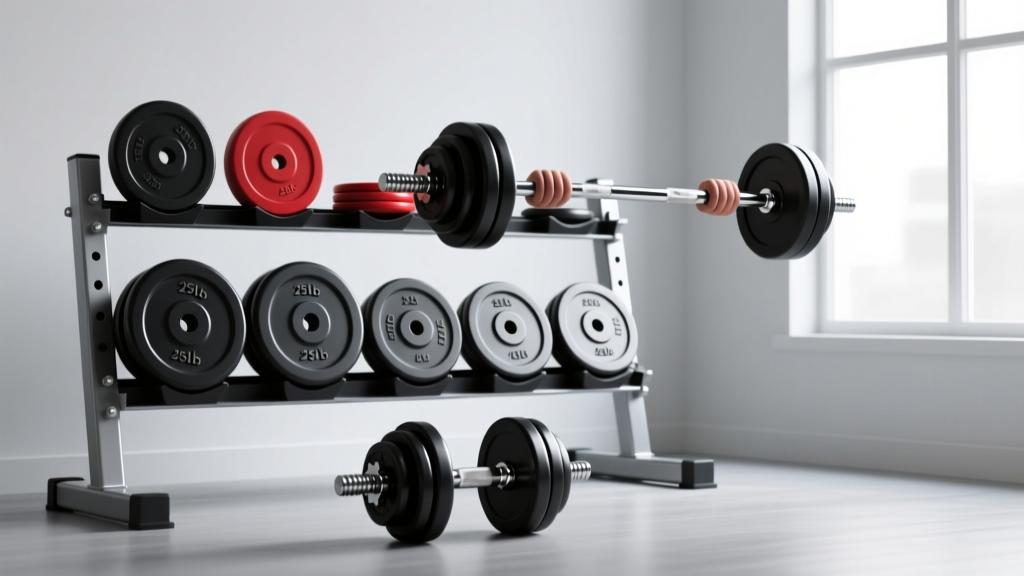
2026 Budget: Bumper vs Iron Plates & Dumbbell Lateral Raises
Compare bumper vs iron plates for your 2026 home gym budget. We break down cost-per-pound, durability, and funding accessories like dumbbell lateral raises.

The Zero-Sum Home Gym Budget of 2026
Building a comprehensive home gym is an exercise in strict capital allocation. Every dollar you overspend on foundational equipment is a dollar stolen from the accessories that actually drive hypertrophy and athletic performance. As we navigate the fitness equipment market in 2026, the most common dilemma for intermediate lifters is choosing between bumper plates and traditional cast iron plates. While the debate is often framed around noise reduction and drop-safety, the most critical factor for the budget-conscious lifter is opportunity cost. By analyzing the true cost-per-pound of Olympic plates, we can uncover hidden budget surpluses that can be reallocated to precision isolation tools—specifically, high-quality adjustable dumbbells required for optimal dumbbell lateral raises.
Material Realities: Virgin Rubber vs. Machined Cast Iron
Before running the financial breakdown, it is essential to understand the physical properties and failure modes of both plate types. According to the equipment testing experts at Garage Gym Reviews, the choice between rubber and iron fundamentally changes how your gym space functions.
Virgin Rubber Bumper Plates
Bumper plates are constructed from dense, virgin rubber with a stainless steel or chrome center hub. They are designed to be dropped from overhead during Olympic lifts like the snatch and clean and jerk. The rubber absorbs the kinetic energy, resulting in a 'dead bounce' that protects both the barbell sleeves and your flooring. However, the manufacturing process is expensive, and the thick rubber profile means you can only fit a limited amount of weight on a standard barbell sleeve (usually capping out around 500 to 550 lbs before you run out of sleeve space).
Machined Cast Iron Plates
Cast iron plates are the traditional standard. They are cast in sand molds, machined for weight accuracy, and typically finished with a black oxide, enamel, or zinc coating. Iron plates are incredibly dense, allowing you to load well over 800 lbs on a single barbell. They are virtually indestructible under normal use, but they will chip your concrete if dropped from shoulder height, and they are prone to surface oxidation (rust) if kept in humid, unconditioned environments.
2026 Cost-Per-Pound Matrix: Where Does Your Money Go?
To understand the budget impact, we must look at the actual street prices for a standard 255-pound plate package (two 45s, two 25s, two 10s, two 5s, and two 2.5s) from leading manufacturers in 2026. The data below highlights the massive price disparity between entry-level bumpers and standard iron.
| Plate Model | Material | Price Per Pound | Total Cost (255 lb Set) | Best Use Case |
|---|---|---|---|---|
| Titan Fitness Cast Iron | Machined Iron | $1.55 / lb | $395 | Powerlifting, General Strength |
| Rogue Black Oxide | Machined Iron | $2.15 / lb | $548 | Premium Iron, Rust Resistance |
| Fringe Sport Sport Bumpers | Recycled Rubber | $2.60 / lb | $663 | Budget CrossFit, Light Drops |
| Rogue Echo Bumpers | Virgin Rubber | $3.25 / lb | $828 | Olympic Weightlifting, Heavy Drops |
| REP Fitness Urethane | Urethane | $4.10 / lb | $1,045 | Commercial Gyms, Zero Odor |
As the matrix demonstrates, outfitting your barbell with premium Rogue Echo Bumper Plates costs more than double what you would spend on a reliable set of Titan Fitness cast iron plates. That $433 difference is not just a rounding error; it is the exact amount of capital required to completely transform your accessory work.
The Opportunity Cost: Funding Dumbbell Lateral Raises
Here is where the budget breakdown shifts from basic arithmetic to advanced programming strategy. When you choose machined cast iron over virgin rubber bumpers, you are not just saving money; you are buying biomechanical precision for your isolation work. Consider the dumbbell lateral raise, a staple movement for shoulder hypertrophy.
Why Micro-Loading Matters for the Lateral Deltoid
The lateral deltoid is a relatively small, pennate muscle fiber group. It responds optimally to metabolic stress and precise progressive overload in the 12 to 25 rep range, a principle heavily documented by the hypertrophy researchers at Stronger By Science. If you blow your gym budget on premium bumper plates, you may be forced to rely on cheap, fixed hex dumbbells that only adjust in 5-pound increments.
The Biomechanics Trap: Jumping from 20-pound to 25-pound dumbbells for lateral raises represents a massive 25% increase in load. This inevitably leads to form breakdown, momentum cheating, and unwanted upper trapezius recruitment. The lateral head simply cannot handle a 5-pound jump per hand while maintaining strict, controlled mechanics.By saving $433 on your plate package, you can reinvest that capital into a pair of Nuobell 80 adjustable dumbbells (street price $429). The Nuobell system uses a unique twisting handle mechanism that allows for 2.5-pound micro-jumps. This enables you to add just 5 pounds to the total load while maintaining strict, controlled lateral raises, ensuring continuous progressive overload without sacrificing your rotator cuff health or resorting to sloppy 'ego-lifting' form.
Hidden Costs: Flooring, Maintenance, and Space
A true budget breakdown must account for the secondary costs associated with each plate type. The sticker price is only the beginning of your financial commitment.
Flooring Requirements
Cast iron is unforgiving. Dropping 300 pounds of cast iron on a standard 1/2-inch foam puzzle mat will destroy the mat and potentially crack your concrete subfloor. If you buy iron, you must budget for high-density rubber horse stall mats (typically $50 to $80 per 4x6 sheet) or specialized lifting platforms. Bumper plates, conversely, can be safely dropped on standard 3/4-inch rubber gym tiles, potentially saving you $150 to $200 on specialized flooring.
Maintenance and Longevity
Iron requires active maintenance. If you live in a humid environment or an unconditioned garage, bare or lightly painted iron will oxidize. You must budget for a wire brush and a monthly application of 3-in-One oil or Boeshield T-9 to prevent rust degradation. Bumper plates are virtually maintenance-free, though cheaper recycled rubber bumpers can emit a strong off-gassing odor for the first few months and may degrade or crack if left exposed to direct UV sunlight in a driveway gym.
Decision Framework: Which Path Should You Take?
Use this quick diagnostic framework to determine how to allocate your 2026 equipment budget:
- Choose Cast Iron If: You are a powerlifter or bodybuilder who rarely drops the barbell from overhead, you have limited barbell sleeve space, and you want to free up $400+ to invest in micro-loading adjustable dumbbells for precise lateral raises and tricep extensions.
- Choose Bumper Plates If: You practice Olympic weightlifting, do high-rep CrossFit WODs involving barbell cycling, or share a wall with neighbors who will complain about the seismic vibration of dropped iron.
- The Hybrid Approach: Buy a minimal set of iron plates (e.g., 135 lbs) for heavy pressing and squatting, and use the remaining budget to buy a single pair of 15lb and 10lb competition bumper plates for your dynamic effort and Olympic lifting days.
Final Verdict & Budget Allocation Strategy
In the modern home gym economy, prestige purchases like premium virgin rubber bumper plates often yield diminishing returns for the average lifter. Unless your programming strictly requires dropping the barbell from the clavicle or overhead, cast iron remains the undisputed king of value. By treating your gym budget as a zero-sum game and opting for the $1.55/lb iron route, you unlock the financial flexibility to purchase the high-precision adjustable dumbbells necessary for strict, joint-friendly dumbbell lateral raises. Build your foundation with iron, but build your physique with the accessories that budget-smart lifting affords you.
More gear to consider
All reviews
Bumper Plate vs Iron Plate Layouts & Pool Dumbbells Exercises Zones

EZ Bar vs Straight Bar & Dumbbell Bench Press or Floor Press
Power Rack vs Squat Rack vs Squat Stand: Dumbbell Coffin Press Guide

Cast Iron vs Competition Kettlebells & Lat Dumbbell Trends

Dumbbell Curls for Triceps: Debunking Myths & Beginner Arm Guide
