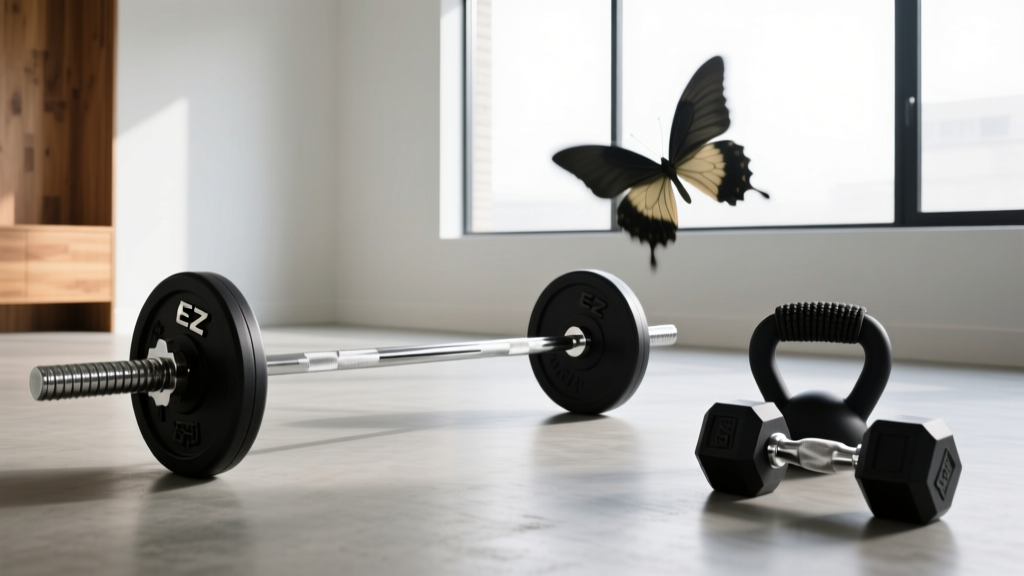
EZ Bar vs Straight Bar: Care, Longevity & Dumbbell Butterfly Raise
Compare EZ curl bar vs straight bar maintenance, joint longevity, and sleeve care. Plus, how the dumbbell butterfly raise saves shoulders.

When building a home gym or outfitting a commercial facility in 2026, the debate between the EZ curl bar and the straight barbell often centers on muscle activation. However, from a longevity perspective—both for the lifter's joints and the equipment's physical lifespan—the comparison requires a much deeper analysis. Improper maintenance can ruin a $200 barbell in months, while repetitive strain from the wrong bar path can sideline a lifter for years. This guide breaks down the biomechanical and physical maintenance differences between these bars, and explores how pivoting to movements like the dumbbell butterfly raise can extend your lifting career.
Biomechanical Longevity: Joint Stress and Equipment Choice
The human wrist is not naturally designed to bear heavy loads in full, locked supination (palms facing strictly upward). A standard straight bar, such as the classic 28.5mm shaft Olympic barbell, forces the radioulnar joints into this fixed position. Over time, heavy curling or skull crushers on a straight bar can lead to medial epicondylitis (golfer's elbow) and wrist impingement.
⚠️ Joint Strain Warning: If you experience sharp, shooting pain on the inside of your elbow during straight bar curls, this is a primary indicator of connective tissue overload. Continuing to push through fixed-path supination pain often leads to chronic tendonosis that requires months of rehabilitation.The EZ curl bar was engineered specifically to mitigate this. By offering angled grip shafts (typically 25mm in diameter), the EZ bar places the wrists in a semi-supinated, more anatomically neutral position. According to the National Strength and Conditioning Association (NSCA), accommodating natural joint angles during isolation movements significantly reduces shear force on the elbow and wrist ligaments, thereby extending a lifter's active years.
The Dumbbell Butterfly Raise: A Joint-Sparing Pivot
When barbell equipment—whether straight or EZ—begins to cause repetitive strain in the elbows or anterior deltoids, intelligent lifters pivot to free-moving alternatives. One highly effective, yet underutilized, joint-sparing movement is the dumbbell butterfly raise.
Often performed on an incline bench or bent-over at the hips, the dumbbell butterfly raise targets the rear deltoids, rhomboids, and upper traps through a wide, sweeping arc (mimicking a reverse pec-deck flye). Because you are holding independent dumbbells, your wrists and elbows are free to rotate naturally throughout the range of motion. As highlighted by ACE Fitness, incorporating free-moving dumbbell variations allows the humerus to track naturally without the restrictive torque of a fixed barbell, making the dumbbell butterfly raise an essential tool for lifters managing shoulder impingements or elbow tendonitis.
Why Dumbbells Outlast Barbells for Rehab
- Independent Tracking: Allows the stronger side to compensate less, preventing asymmetrical joint wear.
- Grip Flexibility: You can use a neutral grip (palms facing each other) during the butterfly raise, which opens the subacromial space in the shoulder, reducing impingement risk.
- Equipment Wear: Hex rubber or urethane dumbbells require virtually zero sleeve or knurling maintenance compared to Olympic bars.
Physical Maintenance: Knurling, Sleeves, and Oxidation
While joint longevity is paramount, the physical longevity of your steel equipment dictates your long-term financial investment. The maintenance requirements of an EZ bar differ from a straight bar due to surface area, knurling complexity, and finish types.
EZ bars feature complex, multi-angled knurling zones. These angles trap dead skin, chalk, and moisture far more aggressively than the continuous, straight-line knurling of a standard barbell. If left uncleaned, the trapped moisture accelerates oxidation deep within the knurling peaks, leading to 'knurl rot'—a state where the steel literally flakes away.
2026 Barbell Finish Durability Matrix
| Finish Type | Common Models | Oxidation Risk | Maintenance Frequency |
|---|---|---|---|
| Bare Steel | Custom Powerlifting Bars | Extreme | Weekly (Oil required) |
| Hard Chrome | CAP Barbell Super Curl Bar | Moderate | Monthly |
| Zinc | Standard Olympic Straight Bars | Low-Moderate | Bi-Monthly |
| Cerakote / E-Coat | Rogue Cerakote EZ Bar (~$225) | Near Zero | Quarterly (Wipe down only) |
The 15-Minute Monthly Barbell Care Routine
To maximize the lifespan of both your straight bars and EZ curl bars, implement this specific maintenance routine. Never use WD-40; it is a solvent that will strip the factory lubricants from your bar's internal bronze bushings or needle bearings.
- Dry Brush (3 Minutes): Use a stiff nylon brush (never wire, which strips zinc and cerakote) to scrub the knurling. For EZ bars, brush at multiple angles to match the angled grip shafts.
- Chalk Removal (4 Minutes): Spray a microfiber towel with a 50/50 mix of white vinegar and water. Wipe down the shaft to dissolve embedded magnesium carbonate chalk, which is highly hygroscopic (absorbs moisture from the air).
- Sleeve Inspection (3 Minutes): Check the snap rings or end caps. If the sleeve feels 'gritty' during spins, the internal oil-impregnated bronze bushings are drying out.
- Lubrication (5 Minutes): Apply 3-in-One oil or food-grade mineral oil to a clean rag and wipe the entire shaft. For bare steel or chrome bars, leave a microscopically thin film of oil to act as a vapor barrier against ambient humidity.
Environmental Controls for Home Gyms
Equipment longevity is inextricably linked to your gym's environment. Steel begins to oxidize rapidly when relative humidity (RH) exceeds 65%. In 2026, smart home gym setups utilize Wi-Fi-enabled dehumidifiers to maintain a strict 40% to 50% RH level. Furthermore, storing your EZ bars and straight bars horizontally on a rack is preferred over vertical storage. Vertical storage can cause internal sleeve lubricants to pool at the bottom collar, leaving the top bushings dry and prone to premature wear and squeaking.
Summary Matrix: EZ vs. Straight Bar
| Feature | Straight Barbell | EZ Curl Bar |
|---|---|---|
| Primary Use | Heavy Compounds, Full Supination Curls | Isolation, Skull Crushers, Preacher Curls |
| Joint Impact | High wrist/elbow torque | Low torque, neutral grip options |
| Knurl Cleaning | Easy (Linear brushing) | Difficult (Multi-angle brushing required) |
| Storage Footprint | 7 feet (Requires full horizontal rack) | ~47 inches (Fits in small vertical holders) |
| Alternative Pivot | Switch to Dumbbell Butterfly Raise for joint relief | Switch to Neutral-Grip Dumbbell Curls |
Ultimately, choosing between an EZ bar and a straight bar is not just about which muscle head you want to target; it is about managing the long-term wear and tear on both your body and your gear. By maintaining your barbell finishes with proper oils, controlling your gym's humidity, and knowing when to pivot to free-weight alternatives like the dumbbell butterfly raise, you ensure that both your joints and your equipment will easily survive the rigors of decades of heavy lifting.
More gear to consider
All reviews
EZ Curl Bar vs Straight Bar: Beyond the Dumbbell Shrugs GIF
EZ Bar vs Straight Bar: Care & Dumbbell Row Benefits

Can Rust-Oleum Be Used on Iron Dumbbells? DIY & Rack Guide

Power Rack vs Squat Rack vs Stand: Setup for Dumbbell Deadlifts

Barbell Collar Types: Safety Guide for American Dumbbells Users
