Bowflex vs Nuobell: Best for Dumbbell Chest Flys on Bench?
We compare Bowflex SelectTech 552 and Nuobell 552 adjustable dumbbells to find which offers better balance, grip, and ROM for dumbbell chest flys on bench.

When outfitting a home gym, adjustable dumbbells are the undisputed kings of space efficiency. However, not all adjustable mechanisms are created equal—especially when transitioning from heavy compound presses to precise isolation movements. If your programming includes dumbbell chest flys on bench, the physical geometry, weight distribution, and handle ergonomics of your equipment will directly impact your range of motion (ROM), joint safety, and muscle activation.
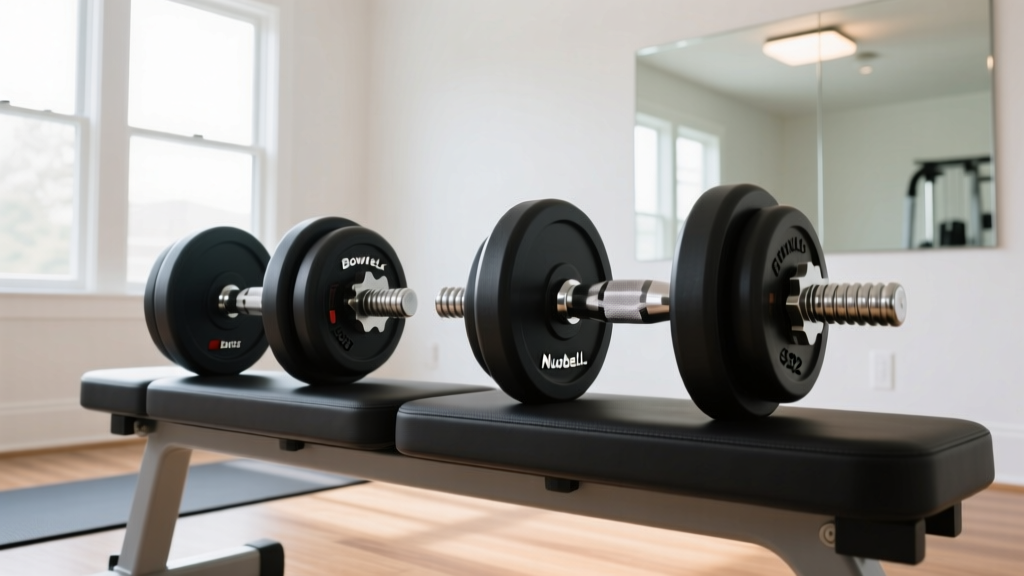
In this 2026 head-to-head comparison, we are putting the two most popular adjustable dumbbells on the market—the Bowflex SelectTech 552 and the Nuobell 552—to the test. We will evaluate them specifically through the lens of the chest fly to determine which model truly deserves a spot next to your weight bench.
The Biomechanical Demands of the Chest Fly
Before dissecting the hardware, we must understand the movement. The dumbbell chest fly is an isolation exercise that targets the sternal head of the pectoralis major. According to biomechanical analyses outlined by ExRx, the movement requires a wide, sweeping arc with a slight bend in the elbows, placing immense tensile stress on the pecs at the bottom of the eccentric phase.
Unlike a barbell bench press, the fly requires independent stabilization of two separate lever arms. This means the physical footprint of the dumbbell matters. If the weight blocks are overly bulky, they can collide with your forearms or the bench pad at maximum stretch, artificially limiting your ROM and robbing you of the deep eccentric stretch required for hypertrophy. Furthermore, wrist torque is a major factor; a handle that is too thick or poorly balanced will force your wrists into extension, shifting the load away from the chest and into the anterior deltoids and elbow joints.
Contender 1: Bowflex SelectTech 552
The Bowflex SelectTech 552 has been the industry standard for over a decade. Utilizing a dual-dial system, it adjusts from 5 to 52.5 lbs in 2.5 lb increments (up to 25 lbs) and 5 lb increments thereafter. But how does this bulky pioneer handle the nuances of the fly?
Performance on the Fly: The Geometry Problem
The most significant drawback of the Bowflex 552 for dumbbell chest flys on bench is its static footprint. Regardless of whether you select 10 lbs or 50 lbs, the outer plastic casing remains a fixed 15.75 inches in length. The weight plates themselves are rectangular blocks. When you drop into the deepest part of the fly's eccentric stretch, your forearms naturally supinate slightly. For lifters with shorter limbs or those using a narrow bench, the rectangular corners of the Bowflex plates frequently dig into the forearm flexors or physically clank against the bench pad.
Grip and Wrist Torque
The Bowflex features a rubberized, relatively thick handle. While comfortable for presses, the thickness can be detrimental during a fly. As the weight pulls your arms laterally, a thicker grip requires more crush strength to maintain a neutral wrist. By the time you reach the 35+ lb range, grip fatigue often precedes pectoral failure.
Warning: The Rattle FactorBecause the Bowflex retains the unused plates within the handle housing, lifting lighter weights (e.g., 15 lbs) results in noticeable internal rattling. During the slow, controlled tempo required for a chest fly, this shifting center of mass can disrupt your mind-muscle connection and introduce micro-instabilities at the shoulder joint.
Contender 2: Nuobell 552 Adjustable Dumbbells
The Nuobell 552 takes a radically different approach. Instead of a dial, it uses a twist-handle mechanism. More importantly, it leaves the unused weight plates in the cradle, meaning the physical size of the dumbbell shrinks as you lower the weight.
Performance on the Fly: The Traditionalist Advantage
For dumbbell chest flys on bench, the Nuobell is a revelation. Because the unused plates stay behind, a 15 lb Nuobell is significantly shorter and more compact than a 15 lb Bowflex. The weight plates that do attach are tapered and rounded, closely mimicking the profile of a traditional urethane hex dumbbell. When you open your arms at the bottom of the fly, there is zero physical interference with your forearms or the bench. You achieve a true, unimpeded deep stretch, which is the primary driver of stretch-mediated hypertrophy in the pecs.
Grip and Wrist Torque
Nuobell utilizes a standard 1.1-inch knurled steel handle. This is the exact specification found on commercial-grade dumbbells. The knurling provides aggressive grip security without the need for chalk, and the standard diameter allows your wrist to stack perfectly over your forearm. This optimal joint stacking ensures that the load is directed squarely into the pectoral fibers rather than leaking into the wrist extensors.
Head-to-Head Spec & Performance Matrix
Below is a direct comparison of how these two models stack up across the metrics that matter most for isolation movements.
| Feature | Bowflex SelectTech 552 | Nuobell 552 |
|---|---|---|
| Adjustment Mechanism | Dual-Dial | Twist-Handle |
| Footprint at 15 lbs | 15.75" (Static) | ~11.5" (Dynamic) |
| Weight Plate Shape | Rectangular / Blocky | Rounded / Tapered |
| Handle Material | Rubberized / Smooth | Knurled Steel |
| Handle Diameter | ~1.3" (Thick) | 1.1" (Standard) |
| Internal Rattle | High (Unused plates in housing) | None (Unused plates in cradle) |
| 2026 Street Price | ~$399 - $429 | ~$349 - $369 |
Failure Modes & Edge Cases
No adjustable dumbbell is indestructible, and understanding their failure modes is critical for safety. The Mayo Clinic emphasizes that proper equipment maintenance and controlled movements are vital to preventing joint and soft-tissue injuries during resistance training.
- The Drop Hazard: Neither dumbbell should ever be dropped. However, the Bowflex is particularly vulnerable. If you drop the Bowflex on the dial, the internal plastic teeth can shear off, permanently locking the weight selection. The Nuobell's internal steel locking pins are slightly more robust, but a drop onto the handle will still bend the internal shaft, rendering the twist mechanism useless.
- Dial Misalignment: With the Bowflex, if the dials on either side are not set to the exact same number, the dumbbell will not lift from the cradle. During a superset where you are fatigued and rushing to change weights for flys, this misalignment can cause immense frustration and break your workout flow.
- Handle Slippage: The Nuobell's twist handle must be fully seated back into the cradle to reset the locking pins. If placed back slightly crooked, the weights may disengage mid-rep. Always visually verify the locking indicator before lifting.
Expert Execution: Maximizing the Fly with Adjustables
Having the right tool is only half the battle. To get the most out of your adjustable dumbbells during chest flys, implement these technical cues:
- The Micro-Bend: Lock your elbows into a 10 to 15-degree bend. Do not allow the elbows to straighten as the weight pulls your arms down, as this shifts the lever arm to the biceps tendon.
- Scapular Retraction: Pinch your shoulder blades together and drive them into the bench pad. This elevates the ribcage and ensures the pecs, not the anterior deltoids, catch the load at the bottom of the movement.
- The Concentric Squeeze: When bringing the weights back up, imagine you are hugging a large barrel. Do not simply press the weights up; sweep them inward to maximize the shortening of the pectoral fibers.
Pro-Tip for Home Gym Lifters: If you are using the Bowflex 552 and find the rectangular plates hitting your forearms at the bottom of the fly, try altering your grip to a slightly more neutral (palms facing each other) position, or switch to a floor fly. The floor will naturally limit your ROM before the dumbbells can collide with your limbs, protecting your shoulder capsules.
The Verdict: Which Wins for Dumbbell Chest Flys?
When evaluating these two titans strictly for the purpose of performing dumbbell chest flys on bench, the Nuobell 552 is the definitive winner. Its dynamic footprint, traditional knurled handle, and rounded weight profiles replicate the feel of commercial urethane dumbbells almost perfectly. It allows for an unimpeded eccentric stretch and superior wrist stacking, which are the two most critical components of fly mechanics.
The Bowflex SelectTech 552 remains a phenomenal piece of engineering for general fitness, presses, and rows. However, its static, blocky geometry and thicker grip make it a suboptimal choice for the precise, wide-arc isolation required for chest flys. If your training split heavily features isolation movements and you demand a true free-weight feel, the Nuobell's superior biomechanical compatibility makes it worth every penny of its ~$359 price tag in 2026.
More gear to consider
All reviews
How Much Should a 12 Year Old Lift Dumbbells (kg)? Top Racks

Power Rack vs Squat Stand Setup for Dumbbell Thrusters Exercise

Best Adjustable Dumbbells for Preacher Bench Dumbbell Curls 2026

Neoprene Dumbbells & The Black Dumbbell Bracelet: 2026 Guide
Performing Bridges with Dumbbell: Loadable Plate Budget Analysis