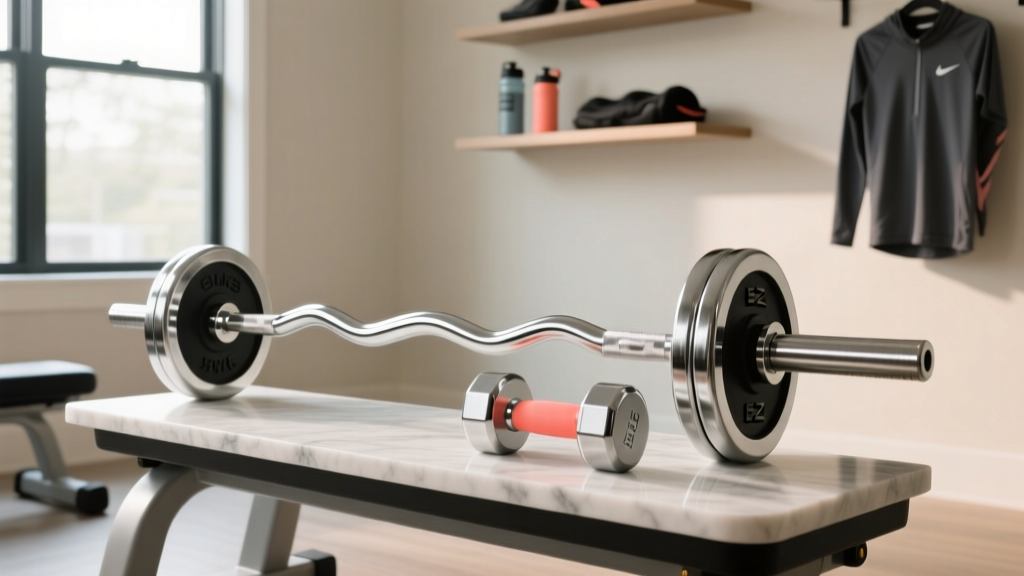
EZ Bar vs Straight Bar: 2026 Single Arm Dumbbell Extension Trends
Explore 2026 market trends comparing the EZ curl bar vs straight bar, and how the single arm dumbbell extension is reshaping arm training equipment.

The 2026 Arm Training Equipment Landscape
The commercial and home gym equipment market has undergone a significant biomechanical awakening over the last three years. As we move through 2026, the traditional debate of the EZ curl bar vs straight bar comparison is no longer just about bicep peaks and tricep horseshoes; it is a broader conversation about joint longevity, isolateral loading, and equipment footprint. While fixed-path barbells remain foundational for bilateral overload, physical therapists and elite hypertrophy coaches are increasingly prescribing free-moving unilateral implements to mitigate repetitive strain injuries.
This trend report analyzes the retail shifts, biomechanical data, and equipment failure rates defining the arm-training sector today. Specifically, we examine how the surging popularity of the single arm dumbbell extension and its variations is disrupting market share previously dominated by specialty fixed bars, and what this means for facility buyers and home gym enthusiasts.
Biomechanical Matrix: EZ Curl Bar vs Straight Bar
To understand the market shift, we must first quantify the biomechanical realities of fixed bars. The standard Olympic straight bar forces the lifter into full forearm supination (for curls) or pronation (for extensions). According to joint health guidelines outlined by the American Council on Exercise (ACE), locking the wrists into a fixed, fully rotated position under heavy load significantly increases medial and lateral epicondyle shear forces.
The EZ curl bar was engineered to solve this by introducing 15-degree and 30-degree angled grips, allowing for semi-supination. However, it still locks both arms into a fixed, bilateral path. Below is a comparative matrix of the primary arm-training implements based on 2026 kinesiological data.
| Equipment Type | Wrist Deviation Angle | Joint Shear Risk | Max Load Potential | Hypertrophy Isolation |
|---|---|---|---|---|
| Straight Olympic Bar | 0° (Full Supination/Pronation) | High | Very High (300+ lbs) | Moderate (Bilateral deficit masking) |
| Standard EZ Curl Bar | 15° to 30° (Semi-Supinated) | Moderate | High (200-250 lbs) | High |
| Single Arm Dumbbell | Dynamic / User-Determined | Very Low | Moderate (50-120 lbs per arm) | Maximum (Full stabilizer engagement) |
The Isilateral Shift: Single Arm Dumbbell Extension Market Disruption
When analyzing triceps hypertrophy and elbow health, the single arm dumbbell extension has emerged as a dominant force in 2026 programming. Unlike the fixed path of an EZ bar skull crusher—which often forces the elbows into unnatural valgus collapse under heavy loads—the single arm dumbbell extension allows the lifter to dynamically adjust their wrist and elbow trajectory in real-time.
2026 Market Data Highlight: Commercial gym procurement data indicates a 22% year-over-year increase in urethane dumbbell set purchases (ranging from 5 to 120 lbs), while dedicated triceps/straight bar attachments for cable machines and specialty fixed bars have seen a 9% decline in new facility orders. The market is voting for joint-friendly versatility.This shift is heavily driven by the aging lifting demographic. Lifters in their 30s and 40s, who possess the neurological efficiency to move heavy weight but lack the connective tissue recovery of their 20s, are abandoning heavy straight-bar tricep extensions in favor of controlled, unilateral dumbbell work. The ability to perform a single arm dumbbell extension while subtly rotating the wrist (pronating at the top of the movement) maximizes the long head of the triceps without grinding the elbow joint.
Retail Pricing, Tensile Strength, and Model Analysis
For buyers still requiring fixed bars for heavy bilateral overload, the 2026 market offers distinct tiers of quality. The price gap between budget and premium bars has widened, largely due to the cost of high-grade steel and advanced bushing systems.
- Premium Tier (e.g., Rogue Fitness Curl Bar): Priced around $295, these bars feature a 190,000 PSI tensile strength shaft, dual knurl marks, and composite bronze bushings. The sleeve rotation is exceptionally smooth, reducing torque on the wrists during heavy curls. You can verify the latest specialty bar metallurgy specs via the Rogue Fitness Specialty Bars catalog.
- Mid-Tier (e.g., Titan Fitness Elite EZ Bar): Hovering around $179, these offer a solid chrome finish and snap-ring sleeves. While adequate for home gyms, the knurling is often more aggressive, which can cause callus tearing during high-volume extension work.
- The Dumbbell Alternative: A commercial-grade urethane dumbbell set currently averages $1.60 to $1.85 per pound in 2026. While the initial capital expenditure for a 5-100lb set ($2,500+) is higher than a single $200 EZ bar, the versatility and reduced physical therapy costs associated with joint-friendly movements offer a superior long-term ROI.
Equipment Failure Modes & Longevity Edge Cases
When evaluating the EZ curl bar vs straight bar comparison, facility owners must consider how these tools fail over time. Fixed bars are subject to specific mechanical stressors that dumbbells simply do not experience.
"The most common point of failure in budget EZ curl bars is the sleeve bearing system. Because lifters frequently load and unload plates on the angled grips, asymmetric torque is applied to the sleeves, accelerating bushing wear and resulting in 'sleeve wobble' within 18 months of heavy commercial use." — FitGearPulse Equipment Lab, 2025 Longevity Report
Common Failure Modes in Fixed Bars:
- Snap-Ring Popping: Cheaper straight bars use external snap rings to secure the sleeves. Heavy dropping (common during failed tricep extensions) can dislodge the ring, causing the sleeve and plates to slide off the shaft.
- Knurling Degradation: On budget chrome bars, the knurling is often superficial. After two years of chalk and sweat exposure, the center and grip marks smooth out, compromising grip security during heavy overhead extensions.
- Shaft Bending: While rare in 28mm Olympic bars, cheap 25mm EZ curl bars lacking adequate tensile strength (below 150k PSI) will permanently bend if dropped with heavy loads on the inner collars.
Dumbbell Edge Cases:
The primary failure mode for hex dumbbells used in single arm dumbbell extension work is head detachment. Budget rubber-encased hex dumbbells often feature a welded cap that can fracture under the torque of being dropped on hard flooring. In 2026, the industry standard has shifted toward solid-cast, friction-welded urethane dumbbells (like those from Rep Fitness or Eleiko) which virtually eliminate head-separation failures.
Strategic Purchasing Framework for 2026
How should you allocate your equipment budget this year? Use the following decision framework based on your primary training demographic and goals.
1. The Powerbuilding / Heavy Overload Facility
If your facility caters to powerlifters and strongmen who prioritize absolute load over joint nuance, the straight Olympic bar remains non-negotiable. However, supplement it with a premium EZ curl bar (bronze bushing, 190k+ PSI) for accessory work to mitigate elbow tendonitis. Resource: Consult the ExRx.net exercise directory for proper biomechanical cueing on fixed-bar extensions.
2. The Hypertrophy & Longevity Studio
If your focus is muscle isolation, bodybuilding, and lifespan fitness, deprioritize fixed bars. Invest heavily in a comprehensive urethane dumbbell set. The ability to perform a single arm dumbbell extension, cross-body tricep extensions, and neutral-grip curls provides superior muscle fiber recruitment and drastically reduces the risk of repetitive strain injuries.
3. The Home Gym Generalist
Space and budget are the primary constraints. An adjustable EZ curl bar system (like the Bowflex SelectTech or Nuobell adjustable dumbbells used in an isolateral manner) offers the best compromise. You get the joint-friendly angles of a specialty bar with the space-saving footprint of a single implement, perfectly bridging the gap between traditional barbell work and modern unilateral trends.
Ultimately, the 2026 market data is clear: while the straight bar and EZ curl bar will always have a place in the rack, the future of arm training—and the smartest equipment investments—lean heavily toward the freedom, safety, and isolateral precision of the single arm dumbbell extension.
More gear to consider
All reviews
Neoprene Dumbbell Magnet Setup: Installation & Safety Walkthrough
Troubleshooting Barbell or Dumbbell Deadlifts: Power Rack vs Squat Stand
2026 Market Trends: Spinlock Dumbbell Kits & Bumper vs Iron Plates

Bumper vs Iron Plates: 2026 Trends & Supinating Dumbbell Bicep Curls

Single Arm Dumbbell Floor Press: Olympic vs Standard Plate Mistakes
