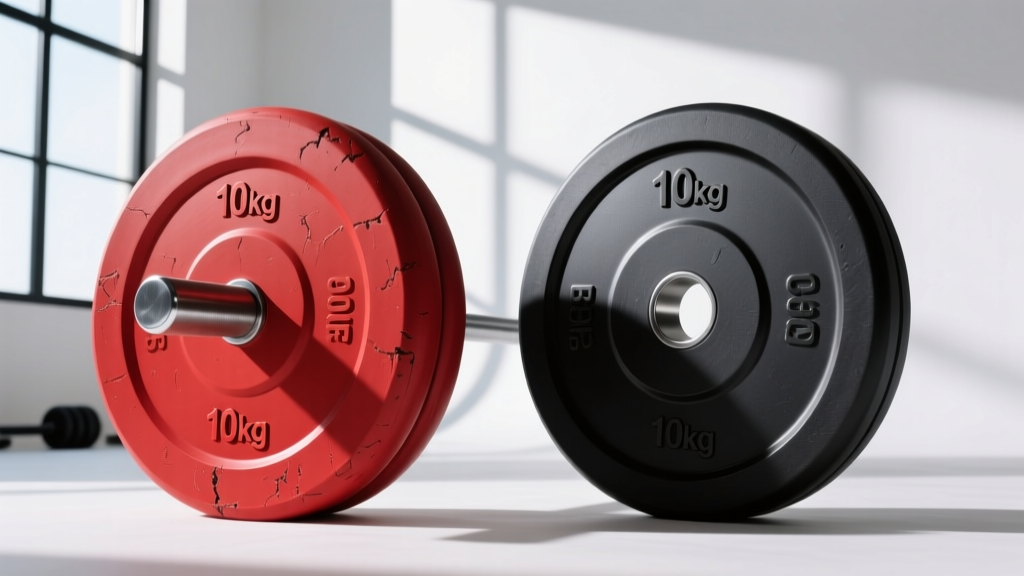
Beyond Holding Dumbbells: Bumper Plate vs Iron Plate Comparison
Upgrading from holding dumbbells to barbell work? We compare bumper plate vs iron plate options, covering drop ratings, pricing, and top 2026 picks.

The Transition: From Dumbbells to the Barbell
Most home gym owners start their fitness journey by simply holding dumbbells for goblet squats, lunges, and isolation presses. Dumbbells are versatile, accessible, and perfect for building a foundational base. However, once you hit a strength plateau or decide to pursue heavy compound movements like deadlifts, power cleans, and overhead snatches, the barbell becomes mandatory. This brings you to a critical crossroads in equipment purchasing: do you buy traditional cast iron plates, or invest in rubber bumper plates?
Choosing between the two isn't just about aesthetics or budget; it fundamentally alters your training environment, floor safety, and barbell sleeve capacity. In this hands-on review and expert comparison, we break down the exact material science, pricing metrics, and real-world failure modes of bumper vs. iron plates to help you make the right choice for your 2026 setup.
Expert Summary: The Quick Verdict
- Choose Iron Plates if: You primarily do powerlifting (squat, bench, deadlift), need to maximize barbell sleeve capacity for 500+ lb lifts, and have a dedicated lifting platform.
- Choose Bumper Plates if: You perform Olympic weightlifting (cleans, snatches), do CrossFit-style workouts, or need to drop weights on a garage concrete floor without destroying the slab.
Head-to-Head: Bumper vs. Iron Plate Specifications
Before diving into specific brands, it is vital to understand the structural differences. According to BarBend's comprehensive equipment analysis, the core divergence lies in material density and kinetic energy absorption.
| Feature | Cast Iron / Steel Plates | Virgin Rubber Bumper Plates | Crumb Rubber Bumpers |
|---|---|---|---|
| Material | Cast Iron or Machined Steel | Vulcanized Virgin Rubber | Recycled Rubber Crumb |
| Thickness (45lb) | 1.3" - 1.5" | 3.0" - 3.25" | 3.5" - 4.0" |
| Drop Rating | Low (Will crack floors/bars) | High (10,000+ drops) | Medium (Prone to edge tearing) |
| Bounce (Shore A) | N/A (Zero bounce) | 85-90 (Dead bounce) | 70-75 (High bounce) |
| Avg Cost Per Pound | $1.20 - $2.50 | $2.50 - $4.00 | $1.80 - $2.50 |
The Case for Iron: Density, Capacity, and Powerlifting
If your training revolves around the big three powerlifts—squat, bench press, and deadlift—iron plates are the undisputed champion. The primary advantage here is density. Because iron is significantly denser than rubber, a 45-pound cast iron plate is roughly 1.5 inches thick, compared to over 3 inches for a standard bumper plate.
The Sleeve Capacity Math
A standard Olympic barbell sleeve is 16.3 inches long. If you are loading Rogue Echo Bumper Plates (3.25 inches thick per 45lb plate), you can only fit four plates per side. That caps your barbell at 405 lbs (including the 45lb bar). Conversely, using 1.5-inch machined iron plates allows you to load up to ten plates per side, pushing the capacity well past 900 lbs. For elite powerlifters or those doing heavy pin pulls, iron is non-negotiable.
Failure Modes of Iron Plates
Iron plates are virtually indestructible in terms of structural integrity, but they are highly susceptible to cosmetic and environmental degradation. Standard cast iron plates will rust rapidly in humid garage environments unless they are enameled or powder-coated. Furthermore, dropping a 315lb barbell loaded with iron plates from a deadlift lockout onto bare concrete will crack the slab and permanently bend your barbell's sleeve bearings.
The Case for Bumpers: Olympic Lifts and Floor Protection
Bumper plates were engineered for a single purpose: to be dropped from overhead. When transitioning from holding dumbbells for strict presses to executing explosive barbell snatches and cleans, the ability to safely bail or drop the bar is critical for joint longevity and equipment survival.
Understanding Durometer and 'Dead Bounce'
Not all rubber is created equal. Expert lifters look at the Shore A durometer scale to measure rubber hardness.
- Virgin Rubber (85-90 Shore A): Found in premium plates like Fringe Sport Black Bumpers or Rogue Echo. This high density creates a 'dead bounce,' meaning the plate absorbs kinetic energy and stays planted on the floor upon impact.
- Crumb Rubber (70-75 Shore A): Found in cheaper, recycled 'Hi-Temp' plates. These are softer and bouncier. Dropping a heavy snatch with crumb bumpers can result in the barbell violently rebounding, posing a severe safety hazard to your wrists and face.
Expert Warning: Never drop a barbell loaded with only 10lb or 15lb bumper plates. The thin rubber cannot absorb the kinetic energy of a heavy barbell, which will cause the steel center insert to punch through the rubber and bend your barbell sleeve. Always use 45lb bumpers as your base load.
Grip Training: Plate Pinches vs. Holding Dumbbells
An often-overlooked aspect of the iron vs. bumper debate is how the plates interact with accessory grip work. Many lifters rely on holding dumbbells for heavy farmer's walks to build crushing grip strength. However, plate pinches are a superior method for targeting the thumb and adductor pollicis muscles.
For plate pinches, machined iron plates are vastly superior. The smooth, flat, painted surface of a 10lb iron plate allows you to pinch two plates together seamlessly. Bumper plates, with their thick, rounded rubber edges and raised lettering, make flush pinching nearly impossible and alter the biomechanics of the grip stimulus. If grip specialization is part of your programming, keeping a set of 10lb and 5lb iron plates in your arsenal is highly recommended.
Expert Top Picks for 2026
Based on hands-on testing, drop-test durability, and current market pricing, here are our top recommendations for the year.
1. Best Overall Bumper: Rogue Echo Bumper Plates V2
Price: ~$2.75/lb | Shore A: 85 | Thickness: 3.25" (45lb)
The Rogue Echo remains the gold standard for garage gyms. The V2 iteration features a multi-piece steel hub that drastically reduces the risk of the insert popping out during high-impact drops. The dead bounce is exceptional, and the minimal 3.25-inch width allows you to fit up to 365 lbs on a standard barbell sleeve.
2. Best Budget Iron: Titan Fitness Cast Iron Plates
Price: ~$1.40/lb | Finish: Matte Enamel | Thickness: 1.4" (45lb)
For powerlifters who don't drop their bars, Titan's cast iron plates offer unmatched value. The matte enamel finish resists chipping better than cheap glossy paints, and the machined inner steel rings ensure a snug fit on the barbell sleeve, eliminating the annoying 'clanking' sound during heavy bench presses.
3. Best Premium Calibrated: Eleiko IPF Calibrated Steel
Price: ~$12.00/lb | Tolerance: +/- 10 grams | Thickness: 1.1" (45lb)
If you are a competitive powerlifter requiring exact weight tolerances and maximum sleeve space, Eleiko's calibrated steel is the apex predator. As noted by Garage Gym Reviews, the ultra-thin profile and precise weight accuracy justify the massive price tag strictly for sanctioned meet prep.
Final Verdict: Building Your Hybrid Setup
You do not necessarily have to choose just one. The most efficient home gyms in 2026 utilize a hybrid approach. We recommend purchasing a core set of 45lb and 25lb virgin rubber bumper plates for your dynamic Olympic lifts and high-rep CrossFit metcons. Then, supplement with a pair of 10lb and 5lb machined iron plates for micro-loading your bench press, executing heavy deadlifts where bounce is undesirable, and performing plate pinches to supplement the grip strength you've built from years of holding dumbbells.
By understanding the kinetic properties, sleeve mathematics, and material science of your weight plates, you can build a resilient, safe, and highly functional free weight setup that will survive decades of heavy abuse.
More gear to consider
All reviews
Barbell Collar Types & How to Deadlift with Dumbbells Safely

What Dumbbell Weight to Use & Best Storage Racks 2026

Rack Longevity: Storing the Biggest Dumbbell in the World

Bumper vs Iron Plates: Gym Space & Incline Dumbbell Press Shoulders
Top Loadable Dumbbells for the Dumbbell Sit Up Press 2026
