
XTERRA TR150 Folding Treadmill Belt Maintenance in Tight Spaces
Learn how to properly lubricate and maintain your XTERRA TR150 folding treadmill belt, addressing storage angles, lubricant migration, and tight-space layouts.

The Hidden Cost of Folding: How Storage Angles Affect Belt Health
As of 2026, the XTERRA TR150 folding treadmill remains one of the most popular budget-friendly cardio machines for apartment dwellers and home offices. Priced consistently between $299 and $349, its 2.25 HP motor and 50-inch by 16-inch running surface offer excellent value. However, space optimization introduces a hidden mechanical challenge that most owner manuals gloss over: the physics of vertical storage and its direct impact on belt lubrication.
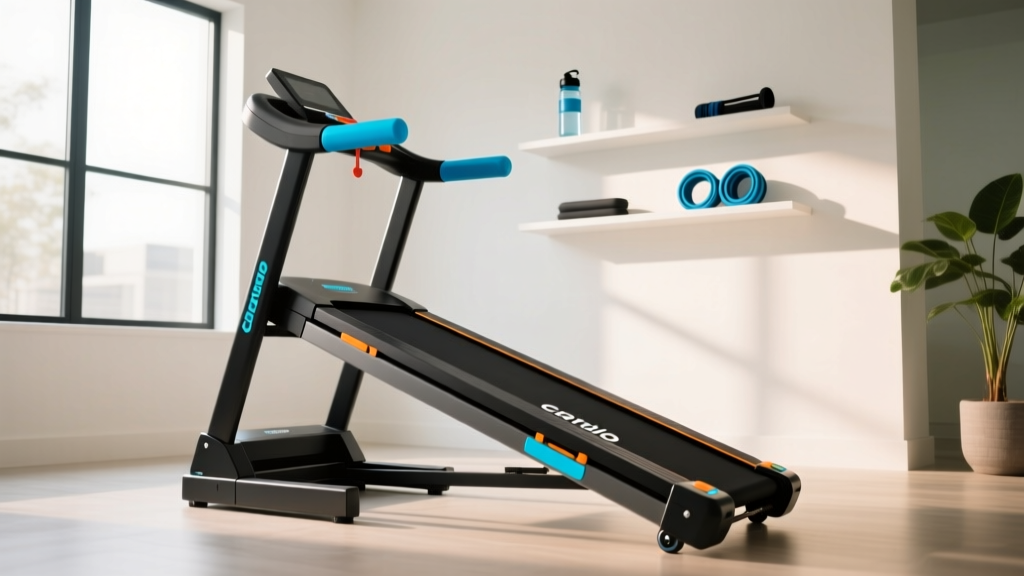
When you engage the hydraulic soft-drop cylinder to fold the TR150, the rear of the deck lifts toward the console, creating a 45-to-60-degree upward incline. If the belt is not properly maintained before long-term storage, 100% silicone lubricant migrates downward toward the front roller and motor housing. This leaves the upper running surface bone-dry and prone to micro-tearing, while simultaneously pooling excess oil near the motor seal, which attracts dust and lint from closet environments.
⚠️ Critical Lubricant Warning: Never use WD-40, silicone spray aerosols, or petroleum-based oils on your TR150. These degrade the PVC belt backing and destroy the wax-coated MDF deck. You must use only liquid 100% pure silicone treadmill lubricant, typically costing $8 to $12 per 4oz bottle.Designing the 'Maintenance Clearance' Zone
Effective space optimization is not just about where you store the machine; it is about designing a layout that allows you to service it. A common mistake in small-room layouts is pushing the folded treadmill flush against a baseboard or wedging it into a 20-inch alcove. This makes routine belt tensioning and lubrication physically impossible without dragging the 108-pound machine into the center of the room.
To maintain your XTERRA TR150 folding treadmill without moving it, your floor plan must incorporate a Maintenance Clearance Zone. According to equipment servicing standards outlined by Treadmill Doctor, proper belt alignment requires access to the rear roller adjustment bolts.
- Right-Side Clearance (24 Inches): The motor and drive belt are housed on the left, but the primary belt tracking adjustments are often accessed via the rear end caps. You need at least 24 inches of lateral space on the right side to comfortably use a 6mm Allen wrench without scraping your knuckles against a drywall partition.
- Rear Clearance (30 Inches): When folded, the 6-foot power cord hangs near the rear stabilizer. If pushed flush against a wall, the cord crimps against the metal frame, causing voltage drops that can starve the 2.25 HP motor during startup. Leave 30 inches of rear clearance to manage the cord loop and allow the rear roller to breathe.
- Overhead Clearance (72 Inches): Ensure no floating shelves or low-hanging pendant lights obstruct the console when unfolding the deck.
Step-by-Step Belt Lubrication in a Confined Layout
If your layout restricts you from moving the machine to an open area, follow this confined-space lubrication protocol. This method minimizes the footprint required to service the deck.
- Unfold and Secure: Lower the deck using the hydraulic release knob. Plug the machine directly into a wall outlet (avoid extension cords in tight spaces to prevent tripping hazards and voltage sag).
- The 'Snap' Test: Lift the center of the belt. It should rise about 2 to 3 inches. If it lifts higher, the belt is too loose and will slip during high-speed intervals; if lower, it is creating excess friction on the 100% silicone wax deck.
- Loosen the Belt: Using a 6mm Allen wrench, turn the left and right rear roller bolts counter-clockwise by exactly one full rotation. This creates enough slack to slide your hand under the belt without needing to lift the heavy frame.
- Apply the Silicone: Squeeze an 8-inch zigzag line of 100% liquid silicone directly onto the center of the deck, underneath the belt. Repeat on the opposite side.
- Re-Tension and Distribute: Tighten the rear bolts clockwise by one full rotation. Power on the TR150 to 3.0 MPH. Stand on the side rails, not the belt. Let it run for 3 minutes. The rotation will evenly distribute the silicone from the center to the edges.
Lubrication Frequency Matrix: Folded vs. Flat Storage
The frequency of your maintenance depends entirely on how your spatial layout dictates the machine's resting state. Machines stored vertically require different care intervals than those left flat in a dedicated home gym.
| Storage Orientation | Usage Level | Lubrication Interval | Primary Failure Risk |
|---|---|---|---|
| Always Flat (Dedicated Room) | Under 3 hours/week | Every 6 months / 150 miles | Edge fraying from foot-strike patterns |
| Always Flat (Dedicated Room) | Over 3 hours/week | Every 3 months / 75 miles | Motor thermal cutoff due to friction |
| Folded Vertically (Closet/Alcove) | Any Usage | Every 2 months + Pre-Storage | Lubricant pooling at front roller; dry top-deck |
For official troubleshooting and warranty-specific maintenance requirements, always cross-reference your routine with the XTERRA Fitness Support Portal to ensure you do not inadvertently void your coverage.
Edge Cases: Troubleshooting Post-Storage Belt Friction
Thermal Cutoffs in Enclosed Alcoves
If you store and operate your XTERRA TR150 in a narrow, poorly ventilated alcove, you are at a high risk for motor thermal cutoffs. When a belt lacks lubrication due to vertical migration, the friction coefficient between the belt and the MDF deck spikes. The 2.25 HP motor must draw higher amperage to maintain speed. In a confined space with poor ambient airflow, the motor housing heats up rapidly, tripping the internal thermal breaker. Fix: If the machine suddenly dies mid-run, do not unplug it immediately. Turn off the red rocker switch near the power cord, wait 15 minutes for the thermal fuse to reset, and lubricate the belt before restarting.
Belt Drift After Vertical Storage
When the TR150 is folded, the belt rests under uneven tension if the hydraulic cylinder settles slightly over time. Upon unfolding, users often notice the belt drifting aggressively to the left or right within the first two minutes of use. Do not immediately adjust the rear roller bolts. Instead, run the machine at 4.0 MPH for five minutes. The heat generated will soften the silicone and allow the belt to naturally re-center on the crowned front and rear rollers. Only use the Allen wrench to adjust tracking if the belt continues to rub against the side rail after the warm-up period.
Pro Layout Tip: Place a high-density EVA foam equipment mat (at least 3/8-inch thick) under the TR150. In tight spaces, sound transfers directly through floor joists to neighbors below. A mat not only dampens the 75-decibel footfall noise but also prevents the front motor hood from vibrating against hard flooring, which can loosen the internal drive belt over time.
Optimizing your space for a folding treadmill means looking beyond the physical footprint. By designing a layout that respects the mechanical realities of lubricant migration and tool clearance, you ensure your XTERRA TR150 operates smoothly for years, regardless of how small your home gym might be.
More gear to consider
All reviews
Folding Treadmill Review: Space Safety and the Corey Treadmill Death
Small Space Folding Treadmill Review: Is Treadmill Removal Free?

Curved Manual vs Motorized: Is the Wahoo KICKR Treadmill Right for You?

Stair Climber Setup Walkthrough vs NordicTrack Treadmill E2500

Under Desk Treadmill for Office Use Review: Bowflex vs Sole Treadmill
