Rowing Machine Buying Guide & Technique: ProForm XP Treadmill Switch
Transitioning from a ProForm XP treadmill? Discover our 2026 rowing machine buying guide, stroke technique troubleshooting, and common beginner mistakes.

Why Runners Transition from the ProForm XP Treadmill to Rowing
If you have spent years logging miles on a ProForm XP treadmill—such as the legacy ProForm XP 110 or XP 90 incline trainers—you already know the value of consistent, high-incline cardiovascular work. These machines were famous for their 10% to 12% incline capabilities and reliable 2.5 CHP motors, making them a staple for home runners. However, the repetitive impact stress of daily treadmill running, even with advanced cushioning systems, eventually takes a toll on the patellar tendons, plantar fascia, and lumbar spine.
Transitioning to a rowing ergometer is one of the most effective ways to maintain elite cardiovascular conditioning while eliminating joint impact. According to the Hospital for Special Surgery, rowing engages approximately 86% of the body's musculature, offering a massive caloric burn without the ground-reaction forces associated with treadmill running. But making the switch is not as simple as just sitting down and pulling. Treadmill runners bring specific biomechanical habits to the rower that often result in inefficient strokes, lower back pain, and hardware frustration. This guide troubleshoots those exact mistakes and provides a comprehensive 2026 buying guide for your next cardio investment.
Troubleshooting Your Rowing Technique: 4 Treadmill-Induced Mistakes
When moving from the moving belt of a ProForm XP to the sliding seat of a rower, your brain will attempt to apply running mechanics to the rowing stroke. Here is how to troubleshoot and correct the most common form errors.
Mistake 1: Opening the Hips Too Early (The 'Incline Lean')
On a treadmill, especially when tackling a 10% incline, runners naturally hinge forward at the hips to maintain momentum and balance. On a rowing machine, this instinct is disastrous. If you open your torso before your legs have fully extended during the 'Drive' phase, you transfer the load directly to your lumbar erectors rather than your glutes and quads.
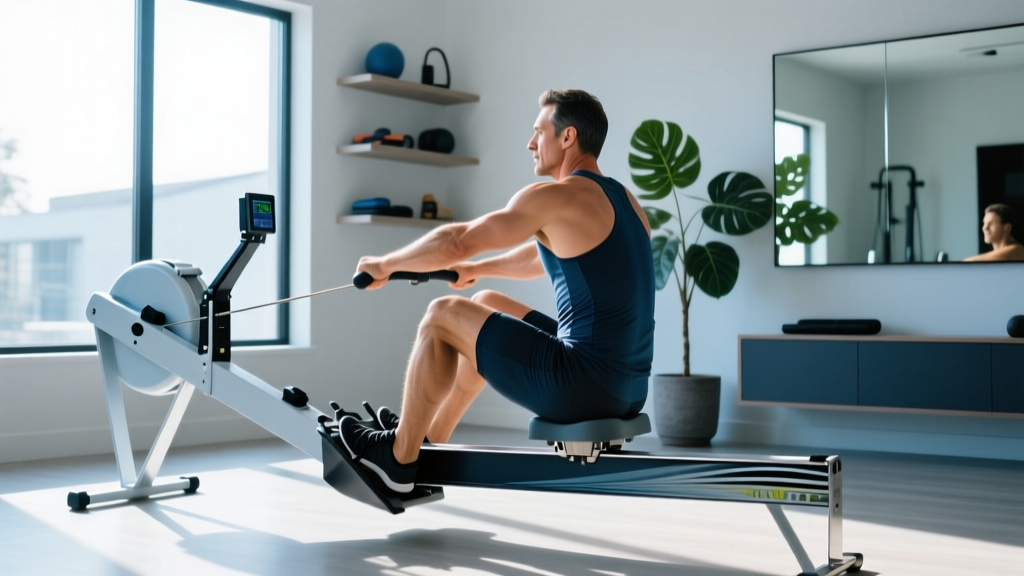
⚠️ Troubleshooting Fix: The rowing stroke is a strict sequence: Legs, Core, Arms. Imagine your arms are merely ropes connecting your torso to the handle. Do not allow your shoulders to move past your hips until your legs are completely straight. Review the official Concept2 technique breakdown to visualize the proper hip-hinge timing.Mistake 2: Setting the Damper to 10
Treadmill users often equate 'higher numbers' with 'better workouts'—cranking the incline to max and the speed to the limit. On an air rower, beginners immediately slam the side damper lever up to 10. This is a critical error. A damper setting of 10 does not mean a better workout; it simply lets more air into the flywheel housing, creating a heavier 'drag factor' that mimics rowing a slow, heavy wooden boat. This leads to premature muscular fatigue and compromised form before you even reach your aerobic threshold.
- The Fix: Access the hidden 'Drag Factor' menu on your performance monitor. For 90% of aerobic conditioning, you want a drag factor between 110 and 130. On a new Concept2 RowErg, this usually corresponds to a physical damper setting between 3 and 5. Read more about calculating your ideal drag factor here.
Mistake 3: Over-Compressing at the Catch
Runners are used to a long, reaching stride. On the rower, this translates to sliding too far forward at the 'Catch' (the starting position), causing the shins to angle past vertical and the heels to lift excessively. This over-compression jams the hips and forces the lower back into a rounded, vulnerable position.
'Your shins should be perfectly vertical at the catch. If your knees are tracking over your toes, you have slid too far forward. Stop the slide when your shins hit 90 degrees.' — Elite Rowing Coaching Principle
Mistake 4: Gripping the Handle Like Treadmill Handrails
White-knuckling the handle creates immense tension in the forearms and upper traps, leading to early grip failure. Hold the handle loosely with your fingers wrapped around it, thumbs underneath, keeping your wrists completely flat and neutral.
Hardware Troubleshooting: Fixing Common Rower Squeaks and Slips
Unlike the motorized belt of your ProForm XP treadmill, rowing machines are largely mechanical and require specific, albeit minimal, maintenance. If your new rower is acting up, troubleshoot these common hardware issues:
| Symptom | Likely Cause | Troubleshooting Solution |
|---|---|---|
| Grinding noise on the drive | Dry or dirty chain | Wipe chain with a paper towel and apply purified mineral oil (never use WD-40). Re-oil every 50 hours of use. |
| Seat sticking on the rail | Dust buildup on monorail | Wipe the stainless steel or aluminum rail with a damp cloth or glass cleaner before every session. |
| Cloudy water / foul smell (Water Rowers) | Algae or bacterial growth | Drop a chlorine purification tablet into the tank. Do this every 6 months; never use bleach. |
| Bungee cord slack (Handle won't retract) | Stretched elastic return cord | Consult your manufacturer's manual to adjust the bungee tension knob or replace the shock cord. |
The 2026 Rowing Machine Buying Guide: Air vs. Water vs. Magnetic
When replacing a ProForm XP treadmill, you are likely looking for a machine that offers durability, accurate data tracking, and a realistic feel. The 2026 market is dominated by three resistance types. Here is how to choose the right one for your home gym.
1. Air Resistance (The Gold Standard)
Air rowers use a flywheel with fan blades. The harder you pull, the more resistance is generated. They are infinitely variable and are the undisputed choice for competitive athletes and CrossFit gyms.
- Top Pick: Concept2 RowErg (Standard Legs)
- 2026 Price: ~$1,100
- Pros: Unmatched durability, industry-standard PM5 monitor, easy to store (separates in half), massive resale value.
- Cons: The fan generates significant noise, which can interfere with watching TV or listening to podcasts without headphones.
2. Water Resistance (The Aesthetic & Sensory Choice)
Water rowers use paddles suspended in a polycarbonate tank of water. They provide a highly realistic 'on-water' feel and a soothing swooshing sound that many users prefer over the mechanical whir of an air rower.
- Top Pick: WaterRower Natural (Oak)
- 2026 Price: ~$1,599
- Pros: Beautiful furniture-grade wood construction, quiet operation, smooth catch.
- Cons: Requires water purification maintenance, monitor technology is generally less advanced than air rowers, cannot be easily folded.
3. Magnetic Resistance (The Silent, Tech-Forward Choice)
Magnetic rowers use a magnetic brake system to create resistance. They are nearly silent and often feature massive integrated touchscreens for immersive programming.
- Top Pick: NordicTrack RW900
- 2026 Price: ~$1,199 (plus IFIT subscription)
- Pros: Whisper-quiet operation, 22-inch HD touchscreen, automated resistance adjustments via IFIT programming.
- Cons: Requires a paid subscription for full functionality, heavy and difficult to move, resistance feels slightly less 'dynamic' than air or water.
Final Verdict: Making the Switch
Upgrading from a ProForm XP treadmill to a rowing machine is a brilliant move for longevity, full-body conditioning, and joint preservation. However, the transition requires a conscious effort to unlearn running mechanics. Focus heavily on the 'legs-core-arms' sequencing, keep your drag factor in the 110-130 sweet spot, and maintain your machine's chain or water tank regularly. Whether you choose the indestructible Concept2 RowErg or the visually stunning WaterRower, mastering the ergometer will unlock a new tier of cardiovascular fitness that the treadmill simply cannot provide.
More gear to consider
All reviews
Office Treadmill Review: Space vs ProForm ProShox 2 Treadmill Manual

NordicTrack Commercial Series 1250 Treadmill & Bike Space Layout

Stair Climber Machine for Home Use Guide vs Treadmills for Heavy Users
Treadmill Belt Maintenance & Pace Conversion Chart Guide

NordicTrack Ultra 1 Treadmill vs Under Desk Office Models