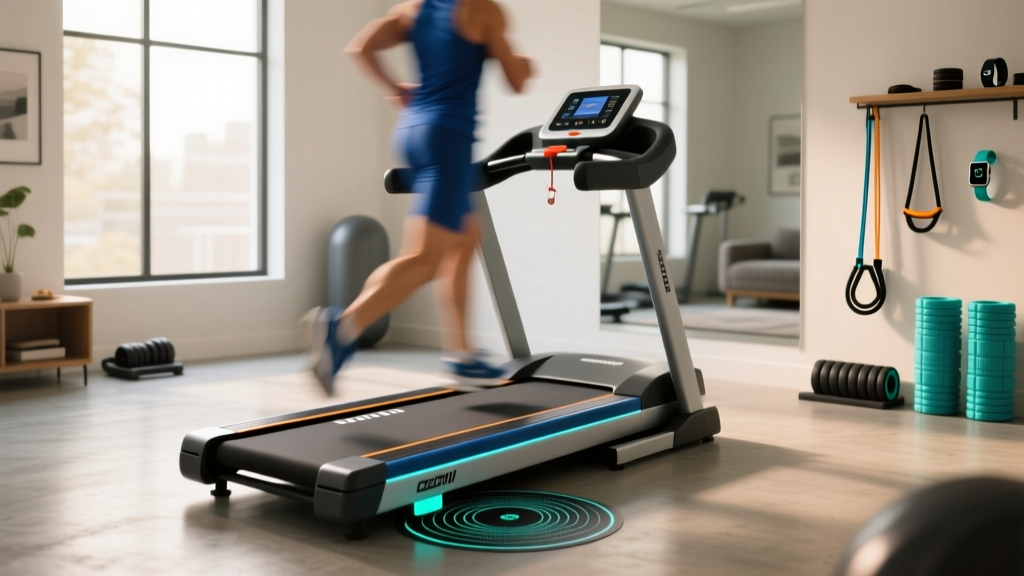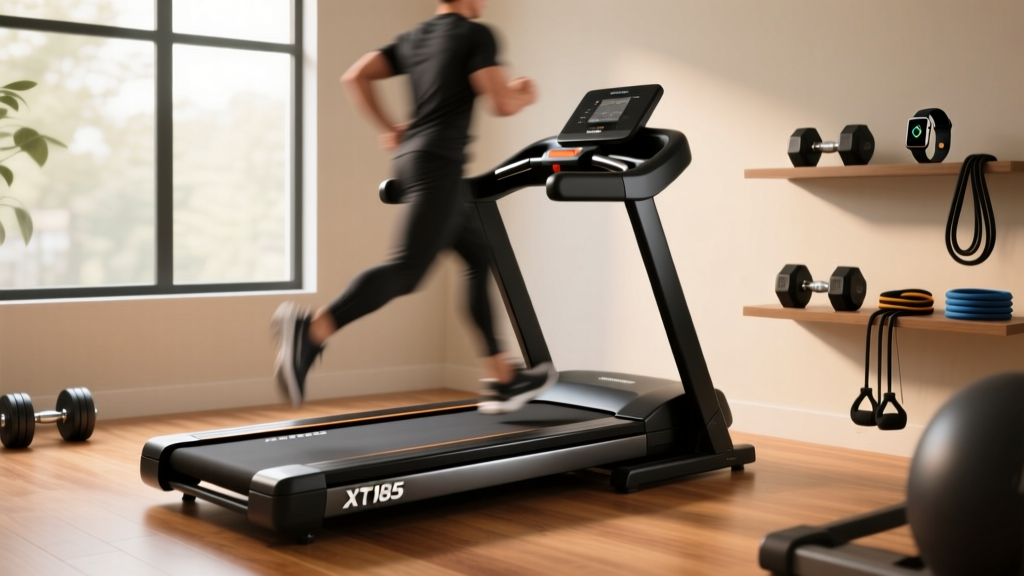
XT185 Treadmill Installation & Motor Horsepower Guide
Master your XT185 treadmill setup with our complete installation walkthrough. Learn how motor size and horsepower impact electrical and placement needs.

Decoding the XT185 Treadmill: Why Motor Size Dictates Your Setup
Setting up a premium, heavy-duty cardio machine is about far more than simply bolting the console to the uprights and plugging it into the nearest wall outlet. When unboxing the XT185 treadmill, you are dealing with a sophisticated piece of engineering centered around a massive 3.75 Continuous Horsepower (CHP) motor. In the 2026 home fitness market, high-torque motors like this are becoming the gold standard for serious runners, but they also introduce strict electrical and spatial requirements that cheaper, lower-horsepower models simply do not have.
This comprehensive setup and installation walkthrough will guide you through the physical assembly of the XT185 while deeply exploring the science of treadmill motor sizes. Understanding how horsepower impacts electrical draw, heat dissipation, and belt friction is the key to ensuring your machine operates flawlessly for the next decade. Let's break down the exact steps required to safely install, calibrate, and optimize your XT185 treadmill.
⚠️ Critical Electrical Warning
Before unboxing the XT185, you must verify your electrical circuit. The 3.75 CHP motor requires a dedicated 20-amp circuit (NEMA 5-20R receptacle). Plugging this machine into a standard shared 15-amp bedroom or living room circuit will result in immediate breaker trips during startup surges and poses a severe fire hazard.
Treadmill Horsepower Explained: Peak HP vs. Continuous Duty (CHP)
To properly install and maintain the XT185, you must understand the terminology manufacturers use to describe motor size. The fitness industry is notorious for misleading marketing, specifically the use of 'Peak HP' versus 'Continuous Duty Horsepower' (CHP).
- Peak HP: This is the absolute maximum horsepower the motor can achieve for a fraction of a second under zero load before it burns out. It is a useless metric for real-world running and is often used to inflate the perceived value of budget treadmills.
- Continuous Duty HP (CHP): This is the true measure of a motor's capability. A 3.75 CHP motor, like the one in the XT185, has been tested to deliver 3.75 horsepower continuously, under a heavy load, at a high incline, without overheating. According to equipment selection guidelines from the American Council on Exercise (ACE), CHP is the only metric consumers should reference when evaluating treadmill longevity and performance.
The XT185's 3.75 CHP motor utilizes a heavy-duty 2.5 kg flywheel and Pulse Width Modulation (PWM) technology on its Motor Control Board (MCB) to deliver smooth, consistent voltage to the drive belt, ensuring that even a 250 lb runner sprinting at 12 MPH experiences zero belt hesitation.
Motor Size vs. User Weight: The Strain Matrix
Why does the XT185 need a 3.75 CHP motor? The answer lies in the physics of kinetic energy and friction. The heavier the user and the faster the pace, the more torque the motor must generate to keep the belt moving underfoot. Below is a standardized matrix detailing the minimum CHP requirements based on user weight and primary activity.
| User Weight | Primary Activity | Minimum Required CHP | XT185 (3.75 CHP) Suitability |
|---|---|---|---|
| Under 150 lbs | Walking / Light Jogging | 2.5 CHP | Overkill (Excellent longevity) |
| 150 - 200 lbs | Jogging / Interval Training | 3.0 CHP | Ideal (Runs cool and efficient) |
| 200 - 250 lbs | Running / High Incline | 3.5 CHP | Perfect Match (Optimal torque) |
| 250+ lbs | Sprinting / Heavy Load | 4.0+ CHP | Capable (May run warmer at max incline) |
Pre-Installation: Electrical & Spatial Requirements
Step 1: Verifying Your Circuit Capacity
A 3.75 CHP motor translates to roughly 2,800 watts of power at peak operational load. At 120 volts, this equates to an operational draw of 10 to 14 amps depending on speed and incline. However, the startup surge—the moment the motor overcomes static friction to get the belt and user moving—can spike to 18 amps for up to three seconds. The NFPA electrical safety codes dictate that continuous loads should not exceed 80% of a circuit's rated capacity. Therefore, a 15-amp circuit (max 12 amps continuous) is mathematically insufficient for the XT185. You must hire a licensed electrician to install a dedicated 20-amp NEMA 5-20R outlet if your home gym currently only has standard 15-amp NEMA 5-15R outlets.
Step 2: Spatial Clearances for Heat Dissipation
High-horsepower motors generate significant thermal energy. The XT185 features an active cooling fan integrated into the motor hood, but it requires adequate ambient airflow. Do not push the motor hood directly against a wall. You must leave a minimum of 24 inches of clearance behind the treadmill and 36 inches on the sides to allow the PWM board and motor windings to shed heat effectively. Trapped heat is the number one cause of premature MCB failure in high-CHP treadmills.
Physical Assembly: Protecting the Motor Housing
With the electrical and spatial prep complete, move on to the physical assembly. The XT185 weighs approximately 285 lbs in the box. Use a two-person lift technique to position the base frame onto a high-density EVA foam equipment mat. The mat is crucial; it absorbs vibration and prevents dust from being sucked into the motor compartment by the cooling fan.
Step 3: Upright and Console Wiring
When raising the steel uprights, pay meticulous attention to the internal wiring harness. The XT185 routes the motor control wires directly up the left upright to the smart-console. Never pinch these wires between the metal brackets. A pinched wire will cause a short circuit that can instantly fry the motor controller. Use the included M8 x 15mm bolts and tighten them to exactly 25 Nm of torque using a calibrated torque wrench. Overtightening can warp the frame and cause the deck to sit unevenly, which leads to belt tracking issues.
Belt Tension: The Hidden Killer of Treadmill Motors
'The most common reason a 3.75 CHP motor burns out is not user weight; it is an overtightened running belt. Friction is the enemy of electrical efficiency.'
During factory transit, the XT185's belt is often tightened to prevent slipping on the delivery truck. Before your first run, you must check the belt tension. An overly tight belt forces the motor to work against its own mechanical resistance, drawing excess amperage and triggering the thermal safety breaker.
- Turn off and unplug the treadmill.
- Reach under the center of the running belt.
- You should be able to lift the belt exactly 2 to 2.5 inches off the walking deck.
- If it lifts less than 2 inches, use the included Allen wrench to loosen the rear roller adjustment bolts by exactly one-quarter turn on each side.
- Apply 100% pure liquid silicone lubricant (never aerosol sprays, which degrade the belt rubber) under the belt according to the manufacturer's schedule.
Final Calibration and Stress Testing
Once assembled, plug the XT185 into your verified 20-amp dedicated circuit. Stand on the side rails, insert the magnetic safety key, and initiate the calibration sequence (usually accessed by holding the 'Incline Up' and 'Speed Down' buttons simultaneously for 5 seconds). The machine will automatically cycle through its maximum speed of 12 MPH and maximum incline of 15% to calibrate the motor sensors.
After calibration, perform a manual stress test. Walk at 3.0 MPH for five minutes, monitoring the belt for lateral drift. If the belt drifts left, tighten the left rear roller bolt by a quarter turn. Finally, run at 8.0 MPH at a 5% incline for ten minutes. Afterward, carefully place your hand near the motor hood exhaust vent. The air should be warm, but not hot enough to burn. If the motor hood is excessively hot, re-check your belt tension and deck lubrication immediately.
Frequently Asked Questions (FAQ)
Can I use an extension cord with the XT185 treadmill?
No. Extension cords, even heavy-duty 12-gauge ones, introduce voltage drop over distance. This voltage drop forces the 3.75 CHP motor to draw higher amperage to compensate for the lack of voltage, leading to overheating and voiding the manufacturer's warranty. Always plug directly into the wall receptacle.
How often should I lubricate the deck to protect the motor?
For the XT185, you should apply 1 oz of 100% silicone lubricant every 150 miles or every 3 months, whichever comes first. Proper lubrication reduces the amp draw on the motor by up to 30%, significantly extending the lifespan of the carbon brushes and the MCB.
What happens if my home only has 15-amp circuits?
If you cannot install a 20-amp circuit, you must downgrade your equipment expectations. A 3.75 CHP treadmill will continually trip a 15-amp breaker. You would need to look into treadmills with a maximum of 2.5 CHP, which are designed to operate safely on standard 15-amp residential circuits.
More gear to consider
All reviews
Curved vs Motorized Treadmills: Beyond Cats on Treadmill Videos
Stair Climber Guide: Translating Mile Times on Treadmill

Rent to Own Treadmill Guide: 2026 Costs & Feature Comparison

Umay Treadmill vs Motorized: 2026 Curved Manual Comparison

Air Bike vs Assault Bike Space & Burning Calories Walking on Treadmill