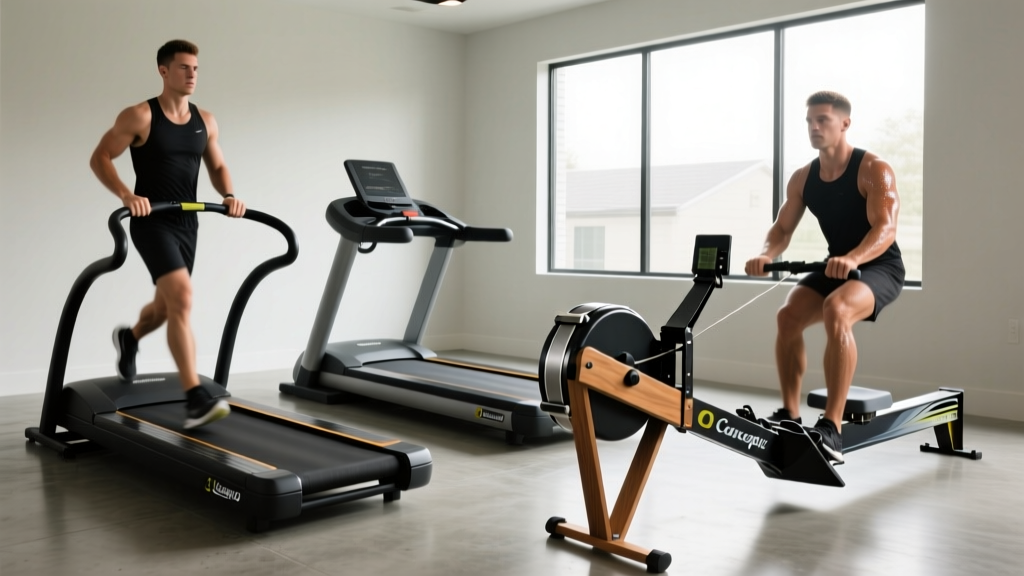
3.5 Horsepower Treadmill Belt Maintenance: 2026 Cost & Value Guide
Discover the true long-term costs of 3.5 horsepower treadmill belt maintenance. We break down lubrication, replacement, and deck value for 2026.

Dropping $1,500 to $2,500 on a premium cardio machine is a significant investment in your home gym. When you purchase a 3.5 horsepower treadmill—such as the Sole F85, Horizon 7.8, or the NordicTrack Commercial 2450—you are paying for continuous-duty torque, thermal stability, and a smoother running experience. However, a massive motor is only half the battle. The true bottleneck of any treadmill's lifespan is the friction interface between the running belt and the deck.
From a budget and value analysis perspective, neglecting belt maintenance on a high-output machine is a fast track to catastrophic financial loss. A dry belt doesn't just wear out; it acts as a mechanical brake, forcing your premium 3.5 HP motor to draw excessive amperage, ultimately frying the lower control board or burning out the motor windings. In this 2026 guide, we break down the exact costs, chemical requirements, and diagnostic frameworks necessary to protect your investment and maximize your long-term ROI.
The Hidden Friction Tax on Premium Motors
Many consumers assume that a 3.5 HP motor is virtually indestructible compared to a 2.0 HP budget model. While a 3.5 HP motor runs cooler under heavy loads, it is still bound by the laws of physics. According to repair data analyzed by the Treadmill Doctor's Lubrication Guide, a properly lubricated belt reduces the coefficient of friction to near-zero. When a belt dries out, the friction coefficient spikes.
When friction increases, the motor must work harder to maintain your target speed. This results in a spike in amp draw. A healthy 3.5 HP treadmill walking at 3.0 mph should draw between 6 and 9 amps. A dry, neglected belt can push that draw to 15+ amps. This excess current generates intense heat in the lower control board (LCB), eventually blowing a MOSFET or capacitor. Replacing an LCB on a modern NordicTrack or ProForm costs between $180 and $250, while a Sole replacement motor can exceed $350. Preventative maintenance is a matter of pennies on the dollar.
5-Year Maintenance Ledger: Budget Breakdown
To understand the true value of owning a 3.5 horsepower treadmill, we must look at the total cost of ownership (TCO) over a standard 5-year lifecycle. Below is a realistic budget breakdown for a heavy-use household (approx. 150 miles per year).
| Maintenance Item | Estimated Cost (2026) | Frequency | 5-Year Total Cost |
|---|---|---|---|
| 100% Silicone Lubricant | $12 - $16 (4oz bottle) | Every 3 months / 150 miles | $30 (approx. 2 bottles) |
| Belt Tension Adjustment | $0 (DIY) | Every 6 months | $0 |
| Replacement Running Belt | $70 - $130 | Year 4 or 5 (if worn) | $100 (average) |
| Deck Flip / Replacement | $150 - $280 | Year 5+ (Phenolic decks last longer) | $0 - $280 |
| Emergency LCB Replacement (If Neglected) | $180 - $350 | Unscheduled (High Risk) | $250+ |
Value Synthesis: A properly maintained 3.5 HP treadmill will cost you roughly $26 per year in consumable maintenance (lubricant and pro-rated belt wear). Compare this to a budget $600 treadmill with a 2.0 HP motor, which often requires a full belt and deck replacement by year two ($180+) and is highly susceptible to motor burnout by year three. The premium machine offers vastly superior long-term value, provided the maintenance ledger is respected.
The Chemistry of Lubrication: What to Buy (and Avoid)
Not all lubricants are created equal. The running decks on premium 3.5 HP treadmills are typically constructed from high-density fiberboard coated with a phenolic resin or melamine wax layer. Applying the wrong chemical compound will strip this coating, permanently ruining a $200 deck in a matter of weeks.
- The Gold Standard: 100% Pure Silicone (Polydimethylsiloxane). Brands like Impresa, Godora, or the OEM tubes sold by Sole and Life Fitness are ideal. They possess the correct viscosity to stay suspended between the belt and deck without evaporating.
- The Fatal Mistake: WD-40, 3-in-One Oil, or any petroleum-based distillate. Petroleum breaks down the rubber backing of the running belt and dissolves the phenolic resin on the deck.
- The 'Specialist' Trap: Even 'WD-40 Specialist Silicone' is not recommended. Aerosolized silicone sprays contain propellants and solvents (like isobutane) that can degrade deck wax and leave a sticky residue once the carrier solvents evaporate.
The 0.5-Ounce Protocol
Over-lubricating is just as dangerous as under-lubricating. Excess silicone will sling out from under the belt at high speeds, coating your motor hood, electronics, and floor in a slippery, dust-attracting film. Follow this exact protocol:
- Release Tension: Use the provided Allen wrench to loosen the rear roller bolts by exactly two full turns on each side.
- Apply: Lift the center of the belt and apply exactly 0.5 ounces (about half a standard squeeze tube) of 100% silicone in a zig-zag pattern across the center third of the deck.
- Retension: Tighten the rear roller bolts back to their original position (two full turns).
- Distribute: Turn the machine on and run it at 2.0 mph for 3 minutes. Walk on the belt lightly to help press the silicone outward toward the edges.
- Wipe: Use a dry microfiber cloth to wipe any excess silicone from the edges of the belt and the side rails.
Diagnostic Framework: Is Your Belt Destroying Your Investment?
How do you know if your maintenance routine is actually working? Relying on a calendar is insufficient; you must rely on diagnostic data. According to the Consumer Reports Treadmill Buying Guide, monitoring the physical wear and electrical draw of your machine is the best way to gauge its health.
The Amp-Draw Stress Test
This is the single most valuable diagnostic tool for a home gym owner. By plugging your 3.5 horsepower treadmill into a standard digital power meter (like a Kill A Watt meter, which costs about $25), you can measure the exact electrical strain on your motor.
Expert Insight: 'Most users wait until the belt physically frays or the deck groans before taking action. By that time, the lower control board has already endured hundreds of hours of thermal stress. Monitoring amp draw allows you to lubricate the deck based on actual mechanical resistance, not an arbitrary calendar date. If your walking amp draw creeps up by 20%, it is time to lubricate, regardless of when you last did it.'
Baseline Targets for a 3.5 HP Motor:
- Walking (3.0 mph, no user): 3 to 5 Amps
- Walking (3.0 mph, 180 lb user): 6 to 9 Amps
- Running (6.0 mph, 180 lb user): 10 to 14 Amps
- Danger Zone: If walking with a user exceeds 12 Amps, or running exceeds 18 Amps, your belt/deck interface is critically dry or the belt tension is improperly calibrated.
The Coast-Down Test
If you don't have a power meter, use the coast-down test. Set the treadmill to 4.0 mph. Step off onto the side rails and unplug the machine from the wall (or hit the emergency stop). Time how long it takes for the belt to come to a complete halt. A well-lubricated, properly tensioned belt on a 3.5 HP machine should coast for 8 to 12 seconds. If it stops abruptly in under 4 seconds, severe friction is present, and immediate maintenance is required to prevent motor damage.
Value Verdict: Does a 3.5 HP Motor Justify the Upkeep?
When analyzing the budget breakdown of home cardio equipment, the data overwhelmingly supports the purchase of a 3.5 horsepower treadmill—if the owner is committed to the $30 bi-annual lubrication protocol. A 3.5 HP continuous-duty motor operates at roughly 60% of its maximum capacity during a standard 6 mph run. This thermal headroom means the motor itself will easily outlast a decade of use.
The vulnerability lies entirely in the belt and deck. By investing 15 minutes every three months and $15 a year in pure silicone, you effectively decouple the lifespan of your electronics from the friction of the running surface. As noted in the Treadmill Doctor's Deck Replacement Analysis, a well-lubricated phenolic deck can easily survive 10,000 miles before requiring a flip or replacement. Ultimately, the 3.5 horsepower treadmill remains the undisputed king of long-term home gym value, provided you respect the chemistry of the belt.
More gear to consider
All reviews
Stair Climber Guide & Matrix PLED C Treadmill Troubleshooting
Upright, Recumbent, Spin Bikes & iPad Stand for Treadmill Mounts

PaceMaster Pro Elite Treadmill vs Under Desk Treadmills for Office Use
Horizon 7.0 AT Treadmill Specs & Noise Level Setup Guide
Treadmill Sprints Guide: Assault AirRunner vs Sole F85