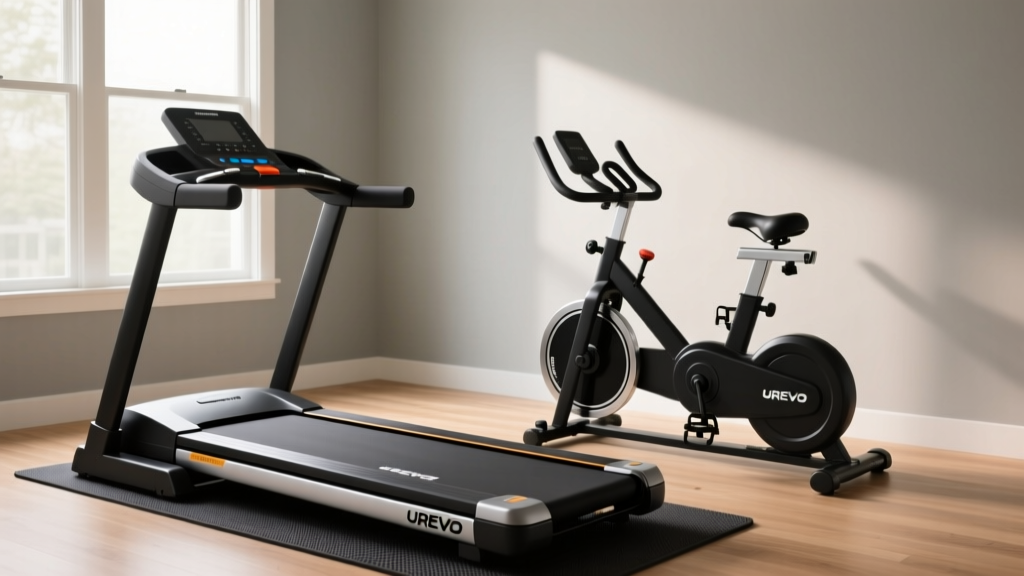
UREVO 2-in-1 Folding Walking Pad Treadmill & Stationary Bike Care
Expert maintenance tips for the UREVO 2-in-1 folding walking pad treadmill and stationary bike types (upright, recumbent, spin) to maximize longevity.

The 2026 Home Cardio Maintenance Standard
As hybrid work routines solidify in 2026, home cardio equipment has transitioned from a luxury to a daily necessity. However, a dual-machine setup—typically combining a compact walking pad with a dedicated cycling machine—introduces unique maintenance challenges. Neglecting these machines leads to degraded performance, voided warranties, and costly replacements. According to the American Council on Exercise (ACE), routine preventative maintenance can extend the lifespan of home fitness equipment by up to 40 percent.
This comprehensive guide provides deep-dive, actionable maintenance protocols for the highly popular UREVO 2-in-1 folding walking pad treadmill, alongside the three primary stationary bike types: upright, recumbent, and spin. We will cover exact lubrication types, torque specifications, and failure modes to ensure your gear operates flawlessly for years.
UREVO 2-in-1 Folding Walking Pad Treadmill Longevity
The UREVO 2-in-1 folding walking pad treadmill is engineered for space efficiency, featuring a collapsible handrail and a compact motor housing. This dual-mode design (desk walking vs. upright jogging) places unique mechanical stresses on the chassis and drive system.
1. Belt and Deck Friction Management
The most common cause of premature motor failure in walking pads is excessive belt-to-deck friction. The UREVO utilizes a multi-layer running belt that requires specific care.
- Lubricant Selection: Use only 100% pure silicone treadmill lubricant. Never use petroleum-based products, WD-40, or household oils, as these will degrade the PVC belt and void the warranty.
- Application Interval: Apply 5ml of silicone oil per side every 40 to 50 miles of use, or every 60 days, whichever comes first.
- Distribution Method: Lift the center of the belt, apply the oil in a zigzag pattern toward the edges, and run the treadmill at 3.0 mph for 5 minutes to distribute the fluid evenly across the deck.
2. Gas-Strut Hinge and Handrail Pivot Care
The 2-in-1 folding mechanism relies on gas struts and heavy-duty pivot bolts to support the handrail and console. Over time, the repetitive folding action can loosen these hardware components.
Expert Torque Check: Every 6 months, use a torque wrench to check the main handrail pivot bolts (typically M10 steel). Tighten them to 30-35 Nm. Over-tightening can strip the aluminum chassis threads, while under-tightening causes console wobble during runs exceeding 6.0 mph.3. Motor Compartment Airflow
The UREVO's 2.5 HP peak motor is housed in a low-profile front cowl. Dust and pet hair easily clog the rear ventilation grates, causing the motor control board to overheat and trigger thermal shutdowns. Use a vacuum with a brush attachment to clear the motor vents every 90 days. Do not use compressed air, as it can force dust deeper into the motor brushes.
Stationary Bike Types: Upright, Recumbent, and Spin
While the UREVO handles your daily step count, stationary bikes provide targeted cardiovascular and resistance training. Maintenance varies drastically depending on the bike's geometry and resistance mechanism. Consumer Reports notes that sweat corrosion and belt-drive degradation are the leading causes of indoor cycle failure.
Upright Bikes (Magnetic Resistance & Belt Drive)
Upright bikes, such as the Schwinn IC4 or NordicTrack commercial series, utilize a magnetic resistance system and a poly-V belt drive.
- Pedal Crank Torque: The lateral force applied during standing climbs loosens pedal cranks. Check the 9/16-inch pedal threads and crank arm bolts monthly. Apply blue Loctite (threadlocker) to the pedal threads if you notice persistent creaking.
- Belt Drive Tension: Unlike chains, poly-V belts do not require lubrication. However, they can stretch. If you experience a 'slipping' sensation under heavy load, consult your manual to adjust the rear flywheel axle bolts to increase belt tension.
Recumbent Bikes (Linear Rails & Mesh Backrests)
Recumbent bikes feature a seated bucket design that slides along linear guide rails to accommodate different user heights. This sliding mechanism is a major maintenance focal point.
- Seat Rail Lubrication: Wipe the steel linear rails with a microfiber cloth weekly to remove dust and skin cells. Apply a PTFE (Teflon) dry lubricant to the rails every 3 months. Avoid wet lubricants or grease, which will attract abrasive grit and score the steel rails, ruining the smooth glide.
- Mesh Backrest Care: The elastomeric mesh backrest absorbs significant sweat. Salt buildup degrades the elastic fibers, leading to sagging. Wipe the mesh down with a 50/50 distilled water and white vinegar solution bi-weekly to neutralize salt and preserve fabric tension.
Spin Bikes / Indoor Cycles (Bottom Brackets & Sweat Guards)
Spin bikes (e.g., Peloton Bike+, Keiser M3i) mimic road bike geometry, resulting in heavy sweat drip directly onto the bottom bracket (BB) and flywheel.
- Bottom Bracket Replacement: The BB bearings endure high radial loads. If you hear a rhythmic clicking or grinding from the crank center, the bearings are compromised. Most premium spin bikes use a standard 68mm BSA threaded bottom bracket. Replacing this with a sealed ceramic cartridge bearing (approx. $45-$60) will restore silent operation and last for years.
- Sweat Guard Integrity: Ensure the plastic sweat guard covering the flywheel is intact and securely fastened. Sweat dripping directly onto a bare cast-iron or aluminum flywheel will cause pitting and rust, which can subsequently degrade the brake pad or magnetic sensor.
2026 Comparative Maintenance Matrix
To streamline your home gym upkeep, refer to this structured matrix detailing the specific requirements for your cardio fleet.
| Equipment Type | Critical Component | Maintenance Action | Frequency | Est. Cost |
|---|---|---|---|---|
| UREVO Walking Pad | Running Belt | Apply 100% Silicone Oil (10ml total) | Every 50 miles | $12 / bottle |
| UREVO Walking Pad | Folding Hinge Bolts | Torque to 30-35 Nm | Every 6 months | $0 (Tool req.) |
| Upright Bike | Pedal Cranks | Check threads, apply Blue Loctite | Monthly | $6 / tube |
| Recumbent Bike | Linear Seat Rails | Clean and apply PTFE Dry Lube | Every 3 months | $9 / can |
| Spin Bike | Bottom Bracket | Replace sealed cartridge bearings | Every 2-3 years | $45 - $60 |
Environmental Controls and Sweat Mitigation
The environment in which you store your UREVO 2-in-1 folding walking pad treadmill and stationary bikes plays a massive role in their longevity. Basements and garages often suffer from humidity fluctuations that promote rust on exposed metal components like the UREVO's rear roller shafts and the spin bike's seat post.
- Equipment Mats: Always place your machines on a high-density PVC equipment mat (at least 3/8-inch thick). This prevents micro-vibrations from transferring to the floor, reduces static electricity buildup that can fry digital consoles, and catches sweat before it damages hardwood or carpet.
- Humidity Regulation: Maintain your home gym's relative humidity between 40% and 50%. If you live in a humid climate, run a dehumidifier in the workout space. High humidity accelerates the oxidation of the magnetic resistance flywheels found in upright and recumbent bikes.
- Post-Workout Protocol: Keep a dedicated microfiber towel and a bottle of non-corrosive, electronics-safe gym wipe solution near your bikes. Wipe down the handlebars, console screens, and seat posts immediately after every session to prevent salt-induced pitting.
Frequently Asked Questions (FAQ)
How do I know if my UREVO walking pad belt is too loose?
If the belt hesitates or slips when you step on it at low speeds, or if it drifts consistently to one side, it requires tensioning. Locate the rear roller adjustment bolts at the back of the deck. Turn both bolts clockwise by exactly one-quarter turn. Do not over-tighten, as excessive tension will strain the 2.5 HP motor and cause premature bearing failure.
Can I use standard bicycle chain lube on my recumbent bike seat rails?
No. Standard bicycle chain lube is typically a 'wet' lubricant designed to adhere to moving chains. On a linear seat rail, wet lubes will attract dust, pet hair, and dead skin, creating an abrasive paste that will scratch and ruin the steel rails. Always use a PTFE (Teflon) dry lubricant that evaporates quickly and leaves a slick, non-stick film.
Why is my spin bike making a rhythmic clicking noise only when I pedal forward?
A rhythmic clicking that stops when you back-pedal usually indicates an issue with the bottom bracket bearings or a loose pedal spindle. First, remove and re-grease the pedal threads. If the noise persists, the bottom bracket cartridge is likely worn or contaminated with sweat. Replacing the bottom bracket requires a specialized splined removal tool but is a straightforward repair that restores silent operation.
Conclusion
Investing in a UREVO 2-in-1 folding walking pad treadmill alongside a dedicated stationary bike provides a comprehensive cardiovascular solution for the modern home. However, the longevity of this equipment is directly tied to your adherence to a strict maintenance schedule. By managing belt friction, monitoring hinge torque, and protecting your bikes from sweat corrosion, you ensure your 2026 home gym remains a reliable, high-performance asset for years to come.
More gear to consider
All reviews
Oiling Treadmill Belts: Manual vs Maintenance-Free (2026)
Wahoo KICKR RUN Treadmill Belt Maintenance & 2026 Market Trends

Getting Your Ass on the Treadmill: Curved Manual vs Motorized

Is the Calorie Count on a Treadmill Accurate? Belt Friction & Costs

Skip the Treadmill Stress Test Price: Folding Treadmill Review
