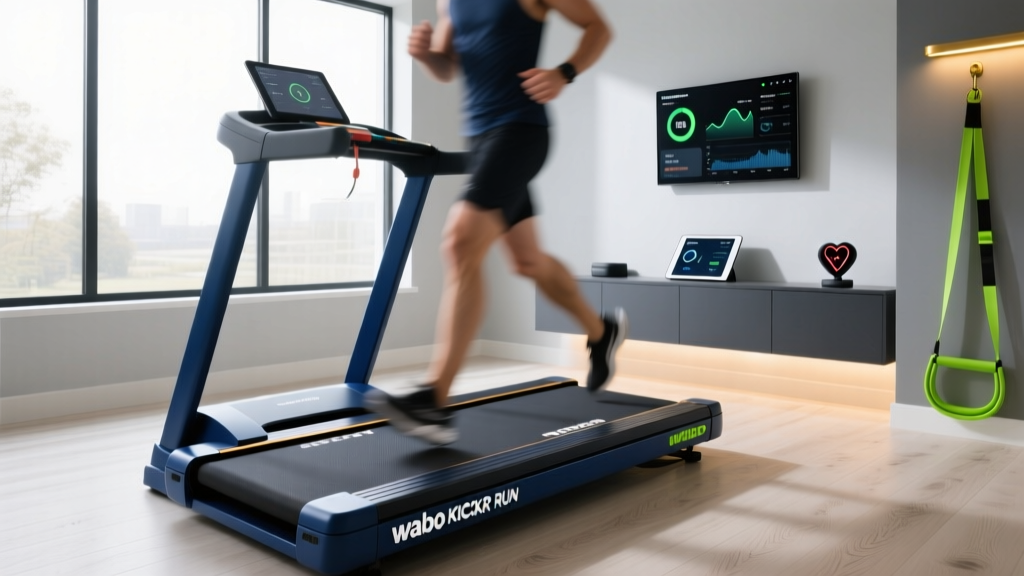
Wahoo KICKR RUN Treadmill Belt Maintenance & 2026 Market Trends
Discover how the Wahoo KICKR RUN treadmill is shifting 2026 market trends in belt maintenance, comparing slat vs. traditional lubricated decks.

The 2026 Paradigm Shift: Zero-Maintenance Slat Belts vs. Traditional PVC
The premium home cardio market has undergone a radical transformation over the last 24 months. As we navigate 2026, the most significant hardware evolution isn't happening on the digital displays or the connected app ecosystems—it is happening beneath the runner's feet. The traditional PVC (polyvinyl chloride) belt sliding over a waxed MDF or phenolic deck is rapidly being phased out in the $3,000+ tier, replaced by advanced vulcanized rubber slat systems. At the forefront of this market shift is the Wahoo KICKR RUN treadmill, a machine that has fundamentally rewritten the rules of treadmill belt maintenance and lubrication.
For decades, treadmill ownership carried an unspoken tax: the relentless cycle of silicone lubrication, belt tensioning, and eventual deck replacement. Today's market analysis reveals that high-end consumers are no longer willing to accept this friction—both literally and financially. By examining the engineering behind the KICKR RUN, we can understand the broader 2026 industry pivot toward zero-maintenance running surfaces and what this means for long-term equipment ROI.
Deep Dive: Wahoo KICKR RUN Treadmill Belt Architecture
To understand why the KICKR RUN has disrupted the maintenance market, we must look at its physical architecture. Unlike legacy treadmills that rely on a continuous loop of synthetic fabric coated in PVC, the KICKR RUN utilizes a slatted belt design. Individual rubberized slats are mounted to a heavy-duty internal chain or Kevlar-reinforced track, gliding over low-friction UHMWPE (Ultra-High-Molecular-Weight Polyethylene) guide rails rather than a flat wooden deck.
Why the KICKR RUN Eliminates Silicone Lubrication
Traditional treadmills require 100% silicone lubricant to reduce the Coefficient of Friction (CoF) between the belt and the deck. Without it, the kinetic energy converts to thermal energy, literally melting the belt backing and scorching the deck. The KICKR RUN's UHMWPE guides possess an inherently microscopic CoF that requires zero chemical lubrication. Introducing silicone to a slat belt system is not just unnecessary; it is actively detrimental, as it attracts abrasive particulate matter (dust, pet dander, dried sweat) that acts like sandpaper on the guide rails.
Comparative Analysis: Traditional Lubrication vs. KICKR RUN Slat System
The financial and mechanical divergence between legacy maintenance protocols and the 2026 slat-belt standard is stark. The table below illustrates the operational differences that are driving the market shift.
| Feature | Traditional PVC Belt (Legacy) | Wahoo KICKR RUN (Slat System) |
|---|---|---|
| Lubrication Requirement | 100% Silicone every 150 miles / 3 months | None (Zero-Lube Architecture) |
| Deck Material | MDF, Phenolic, or Urethane-coated Wood | UHMWPE Guide Rails / Open Airflow |
| Motor Amp Draw (Normal) | 3.0A - 5.0A | Optimized via Magnetic Braking Integration |
| Failure Mode (Neglect) | Belt snapping, MCB (Motor Control Board) fry | Guide rail scoring from abrasive debris |
| 5-Year Maintenance Cost | $150 - $400 (Belts, Lube, Deck Wax) | $0 - $20 (Microfiber cloths, mild cleaner) |
The Hidden Financial and Mechanical Costs of Silicone
Why is the market abandoning the PVC belt? The answer lies in the cascading failure modes associated with improper lubrication. According to equipment safety guidelines referenced by the American Council on Exercise (ACE), improper treadmill maintenance is a leading cause of premature motor failure in home gyms.
- The Under-Lubrication Cascade: When a PVC belt dries out, friction spikes. The drive motor must work harder to maintain the belt's speed under the user's weight. Normal amp draw (3-5 amps) spikes to 10-15 amps. This excess heat degrades the motor windings and frequently fries the Motor Control Board (MCB), resulting in a $300+ repair bill.
- The Over-Lubrication Hazard: Conversely, users who panic and flood the deck with silicone cause the belt to slip. This creates a dangerous latency between the user's foot strike and the belt's movement, increasing the risk of shear-force injuries to the Achilles tendon and knee meniscus. Furthermore, excess silicone squeezes out the sides, degrading the rubber edge seals and attracting dust that forms a grinding paste.
The KICKR RUN entirely bypasses these user-error variables. By removing the chemical dependency of the running surface, Wahoo has effectively bulletproofed the mechanical drivetrain against the most common maintenance-related failures in the industry.
Actionable Protocol: Caring for the KICKR RUN Slat Belt
While the Wahoo KICKR RUN requires zero lubrication, "zero maintenance" is a marketing myth. Advanced polymer and rubber slat belts require a different, albeit much simpler, care protocol to preserve their shock-absorption properties and prevent track degradation.
- Weekly Particulate Extraction: Use a soft-bristle vacuum attachment to remove dust, pet hair, and skin cells from between the slats. Embedded debris is the primary enemy of UHMWPE guide rails.
- Monthly Deep Clean: Dampen a microfiber cloth with a 50/50 mix of distilled water and white vinegar. Wipe down the surface of the slats to break down the acidic salt compounds left by sweat, which can prematurely dry out and crack vulcanized rubber over time.
- Initial Break-In Tension Check: Unlike PVC belts that stretch continuously, slat belts experience a minor seating period. After the first 50 miles of use on your KICKR RUN, check the rear roller tension. If the belt tracks slightly left or right, use the provided hex key to adjust the rear tensioning bolts by no more than a 1/4 turn.
- Avoid Petroleum Solvents: Never use WD-40, Simple Green, or bleach-based cleaners on the KICKR RUN. Petroleum distillates will chemically break down the rubber polymers, leading to catastrophic slat delamination.
"The integration of smart magnetic resistance with zero-friction slat belts represents the maturation of the home fitness hardware market. We are moving away from treating treadmills as disposable appliances and toward engineering them as permanent biomechanical fixtures."
— 2026 Smart Fitness Hardware Analysis, Wahoo Fitness Engineering Briefs
Market Forecast: What This Means for Home Gym Buyers
As we move deeper into 2026, the bifurcation of the treadmill market is complete. Sub-$1,500 treadmills will continue to utilize PVC belts and phenolic decks, accepting the maintenance burden as the cost of entry. However, for buyers investing in the premium tier ($3,000+), the Wahoo KICKR RUN has set a new baseline expectation.
Consumers are now demanding running surfaces that mimic outdoor biomechanics while eliminating the friction-induced wear of the past. The shift toward slat belts is not merely an aesthetic choice; it is a fundamental improvement in mechanical longevity, joint health, and total cost of ownership. If you are currently evaluating high-end cardio equipment, any machine that still requires quarterly silicone lubrication should be viewed as a legacy product. The future of home running is lubrication-free, and the KICKR RUN is leading the charge.
More gear to consider
All reviews
FreeMotion 890 Treadmill Motor Guide & Installation Setup
Treadmill Plug Adapter Noise: Troubleshooting Cardio Machine Hum

Urevo Treadmill Manual Setup: Motor Size & Horsepower Guide

Gym Layouts: Stationary Bike Types & 9 Min Mile Treadmill Speed

Under Desk Treadmill Review: Does a Treadmill Help With Belly Fat?
