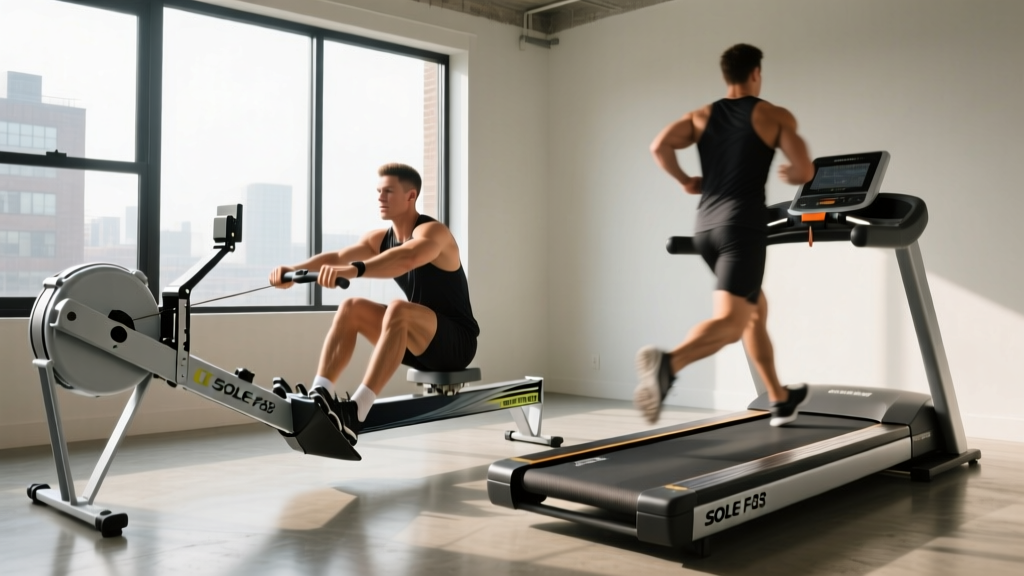
Stationary Bike Types & Gold's Gym Trainer 410 Treadmill Review
Analyzing 2026 cardio trends: upright, recumbent, and spin stationary bike types, plus an in-depth Gold's Gym Trainer 410 treadmill review.

The 2026 Home Cardio Market: Bikes vs. Budget Treadmills
The home fitness equipment landscape in 2026 has bifurcated into two distinct camps: premium, AI-connected ecosystems and high-value, durable mechanical workhorses. While smart mirrors and auto-resistance rowers capture headlines, the foundational cardio market—specifically the evolution of stationary bike types and the enduring demand for entry-level treadmills—remains the highest-volume sector. According to recent fitness equipment market analysis, consumers are increasingly prioritizing footprint efficiency and joint longevity over embedded touchscreens, driving a massive resurgence in mechanical cycling and legacy treadmill models.
This trend report breaks down the three primary stationary bike types (upright, recumbent, and spin) and addresses a highly searched crossover product for budget-conscious buyers: our comprehensive Gold's Gym Trainer 410 treadmill review.
Stationary Bike Types: Upright, Recumbent, and Spin
Choosing the right cycling modality requires understanding the biomechanical differences, spatial requirements, and resistance technologies defining each category in 2026.
1. Upright Bikes: The Space-Saving Standard
Upright bikes mimic the geometry of a traditional road bike but with a wider, more supportive saddle and a vertical seat post. They remain the most popular choice for compact apartments, typically requiring a footprint of just 20" x 40".
- Resistance Technology: Modern uprights have almost entirely abandoned friction pads in favor of eddy-current magnetic resistance. Models like the Schwinn 170 utilize a quiet, maintenance-free magnetic system offering 16 to 25 levels of resistance.
- Biomechanics & Fit: Proper seat height is critical. The formula is inseam length (in cm) x 0.883. A poorly fitted upright bike places excessive shear force on the patellar tendon.
- Price Range (2026): $250 to $700 for residential models.
2. Recumbent Bikes: The Rehab and Comfort Champion
Recumbent bikes feature a bucket seat with a backrest, positioning the pedals in front of the user rather than below. This design shifts the load from the lumbar spine and knees to the glutes and hamstrings. Following the low-impact exercise guidelines recommended for joint rehabilitation, recumbents are the gold standard for users with osteoarthritis or lower back pain.
Expert Insight: When evaluating recumbents, look for a step-through frame design. The Nautilus R618 features an ultra-low step-through height of just 9 inches, making it accessible for users with severe mobility restrictions, whereas older or cheaper models require a 15-inch leg swing that can aggravate hip flexors.- Footprint: Larger than uprights, typically 60" to 65" in length due to the extended seat rail.
- Price Range (2026): $400 to $1,400.
3. Spin Bikes (Indoor Cycles): The High-Intensity Trend
Spin bikes are designed to replicate the exact geometry and high-inertia feel of outdoor road cycling. They feature a heavy flywheel (often 30 to 45 lbs) or a highly geared magnetic flywheel, 4-way micro-adjustability, and a narrow "Q-factor" (the distance between the pedals).
- Drive Systems: The market has shifted heavily toward poly-V belt drives over chain drives. The Keiser M3i, for instance, uses a rear-mounted magnetic flywheel and belt drive to eliminate the sweat-corrosion issues that plague front-flywheel chain bikes.
- Q-Factor Specificity: Serious cyclists should look for a Q-factor between 165mm and 175mm. Wider Q-factors (common in cheap Amazon spin bikes) cause knee valgus during high-cadence intervals.
- Price Range (2026): $600 to $2,500+.
Comparative Matrix: Bike Types vs. Entry Treadmills
To understand how stationary bikes compete with budget treadmills, we must look at the raw data regarding caloric expenditure, spatial footprint, and joint impact.
| Equipment Type | Avg. Footprint (L x W) | Joint Impact Level | Caloric Burn (150lb user / 30 mins) | Primary Failure Mode |
|---|---|---|---|---|
| Upright Bike | 40" x 20" | Very Low | 210 - 280 kcal | Seat post wobble / Console failure |
| Recumbent Bike | 65" x 28" | Minimal | 180 - 240 kcal | Seat rail bearing wear |
| Spin / Indoor Cycle | 48" x 22" | Low (High Muscle Fatigue) | 300 - 450 kcal | Sweat corrosion / Belt snapping |
| Entry Treadmill (e.g., GG 410) | 68" x 28" | High (2-3x Body Weight) | 250 - 350 kcal | Motor overheating / Deck friction |
Gold's Gym Trainer 410 Treadmill Review: A 2026 Legacy Analysis
While stationary bikes dominate the low-impact segment, the entry-level walking and jogging market remains fiercely competitive. Many consumers cross-shopping recumbent bikes are also evaluating budget treadmills for multi-user households. This crossover in buyer intent explains the enduring search volume for legacy budget models, prompting our inclusion of a comprehensive Gold's Gym Trainer 410 treadmill review in this market analysis.
Specifications and Build Quality
The Gold's Gym Trainer 410 (manufactured by ICON Health & Fitness) was designed as an ultra-budget, entry-level machine. In 2026, it is largely considered a legacy model, primarily available on the refurbished or secondary market.
- Motor: 2.0 Continuous Horsepower (CHP). While marketed as sufficient for jogging, a 2.0 CHP motor operates near its thermal limit when supporting users over 200 lbs at speeds above 5.0 mph. It is strictly a walking/light-jogging motor.
- Running Surface: 16" x 50". This is the machine's most significant limitation. A 16-inch width is exceptionally narrow for a treadmill, forcing users to run in a tight, unnatural gait. It is not recommended for users taller than 5'9".
- Incline: 0-10% motorized incline. A rare feature for this price tier, though the incline motor is notoriously slow to adjust.
- Weight Capacity: Rated for 300 lbs, but real-world longevity drops significantly if routinely used by individuals over 240 lbs.
Common Failure Modes and Maintenance
If you are purchasing a Gold's Gym Trainer 410 in 2026, you must be aware of its specific mechanical vulnerabilities:
- Deck Friction and Motor Burnout: The 1-ply belt and standard MDF deck require strict silicone lubrication every 130 to 150 miles. Failure to lubricate increases amperage draw on the 2.0 CHP motor, leading to blown control boards.
- Drive Belt Slippage: The motor-to-roller drive belt is prone to stretching. If you hear a rhythmic slipping sound during foot-strike, the drive belt needs tensioning or replacement.
- iFIT Compatibility: As a legacy model, the 410 lacks modern Bluetooth or Wi-Fi integration. It relies on older proprietary audio ports or CD/USB modules for iFIT coaching, making it largely incompatible with the 2026 cloud-based iFIT ecosystem without third-party workarounds.
FitGearPulse Verdict on the GG 410: The Gold's Gym Trainer 410 is only recommended in 2026 if acquired for under $250 on the secondary market strictly for walking. For running, or for users over 5'10", the 16-inch belt width and 2.0 CHP motor make it a poor investment compared to modern alternatives like the Horizon T101 or entry-level Sole F63 models.
2026 Market Trend Analysis: What Consumers Are Actually Buying
The broader cardio market is experiencing a "dumb equipment + smart app" revolution. According to the American Heart Association's physical activity recommendations, consistency is the primary driver of cardiovascular health. Consumers have realized that paying a $40/month premium for a built-in treadmill or bike screen is unnecessary when they can use a $15/month third-party app on their own tablet.
The Shift to App-Integrated Mechanicals
Brands like Schwinn, Nautilus, and Keiser are leaning heavily into Bluetooth FTMS (Fitness Machine Service) protocols. This allows the bike's magnetic resistance to be automatically controlled by third-party apps like Zwift, Kinomap, or Rouvy. This trend has severely depressed the resale value of older, closed-ecosystem machines (like early-generation smart treadmills) while boosting the value of high-quality mechanical bikes like the Keiser M3i or the Schwinn IC4.
Buyer's Decision Framework for 2026
Use this framework to select the right cardio modality for your home:
- Choose a Recumbent Bike if: You have lumbar spine issues, are recovering from lower-body surgery, or prioritize seated comfort over high caloric burn.
- Choose a Spin Bike if: You want maximum caloric expenditure in a minimal footprint, enjoy high-intensity interval training (HIIT), and plan to use third-party cycling apps.
- Choose an Upright Bike if: You need a general-purpose, low-impact cardio machine for a very small apartment and do not plan to do out-of-the-saddle sprinting.
- Choose an Entry Treadmill (like the GG 410) if: You strictly walk, have a tight budget (under $300 used), are under 5'9" tall, and do not require modern interactive programming.
Final Thoughts
The 2026 cardio equipment market rewards buyers who prioritize mechanical reliability and biomechanical fit over flashy, integrated screens. Whether you are investing in a high-end magnetic recumbent bike for joint longevity or scavenging the secondary market for a budget Gold's Gym Trainer 410 treadmill for daily walking, understanding the exact specifications, failure modes, and spatial requirements of your equipment is the key to long-term fitness consistency.
More gear to consider
All reviews
Pad vs Treadmill: Running on a Treadmill to Lose Weight How Long?

Stair Climber vs Treadmill for Lower Belly Fat: Beginner Guide
How to Lose Stomach Fat on Treadmill vs. Stationary Bikes

Stair Climber Home Guide: Mistakes & Lifetime Fitness T5 Treadmill Fixes

Adidas T-19i Bluetooth Treadmill: Feature Comparison & Buyer Mistakes