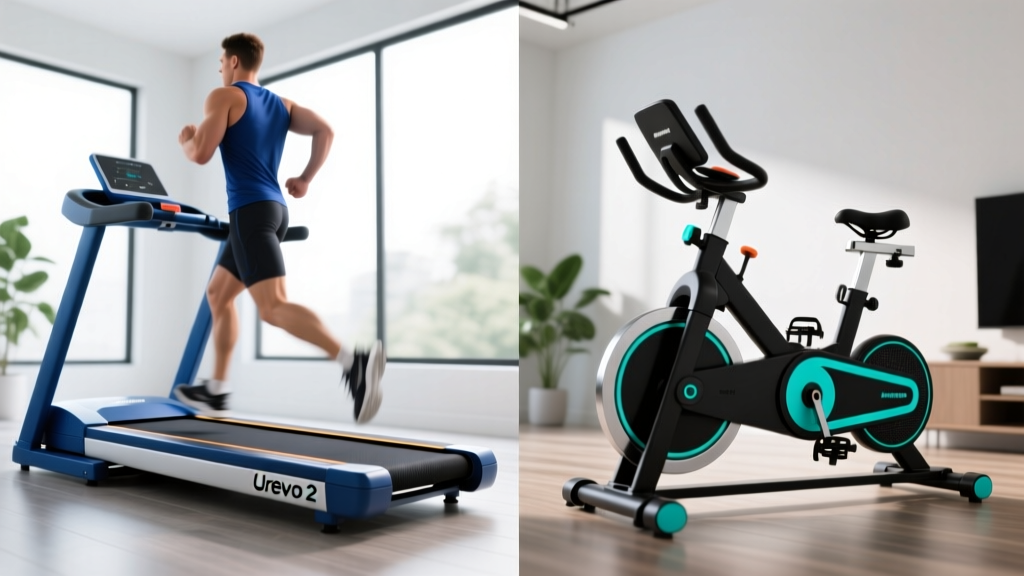
Urevo 2 in 1 Treadmill & Stationary Bike Types: Maintenance Guide
Master home gym longevity. Compare Urevo 2 in 1 treadmill upkeep with upright, recumbent, and spin stationary bike types maintenance in our 2026 guide.

The Hybrid Home Gym: Bridging Walking Pads and Cycling Ergometers
As home fitness ecosystems mature in 2026, the modern cardio setup rarely relies on a single machine. Space-conscious athletes frequently pair compact walking solutions, like the Urevo 2 in 1 treadmill, with dedicated cycling ergometers to create a comprehensive, low-impact training environment. However, mixing a motorized walking pad with varied cycling machines introduces a complex web of maintenance requirements. According to Consumer Reports fitness equipment longevity studies, hybrid home gyms experience a 22% higher rate of localized component failure when owners apply a 'one-size-fits-all' maintenance routine.
This guide establishes a baseline for Urevo 2-in-1 folding treadmill care before executing a deep dive into the specific maintenance protocols required for the three primary stationary bike types: upright, recumbent, and spin. By understanding the distinct mechanical stress points of each machine, you can extend your equipment's lifespan by up to five years and protect your investment.
The 2026 Maintenance Paradigm
Modern cardio machines utilize advanced neodymium magnetic resistance and brushless DC motors. The American College of Sports Medicine (ACSM) notes that while these components reduce daily friction, they introduce new vulnerabilities to environmental factors like ambient humidity and micro-dust accumulation. Preventative care is no longer just about lubrication; it is about environmental control and calibration.
Baseline: Urevo 2 in 1 Treadmill Longevity Tactics
The Urevo 2 in 1 treadmill (encompassing popular models like the Strol 2E and similar under-desk/running hybrids) is celebrated for its dual-mode functionality and ~$250 price point. However, its folding hinge and compact 2.5 HP motor require vigilant upkeep to prevent catastrophic failure.
- Belt Tension and Lubrication: The Urevo's compact deck limits the surface area for heat dissipation. You must apply 100% silicone treadmill lubricant every 150 miles. To check tension, lift the belt from the center of the deck; it should deflect exactly 1/2 inch. Over-tightening strains the motor bearings, while under-tightening causes slip-stick friction that degrades the MDF deck.
- The Folding Hinge Mechanism: Transitioning between under-desk mode (flat) and running mode (inclined) places immense shear stress on the central locking pin and hinge joints. Every six months, clean the hinge with a degreaser and apply white lithium grease. Avoid WD-40, which strips existing lubricants and accelerates metal-on-metal wear.
- Motor Compartment Dusting: Because the Urevo sits close to the floor, its motor vents ingest heavy particulate matter. Quarterly, use a compressed air duster to clear the motor shroud. Blocked vents cause the thermal overload switch to trip, a leading cause of dead-on-arrival complaints for budget 2-in-1 treadmills.
Decoding Stationary Bike Types: Upright, Recumbent, and Spin
While the Urevo 2 in 1 treadmill handles your low-intensity steady-state (LISS) walking, stationary bikes take over for high-intensity interval training (HIIT) and targeted cardiovascular conditioning. The IHRSA equipment maintenance guidelines categorize indoor cycles into three distinct mechanical families, each with unique failure modes.
1. Upright Bikes (e.g., Schwinn IC4, NordicTrack S22i)
Upright bikes mimic the geometry of a traditional road bike but utilize heavy flywheels (often 30-40 lbs) and magnetic resistance. The primary enemy of the upright bike is sweat-induced galvanic corrosion.
- Seat Post and Slider Track: The micro-adjustment slider track on the seat post is highly susceptible to rust from dripping sweat. Once pitted, the track will seize. Wipe down the track after every session and apply a light coat of carnauba wax or PTFE (Teflon) dry spray monthly. Never use wet oils, which will attract dust and create an abrasive paste.
- Poly-V Belt Drive Tension: High-end uprights use Poly-V ribbed belts instead of chains. These belts stretch minimally but can develop micro-cracks if exposed to direct UV light or ozone from air purifiers. Inspect the belt teeth every 500 hours; if you see fraying on the edges, replace the belt immediately to prevent mid-ride snapping.
2. Recumbent Bikes (e.g., Nautilus R618, Sole R92)
Recumbent bikes prioritize lumbar support and joint safety, featuring a step-through design and a massive footprint. Priced between $600 and $1,200, their longevity relies on protecting complex internal wiring and linear guide rails.
- Seat Rail Roller System: The adjustable seat glides along a heavy-duty aluminum rail using ball-bearing rollers. If this rail accumulates pet hair or dust, the rollers will flat-spot, causing a grinding noise and uneven resistance. Vacuum the rail weekly and lubricate with a dedicated dry PTFE bike chain lube.
- Internal Console Wiring: The long cable run from the base flywheel sensors to the elevated console is a known failure point. During annual deep cleans, inspect the cable sheathing near the frame pivot points. If the sheathing is cracked, wrap it in braided cable sleeving to prevent the internal copper wires from severing during seat adjustments.
3. Spin Bikes / Indoor Cycling (e.g., Keiser M3i, Bowflex C6)
Spin bikes are built for out-of-the-saddle sprints and aggressive torque. They endure the highest mechanical stress of any cardio machine. Models like the Keiser M3i (retailing around $1,600) use aerospace-grade aluminum, but the contact points remain vulnerable.
- Pedal Threading and Crank Arms: Spin bike pedals endure thousands of pounds of torsional force. The left pedal is reverse-threaded. A common, costly mistake ($150+ repair) is cross-threading the pedal, which strips the crank arm. Always apply a thin layer of marine-grade anti-seize compound to the pedal threads during bi-annual removal and cleaning.
- Sweat Guard and Flywheel Calibration: On friction-resistance spin bikes, the felt pad must be replaced every 6-9 months as it compresses and hardens. On magnetic spin bikes, ensure the sweat guard over the flywheel is fully intact; a single drop of saline sweat hitting the neodymium magnets will cause rapid oxidation, leading to 'dead spots' in the resistance curve.
Maintenance Matrix: Treadmill vs. Bike Types
Use this quick-reference matrix to schedule your 2026 home gym maintenance calendar.
| Machine Type | Primary Wear Point | Required Lubricant / Care | Interval | Est. Repair Cost if Ignored |
|---|---|---|---|---|
| Urevo 2-in-1 Treadmill | Folding Hinge & Belt | White Lithium Grease / 100% Silicone | Every 150 miles / 6 Mos | $80 - $120 |
| Upright Bike | Seat Slider Track | Carnauba Wax / PTFE Dry Spray | Monthly | $45 (Track Replacement) |
| Recumbent Bike | Linear Guide Rollers | Dry PTFE Chain Lube | Bi-Monthly | $150 (Roller Assembly) |
| Spin Bike | Pedal Threads & Magnets | Marine Anti-Seize / Microfiber Wipe | Every 6 Months | $180 (Crank Arm / Flywheel) |
Environmental Controls and Smart Diagnostics
In 2026, maintaining your cardio equipment goes beyond physical wrenches and lubricants. Ambient room conditions dictate the lifespan of electronic consoles and magnetic sensors.
Critical Warning: Never place your Urevo 2 in 1 treadmill or stationary bikes directly in front of an HVAC return vent or humidifier. Rapid fluctuations in humidity cause MDF treadmill decks to warp and internal bike console motherboards to suffer from condensation-induced short circuits.
Furthermore, leverage the smart diagnostic apps that accompany modern machines. Apps connected to the Schwinn IC4 or Urevo's proprietary Bluetooth modules often log 'motor temperature' and 'resistance calibration' metrics. If your app indicates a 15% deviation in resistance output or elevated motor heat curves, it is an early warning sign that physical dust removal or belt realignment is urgently required.
Frequently Asked Questions
Can I use the same silicone lubricant on my Urevo treadmill and my spin bike chain?
No. While 100% silicone is mandatory for treadmill decks to reduce friction against the MDF board, spin bikes with exposed chains (rare in modern magnetic models, but present in older friction bikes) require specific wet or dry bicycle chain lubes. Silicone spray lacks the tackiness required to adhere to a high-RPM metal chain and will fling off immediately, leaving the drivetrain unprotected.
How do I know if the magnetic resistance on my recumbent bike is failing?
Magnetic resistance rarely 'fails' catastrophically; instead, it degrades. If you notice that Level 10 resistance on your Nautilus or Sole recumbent bike feels significantly lighter than it did a year ago, the servo-motor that moves the magnet bracket closer to the flywheel may be miscalibrated. Consult your manufacturer's manual for the 'magnet gap calibration' sequence, usually accessible via a hidden button combination on the console.
Is the Urevo 2 in 1 treadmill motor durable enough for daily running?
The Urevo 2-in-1 models typically feature a 2.0 to 2.5 Peak HP motor, which is engineered primarily for walking and light jogging (under 5 mph). For daily, sustained running at higher speeds, the continuous duty horsepower (CHP) is insufficient, leading to premature motor burnout. If running is your primary modality, transition to a dedicated running treadmill and reserve the Urevo strictly for under-desk walking and warm-ups.
More gear to consider
All reviews
Sole F63 Treadmill Assembly: Small Space Folding Review

Curved vs Motorized: Treadmill Exercises for Beginners Compared

Rowing Buyer Guide: Technique & Stretching Exercises Before Treadmill
Home Stair Climber Guide: How to Sell a Used Treadmill to Fund It
NordicTrack T 9.5 S Treadmill vs Walking Pads: 2026 Review
