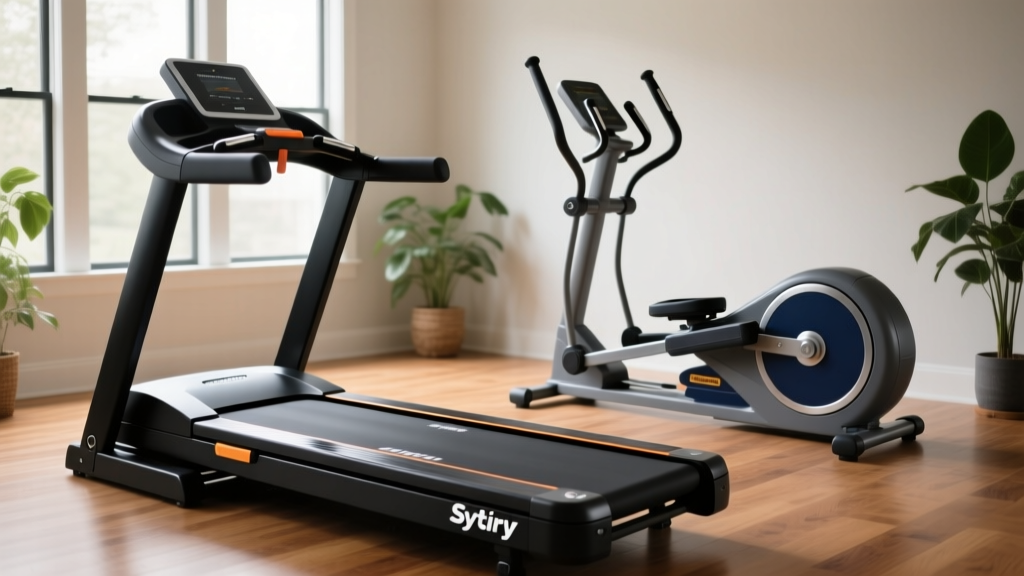
Sytiry Treadmill Reviews: Elliptical vs Treadmill Care
Compare elliptical vs treadmill longevity. We analyze Sytiry treadmill reviews, motor care, belt lubrication, and joint impact for home gym maintenance.

When outfitting a home gym, the debate between an elliptical and a treadmill usually centers on calorie burn, spatial footprint, or joint impact. However, as fitness equipment technicians and long-term users know, the true cost of ownership lies in maintenance, mechanical wear, and longevity. If you are weighing an elliptical vs treadmill for home cardio, understanding the mechanical realities of each machine will save you hundreds of dollars in repair costs over the next decade.
Interestingly, the rise of ultra-compact walking pads has shifted consumer expectations. When analyzing recent Sytiry treadmill reviews and similar budget-friendly models, a common theme emerges: users are often surprised by the strict maintenance routines required to keep smaller, lower-horsepower motors from burning out. Whether you are investing in a $1,200 Sole F80 treadmill or a $2,500 NordicTrack Commercial elliptical, longevity is dictated by how well you manage friction, dust, and electrical load.
The Mechanical Reality: Treadmill vs. Elliptical Wear & Tear
Treadmills and ellipticals operate on fundamentally different mechanical principles. A treadmill relies on a high-friction continuous belt system driven by a DC or AC motor, requiring constant lubrication and tension adjustments. An elliptical, conversely, utilizes a series of pivot points, bearings, and magnetic resistance, shifting the maintenance burden from belt friction to joint lubrication and structural alignment.
According to the Mayo Clinic, ellipticals generally offer a lower-impact cardiovascular workout compared to treadmills, which is excellent for joint health. But from a mechanical standpoint, the repetitive lateral and vertical forces on an elliptical's crank arms and pedal bearings require rigorous structural upkeep to prevent the dreaded 'elliptical wobble' and premature bearing failure.
| Maintenance Factor | Motorized Treadmill | Magnetic Elliptical |
|---|---|---|
| Primary Wear Point | Running belt, deck, motor brushes | Pivot bearings, crank arms, rail wheels |
| Lubrication Type | 100% Silicone liquid/gel | PTFE (Teflon) based grease |
| Avg. Lifespan (Home Use) | 7 to 12 years | 10 to 15 years |
| Annual Upkeep Cost | $40 - $85 (Belts, lube, surge protection) | $15 - $30 (Grease, cleaning solvents) |
Treadmill Longevity: Lessons from Sytiry Treadmill Reviews
The influx of budget compact treadmills has flooded the market, and reading through Sytiry treadmill reviews provides a masterclass in what happens when users treat budget motors like commercial gym equipment. Most compact treadmills in the $300 to $600 range feature 2.0 to 2.5 Peak HP (Horsepower) motors. It is critical to understand that Peak HP is not Continuous Duty HP (CHP). A 2.5 Peak HP motor may only sustain 1.25 CHP before thermal overload protection kicks in.
⚠️ The Budget Motor Burnout Warning:If you own a Sytiry or similar compact treadmill, never run the machine at speeds above 4.0 mph for longer than 45 continuous minutes without allowing a 15-minute cool-down period. Furthermore, users exceeding 180 lbs will increase the amp-draw on the motor by up to 30%, drastically accelerating brush wear and motor controller board degradation.
The Belt Deflection and Lubrication Protocol
For all treadmills, friction is the ultimate enemy. A dry belt forces the motor to work harder, drawing excess amperage that eventually fries the lower control board—a $250 to $400 replacement part. To maintain your treadmill deck:
- The Deflection Test: Turn off and unplug the machine. Lift the running belt from the center of the deck. It should rise exactly 2 to 3 inches. If it lifts higher, the belt is too loose and will slip; if lower, it is over-tensioned and will destroy the front roller bearings.
- Silicone Application: Apply exactly 1 ounce of 100% pure silicone treadmill lubricant under each side of the belt in a zig-zag pattern. Never use WD-40 or petroleum-based products, as they will melt the PVC belt backing and ruin the wooden deck.
- Distribution: Plug the machine in and run it at 2.0 mph for 3 minutes to evenly distribute the silicone.
Elliptical Upkeep: Greasing the Silent Killer of Bearings
Ellipticals do not have belts to lubricate, but they possess up to 12 distinct pivot points that endure immense lateral torque. When comparing an elliptical vs treadmill for home cardio, the elliptical wins on motor longevity (since many use frictionless magnetic resistance), but it requires more physical labor to maintain its structural integrity.
Rail and Roller Maintenance (Rear-Drive Models)
If you own a rear-drive elliptical like the Sole E95 or Precor AMT series, the aluminum extrusion rails and polyurethane wheels must be kept immaculate. Dust and pet hair mix with ambient humidity to create an abrasive paste that scores the aluminum rails, leading to a bumpy, noisy stride.
- Cleaning: Wipe down the rails weekly using a microfiber cloth dampened with 70% isopropyl alcohol. Avoid ammonia-based glass cleaners, which can oxidize and pit the aluminum surface over time.
- Inspection: Check the polyurethane wheels for flat spots. If your elliptical develops a rhythmic 'thumping' sound, the wheels have likely deformed from resting in one position under heavy load.
Pivot Joint Lubrication
The pedal arm and crank connections rely on sealed bearings, but the external suspension pivot points require periodic greasing. Use a PTFE (Teflon) synthetic grease. Unlike standard lithium grease, PTFE does not attract dust and pet dander, keeping the joints clean and silent. Apply a pea-sized amount to the pivot bushings every 6 months, wiping away any excess.
Environmental Factors: Power Surges and Floor Resonance
According to Consumer Reports, electrical surges and improper flooring are two of the leading causes of premature cardio equipment failure. Treadmills draw massive transient currents when the foot strikes the deck, which can cause voltage drops that degrade the motor controller board over time.
Expert Tip: Never plug a treadmill directly into a wall outlet or a cheap power strip. Invest in a dedicated treadmill surge protector rated for at least 2,000 Joules with EMI/RFI noise filtering. Furthermore, ensure your equipment is placed on a 3/8-inch thick vulcanized rubber equipment mat. This not only dampens acoustic resonance for your downstairs neighbors but prevents micro-vibrations from loosening the machine's internal chassis bolts.
The 2026 Home Gym Maintenance Matrix
To maximize the lifespan of your investment, follow this structured maintenance schedule. Consistency is the differentiator between a machine that lasts 5 years and one that lasts 15.
| Frequency | Treadmill Tasks | Elliptical Tasks |
|---|---|---|
| Weekly | Vacuum around the motor hood; wipe console with dry cloth. | Wipe down rails with isopropyl alcohol; check for loose pedal bolts. |
| Monthly | Perform the belt deflection test; inspect belt edges for fraying. | Inspect polyurethane wheels for flat spots; clean dust from magnetic flywheel housing. |
| Quarterly | Apply 100% silicone lubricant (or per manufacturer's smart-lube alerts). | Apply PTFE grease to external pivot bushings and suspension joints. |
| Annually | Remove motor hood and use compressed air to blow out carbon dust from the motor. | Torque all crank arm and chassis bolts to manufacturer specs (usually 25-30 Nm). |
Final Verdict: Which Machine Wins the Longevity Test?
When deciding between an elliptical and a treadmill, your willingness to perform maintenance should be the deciding factor. If you prefer a 'set it and forget it' approach, a front-drive magnetic elliptical is vastly superior; it lacks the high-friction belt and high-draw motor that plague treadmills. However, if you prioritize the biomechanics of running and are willing to commit to a strict silicone lubrication and belt-tensioning schedule, a premium treadmill will serve you well for over a decade.
For those utilizing budget walking pads or compact models highlighted in Sytiry treadmill reviews, manage your expectations and adhere strictly to weight limits and cool-down periods. By respecting the mechanical limits of your equipment and following the American Council on Exercise guidelines for safe home gym environments, you can ensure your cardio machine remains a reliable cornerstone of your fitness journey for years to come.
More gear to consider
All reviews
Best Folding Treadmill in the Philippines for Small Spaces (2026)
ProForm Treadmill Customer Service: Belt Care in Small Spaces

Stationary Bike Types & What Incline Should I Run on a Treadmill

Treadmill for Walking Exercise vs Bikes: 2026 Budget
Peleyon Treadmill: Curved Manual vs Motorized 2026 Guide
