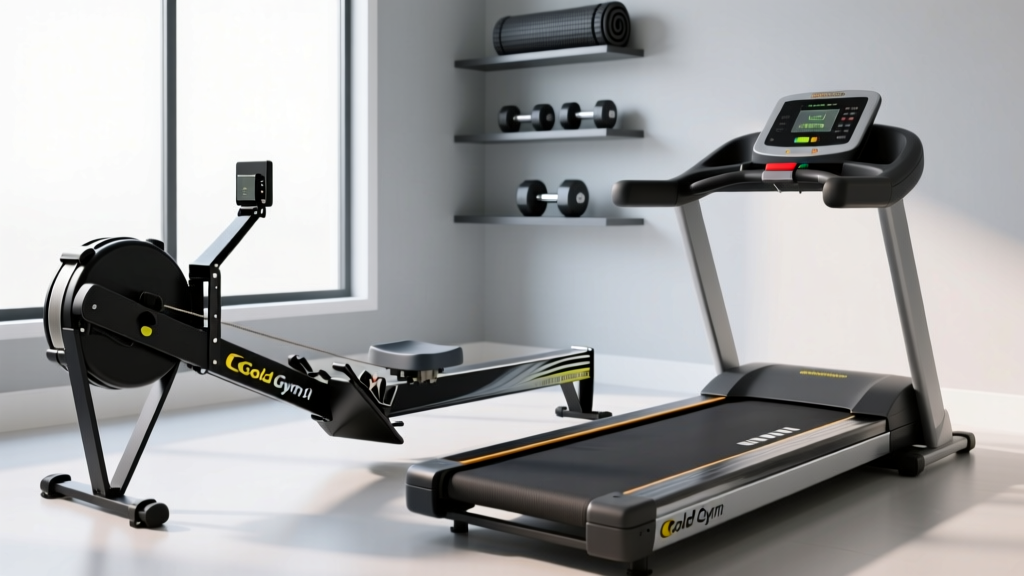
Rowing Machine Guide vs Gold Gym 430i Treadmill Review
Discover our beginner rowing machine buying guide and technique tips, comparing full-body ergometers to the Gold Gym 430i treadmill for optimal home cardio.

If you have been reading a gold gym 430i treadmill review and wondering if an entry-level treadmill is the right choice for your home gym in 2026, you are likely prioritizing budget, accessibility, and straightforward cardio. While the Gold Gym 430i offers a familiar walking and jogging experience for under $300, it primarily targets the lower body and carries a high-impact toll on your joints. For beginners seeking a more efficient, full-body, and low-impact alternative, the indoor rowing machine (ergometer) is vastly superior. This comprehensive guide will walk you through exactly how to buy, set up, and master a rowing machine, proving why it might be the better investment for your fitness journey.
Treadmill vs. Rower: The Home Cardio Showdown
Before diving into rowing technique, it is crucial to understand how a standard budget treadmill compares to a mid-range rowing machine. According to Harvard Health Publishing, vigorous rowing burns significantly more calories per hour than moderate treadmill walking, while engaging 86% of the body's musculature compared to the treadmill's lower-body focus.
| Feature | Gold Gym 430i Treadmill | Mid-Range Rower (e.g., Sunny SF-RW5515) | Premium Rower (Concept2 RowErg) |
|---|---|---|---|
| Average Price (2026) | ~$298 | ~$240 | ~$990 |
| Joint Impact | High (Running/Jogging) | Zero (Seated) | Zero (Seated) |
| Muscle Engagement | Lower Body (70-80%) | Full Body (86%) | Full Body (86%) |
| Footprint & Storage | 63" x 25" (Folds up) | 82" x 20" (Folds upright) | 95" x 24" (Separates in two) |
| Learning Curve | Low (Walk/Run) | Moderate (Form required) | Moderate (Form required) |
2026 Rowing Machine Buying Guide for Beginners
Choosing the right rower depends on your budget, space, and noise tolerance. The market has evolved significantly, with smart connectivity now standard even on budget models.
1. Understanding Resistance Types
- Air Resistance (e.g., Concept2 RowErg - $990): Uses a flywheel and fan. The harder you pull, the more resistance it generates. It is loud but offers the most dynamic, infinite resistance curve favored by professionals.
- Magnetic Resistance (e.g., Sunny Health SF-RW5515 - $240): Uses magnets to create drag on a metal flywheel. It is nearly silent and provides a smooth, consistent feel, making it ideal for apartments or early-morning workouts.
- Water Resistance (e.g., JAXJOFF Water Rower - $450): Features a tank of water and paddles. It replicates the exact sound and feel of rowing on a lake. However, water tanks require periodic purification tablets and are heavier to move.
- Electromagnetic/Smart (e.g., Hydrow - $2,495): Uses computer-controlled magnets to simulate specific water conditions and integrate with live, instructor-led video classes.
2. Sizing and Rail Length
One of the most common beginner mistakes is buying a rower with a slide rail that is too short. If you have an inseam over 34 inches, you must ensure the machine offers a minimum of 38 inches of usable rail length. Otherwise, your seat will hit the back stopper before your legs fully extend at the 'catch' position.
The Damper Setting Myth
Beginners often set the air resistance damper to 10, assuming higher is better. This is incorrect. A setting of 10 is equivalent to rowing a heavy, slow wooden boat. For optimal aerobic conditioning and to protect your lower back, set the damper between 3 and 5. This mimics the sleek, fast feel of an Olympic racing shell and allows you to maintain proper form at a higher stroke rate.
Step-by-Step Rowing Technique: The 4 Phases
Proper form on an ergometer is non-negotiable. According to Concept2's official biomechanics guidelines, the rowing stroke is not an upper-body pull; it is a powerful leg push. The power distribution should be 60% legs, 30% core, and 10% arms.
- The Catch (The Setup): Slide forward until your shins are completely vertical (perpendicular to the floor). Keep your heels slightly lifted, arms straight, shoulders relaxed, and torso hinged forward at an 11 o'clock angle. Your core should be braced.
- The Drive (The Power): Initiate the movement by pushing explosively through your feet. Do not bend your arms yet. Once your legs are about 75% extended, hinge your core backward to a 1 o'clock position. Finally, draw the handle to your lower ribs (just below the chest line) using your biceps and lats.
- The Finish (The Hold): Your legs are fully extended (but not locked out), your core is leaned back slightly at 1 o'clock, and the handle is resting lightly against your lower sternum. Your elbows should be drawn back and grazing your ribs.
- The Recovery (The Reset): This is the resting phase and should take twice as long as the drive (a 2:1 ratio). Extend your arms straight out first, hinge your torso forward past your knees, and only then bend your knees to slide back to the Catch.
3 Critical Beginner Mistakes to Avoid
- 'Shooting the Slide': This happens when your hips and seat move backward before your shoulders do during the Drive. It places massive, dangerous shear force on your lumbar spine. Keep your chest and hips connected during the initial leg push.
- Pulling to the Neck: Rowing the handle up to your collarbones or chin forces your wrists to bend awkwardly and wastes energy. Always aim for the lower ribs.
- Gripping the Handle Too Tightly: A death grip causes forearm fatigue and blisters. Hook your fingers around the handle and let it rest loosely in your palms; your thumbs should just rest underneath, not squeeze.
Your First 4-Week Beginner Rowing Plan
Transitioning from a treadmill to a rower requires conditioning your posterior chain and mastering the neuromuscular timing of the stroke. The Mayo Clinic recommends starting low-impact aerobic exercises gradually to prevent connective tissue strain.
| Week | Focus | Workout Structure | Total Time |
|---|---|---|---|
| Week 1 | Form & Pacing | Row 2 mins, Rest 1 min (Repeat 5x) | 15 Mins |
| Week 2 | Endurance Base | Row 4 mins, Rest 1 min (Repeat 4x) | 20 Mins |
| Week 3 | Stroke Rate Control | 1000m steady state (Aim for 22-24 SPM) | ~25 Mins |
| Week 4 | Intervals (Power) | 500m hard, 500m easy (Repeat 3x) | ~25 Mins |
Pro Tip for 2026: Track your 'Split per 500m' rather than just total distance. A beginner should aim for a consistent 2:30 to 2:45 split. If your split drops drastically in the final minutes of a workout, your form is likely deteriorating. Stop, rest, and reset.
Final Verdict: Is the Rower Right for You?
If your primary goal is casual walking while watching television, the Gold Gym 430i treadmill remains a functional, budget-friendly choice. However, if you want to maximize your time, build functional full-body strength, and protect your knees and ankles from repetitive impact, investing in a rowing machine is the superior choice. By following the buying parameters and technique steps outlined above, you will safely unlock one of the most effective cardiovascular workouts available in modern fitness.
More gear to consider
All reviews
Orange Theory Treadmill Workout at Home: Bike Types & Budget Breakdown

Elliptical vs Treadmill Layouts: Using a Treadmill Speed Converter
Running on Treadmill Hurts Knees? Home Stair Climber Guide & Fixes

Hitting a 7.2 Treadmill Pace on Compact Portable Cardio Gear

Weslo Cadence 200CS Treadmill: Feature Comparison Guide
