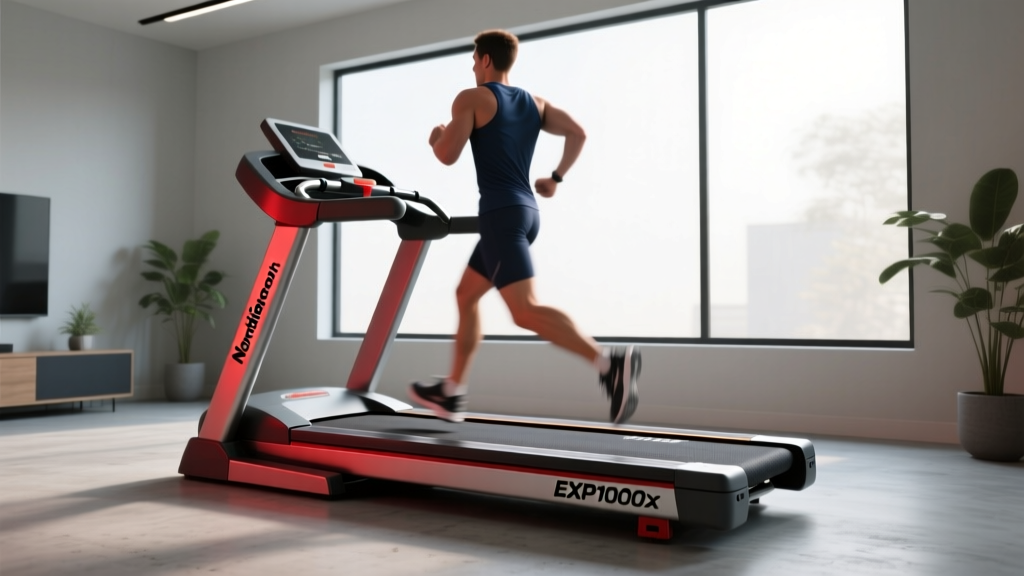
Under Desk Treadmill Review: How Many Calories Lost on Treadmill?
Discover how many calories lost on treadmill desks, plus 2026 space-saving layout guides and under-desk treadmill reviews for optimal home offices.

The Remote Work Dilemma: Space vs. Activity
The shift toward permanent hybrid and remote work models in 2026 has forced a massive reevaluation of home office layouts. Professionals are no longer just looking for a desk and a chair; they are seeking active workstations that maximize square footage without sacrificing ergonomics. Enter the under-desk treadmill. But before dedicating valuable floor space to a walking pad, most buyers have one pressing question: how many calories lost on treadmill desks actually compares to a traditional gym session?
As a senior reviewer for FitGearPulse, I have tested dozens of walking pads and office treadmill configurations. The truth is that integrating a treadmill into your office layout requires a delicate balance of spatial geometry, motor acoustics, and metabolic output. This guide breaks down the exact caloric mathematics of under-desk walking, provides precise layout dimensions for space optimization, and reviews the top models that fit seamlessly into compact home offices.
Calculating the Burn: How Many Calories Are Actually Lost?
When users search 'how many calories lost on treadmill' workstations versus traditional cardio, the answer hinges entirely on speed and incline. Under-desk treadmills are typically capped between 2.0 mph and 4.0 mph to allow for typing and cognitive focus. Because you cannot safely use an incline while typing at a fixed desk, the caloric expenditure is strictly a function of body weight and walking pace.
According to data published by Harvard Health Publishing, walking at a moderate pace yields significant cumulative metabolic benefits when sustained over a workday. Below is a breakdown of estimated hourly calorie burn on an under-desk treadmill (0% incline).
| Body Weight | 1.5 mph (Light Stroll) | 2.0 mph (Casual Walk) | 3.0 mph (Brisk Walk) | 4.0 mph (Power Walk) |
|---|---|---|---|---|
| 125 lbs | 90 cal/hr | 120 cal/hr | 165 cal/hr | 210 cal/hr |
| 155 lbs | 112 cal/hr | 150 cal/hr | 205 cal/hr | 260 cal/hr |
| 185 lbs | 133 cal/hr | 178 cal/hr | 244 cal/hr | 311 cal/hr |
Space Optimization: Designing the 2026 Under-Desk Layout
Integrating a treadmill into an office is not as simple as sliding it under a table. Poor spatial planning leads to tripped breakers, ruined flooring, and severe ergonomic strain. When designing your layout, you must account for the treadmill's belt length, the desk's vertical clearance, and the user's stride.
Essential Layout Dimensions
- Desk Height: For a user who is 5'9", the optimal standing desk height is between 43 and 45 inches. Standard 30-inch desks are useless here; you must invest in a motorized sit-stand desk with a minimum vertical range of 48 inches.
- Rear Clearance: You must leave a minimum of 36 inches of clear space behind the treadmill. This is a critical safety buffer required to prevent wall-scuffing and allow for natural stride deceleration.
- Belt Length: Never purchase a walking pad with a belt shorter than 43 inches for active walking. Shorter belts (often found on 2020-era budget models) force you to shorten your stride, leading to hip flexor tightness and knee pain.
"Proper ergonomic alignment dictates that your monitor's top bezel should be at or slightly below eye level. When adding a 5-inch treadmill deck and a 1-inch anti-fatigue mat to your stance, your monitor must be raised by at least 6 inches to maintain cervical neutrality." — FitGearPulse Ergonomics Team
Top Under-Desk Treadmills for Space-Constrained Offices
Not all treadmills are created equal, especially when floor space is at a premium. Here are the top three models we recommend for 2026 office layouts, categorized by their spatial footprint and use case.
1. WalkingPad R2 (Best for Micro-Layouts and Storage)
The WalkingPad R2 remains the gold standard for ultra-compact home offices. Its patented 180-degree folding mechanism allows it to fold down to just 61 x 22.4 x 5.1 inches, meaning it can easily slide under a standard sofa or stand vertically in a closet when not in use.
- Motor: 1.25 HP (Quiet, brushless)
- Max Speed: 3.7 mph (flat) / 7.5 mph (with handrail raised)
- Weight Capacity: 240 lbs
- Price Range: $499 - $549
- Layout Caveat: The belt is relatively narrow (17.3 inches). It requires focused walking and is not suitable for users who tend to sway laterally while typing.
2. LifeSpan TR1200-DT5 (Best for Dedicated Office Zones)
If you have a dedicated 10x10 office room and do not need to fold the machine away, the LifeSpan TR1200-DT5 is a commercial-grade powerhouse. It comes as a unified desk-and-treadmill unit, eliminating the guesswork of matching desk heights to treadmill decks.
- Motor: 2.25 HP Continuous Duty
- Max Speed: 4.0 mph
- Weight Capacity: 350 lbs
- Price Range: $1,499 - $1,699
- Layout Caveat: The footprint is massive (70 x 28.5 inches). It requires a dedicated 20-amp electrical circuit to prevent tripping breakers when the motor surges during startup.
3. UREVO Strol 2E (Best Budget Foldable)
For those optimizing a bedroom office or a small apartment nook, the UREVO Strol 2E offers a brilliant dual-fold design and built-in transport wheels. It folds down to an incredibly compact 55.9 x 21.5 x 5.5 inches.
- Motor: 1.5 HP
- Max Speed: 4.0 mph
- Weight Capacity: 265 lbs
- Price Range: $229 - $279
- Layout Caveat: The console is mounted on the front base, meaning you will need to bend down to change speeds unless you use the companion app or a remote control.
Hidden Failure Modes in Office Treadmill Layouts
Even with the right equipment, poor spatial execution leads to equipment failure and physical discomfort. Watch out for these common edge cases when designing your layout.
Thermal Throttling and Motor Enclosures
Many remote workers push their under-desk treadmills flush against a wall or enclose them within a custom-built desk cabinet to save space. This is a critical error. Treadmill motors generate significant heat. Without a minimum of 12 inches of lateral and rear airflow, the motor's internal thermal limiter will trip, shutting the machine down mid-stride. Over time, this thermal stress degrades the motor's copper windings, leading to premature failure.
Cable Management and Trip Hazards
An under-desk treadmill requires power, and your standing desk requires power for its lift motors, monitors, and PC. Running cables across the 36-inch rear clearance zone is a massive trip hazard.
- Mount a heavy-duty cable tray directly to the underside of your standing desk.
- Use a flexible cable spine (vertebrae sleeve) to route all desk cables to the wall outlet.
- Ensure the treadmill's power cord has enough slack to accommodate the desk's full vertical travel without pulling taut.
Ergonomic Standards and Safety
Walking while working fundamentally changes your center of gravity and visual stability. According to OSHA guidelines on workplace ergonomics, repetitive motion and awkward postures are primary drivers of musculoskeletal disorders. To mitigate this, utilize an anti-fatigue mat with a beveled edge (at least 3/4 inch thick) placed under the treadmill's front base to soften the impact on your calcaneus (heel bone) during heel strike.
Furthermore, researchers at Cornell University's Human Factors and Ergonomics Laboratory emphasize the importance of micro-breaks. Do not attempt to walk for 4 hours straight. The optimal 2026 workflow is the 50/10 rule: 50 minutes of seated deep work, followed by 10 minutes of under-desk walking at 2.0 mph to promote blood flow and reset your posture.
Final Verdict: Is the Space Worth the Burn?
So, how many calories lost on treadmill desks justifies the spatial investment? If you commit to 2 to 3 hours of daily walking, the metabolic, cardiovascular, and postural benefits vastly outweigh the square footage required. By selecting a foldable model like the WalkingPad R2 or the UREVO Strol 2E, and strictly adhering to rear-clearance and desk-height dimensions, you can transform a stagnant home office into a high-efficiency, calorie-burning workspace without compromising your home's layout.
More gear to consider
All reviews
Oiling Treadmill Belts: Manual vs Maintenance-Free (2026)

Elliptical vs Treadmill: Urevos Strol Lite Treadmill Review

Upright, Recumbent & Spin Bikes: Are Sole Treadmills Good?
Orangetheory Fitness Treadmill Feel: Folding Picks for Small Spaces
Pacer Circuit Treadmill Review: Office Space Layout Guide