
Rowing Guide: Need a Heavy Duty Extension Cord for Treadmill Setup?
Master rowing machine buying and technique. Plus, compare rower power needs to find if you need a heavy duty extension cord for treadmill setups.

The 2026 Rowing Machine Buying Guide: Finding Your Perfect Match
Rowing is widely considered the gold standard of cardiovascular training, engaging up to 86% of your body's musculature per stroke. Unlike high-impact alternatives, the rowing machine offers a zero-impact, highly scalable workout suitable for elite athletes and rehabilitation patients alike. However, selecting the right machine in 2026 requires navigating a complex market of air, magnetic, water, and hydraulic resistance systems.
Resistance Types and Market Leaders
The resistance mechanism dictates the machine's feel, noise level, maintenance requirements, and electrical footprint. Below is a comprehensive comparison of the primary resistance types available on the market today.
| Resistance Type | Market Leader (2026) | Avg. Price | Noise Level | Power Requirement |
|---|---|---|---|---|
| Air | Concept2 RowErg | $1,100 | High (Whooshing) | None (PM5 Monitor uses AA batteries) |
| Magnetic | NordicTrack RW900 | $1,699 | Very Low (Silent) | Standard 120V Wall Outlet |
| Water | WaterRower Natural | $1,595 | Medium (Soothing Splash) | None (S4 Monitor uses batteries) |
| Hydraulic | Stamina 1215 Orbital | $349 | Low (Mechanical squeak over time) | None |
For pure performance and competitive CrossFit or indoor rowing leagues, the Concept2 RowErg remains the undisputed champion. Its air flywheel provides infinite, effort-based resistance. For luxury home gyms prioritizing aesthetics and quiet operation, magnetic rowers or water rowers like the WaterRower Natural (crafted from solid ash wood) are superior choices.
Mastering the Rowing Technique: The 4-Phase Stroke
A common misconception is that rowing is primarily an upper-body exercise. According to the American Council on Exercise (ACE), the rowing stroke actually derives 60% of its power from the legs, 20% from the core, and only 20% from the arms. Mastering the sequence is critical for preventing lower back injuries and maximizing caloric output.
1. The Catch
This is the starting position. Your shins should be vertical (or as close to vertical as your ankle mobility allows), torso hinged forward at roughly 11 o'clock, and arms completely straight. The lats should be engaged, and shoulders relaxed away from the ears.
2. The Drive
The power phase follows a strict sequence: Legs, Core, Arms. Push explosively through the mid-foot. Only when the legs are nearly fully extended should you swing the torso back to the 1 o'clock position, followed finally by pulling the handle to your lower sternum.
3. The Finish
At the end of the drive, your legs are straight, torso is slightly reclined, and the handle is resting just below the pectoral line. Elbows should be drawn back and wrists flat.
4. The Recovery
The recovery is the exact reverse of the drive: Arms, Core, Legs. Extend the arms fully, hinge the torso forward past the knees, and only then allow the knees to bend as you slide back to the catch.
Expert Insight: The Damper Setting Myth
Many beginners set the damper lever on air rowers to 10, assuming it mimics a heavy boat. According to Concept2's official technique guidelines, a damper setting of 10 is equivalent to rowing a heavy, slow rowboat. For the most realistic on-water feel and optimal aerobic conditioning, set the damper between 3 and 5, which yields a drag factor of 100-130.
Home Gym Power Planning: Rowers vs. Treadmills
When designing a home gym layout, equipment placement is often dictated by the location of electrical outlets. This leads many consumers down a dangerous path regarding power management, particularly when comparing low-draw rowers to high-draw motorized cardio equipment.
⚠️ CRITICAL ELECTRICAL WARNING:Many home gym owners frantically search for a heavy duty extension cord for treadmill placement issues, not realizing that treadmill manufacturers explicitly forbid the use of extension cords. Using one can void your warranty and create a severe fire hazard.
The Electrical Footprint: Why Treadmills Demand Dedicated Circuits
To understand why rowers offer superior placement flexibility, we must look at the electrical engineering of the machines. A standard 3.0 HP motorized treadmill operates on a 120V circuit but can experience peak surge draws of up to 18 to 20 amps (approx. 2,100 to 2,400 watts) during heavy incline acceleration.
When you use an extension cord—even a 10-gauge 'heavy duty' one—you introduce electrical resistance over distance. This results in voltage drop. If the voltage reaching the treadmill motor drops from 120V to 105V, the motor will draw proportionally higher amperage to maintain its mechanical output. This excess amperage generates immense heat, degrading the motor windings, tripping your breaker, or melting the cord insulation.
Therefore, while you must never use an extension cord for a treadmill (requiring instead a dedicated 15A or 20A wall receptacle directly behind the machine), rowing machines present an entirely different scenario.
The Rower Advantage: Ultimate Layout Flexibility
Unlike motorized treadmills, rowing machines do not rely on high-torque continuous-duty motors to move a user's body weight.
- Air and Water Rowers: Require zero wall power. The monitors run on standard AA batteries or self-generating dynamos. You can place a Concept2 or WaterRower in the center of a room, a garage, or a patio without any electrical constraints.
- Magnetic Rowers: High-end magnetic rowers like the Echelon Row-Smart or ProForm Row Sport use electromagnetic resistance. However, the maximum power draw is typically under 50 watts (less than 0.5 amps). If your magnetic rower is situated far from an outlet, a standard, UL-listed 14-gauge or 16-gauge household extension cord is perfectly safe and will not cause voltage drop issues, as confirmed by general guidelines from the Electrical Safety Foundation International (ESFI).
This massive disparity in power requirements makes rowing machines the superior choice for multi-use living spaces, apartments, or home offices where installing dedicated 20-amp fitness circuits is financially or structurally unfeasible.
Space, Storage, and Layout Considerations
Beyond electrical safety, spatial footprint is a primary driver in the 2026 cardio machine market.
| Equipment | Active Footprint (L x W) | Storage Capability | Ideal Room Type |
|---|---|---|---|
| Motorized Treadmill | 70" x 32" (Cannot be folded while in use) | Hydraulic fold (still consumes 40+ sq ft vertically) | Dedicated Garage / Basement |
| Concept2 RowErg | 96" x 24" | Separates into two pieces; stands upright in 25" x 25" space | Living Room / Multi-use Gym |
| WaterRower Natural | 84" x 22" | Folds and stands vertically like a piece of furniture (22" x 22") | Home Office / Bedroom |
For users with limited square footage, the ability to stand a rower vertically in a closet or corner after a 30-minute interval session is a game-changer. Furthermore, because rowers lack the massive, vibration-inducing motors of treadmills, they do not require specialized anti-vibration rubber matting to protect subfloors or disturb downstairs neighbors.
Frequently Asked Questions
How often should I maintain my rowing machine?
Maintenance depends on the resistance type. Air rowers like the Concept2 require weekly wiping of the monorail and periodic oiling of the chain (every 50 hours of use). Water rowers require dropping a chlorine tablet into the tank every 6 months to prevent algae growth. Magnetic rowers are virtually maintenance-free, requiring only occasional dusting of the internal flywheel housing.
Can I use a smart rower without a subscription?
Yes, but with caveats. Machines like the Hydrow or NordicTrack RW900 are heavily integrated with their respective subscription ecosystems ($39-$44/month in 2026). Without an active subscription, you are often locked out of historical data tracking and scenic routes, leaving you with a basic 'just row' manual mode. If you want to avoid subscriptions, the Concept2 RowErg paired with a free third-party app like ErgData or a standard tablet running a YouTube rowing class is the most cost-effective route.
What is the ideal stroke rate for fat loss?
Beginners often mistakenly row at 30+ strokes per minute (SPM), which leads to rapid fatigue and poor form. For sustainable aerobic fat-burning zones (Zone 2 cardio), aim for a stroke rate between 18 and 22 SPM, focusing on applying maximum wattage during the leg drive rather than rushing the slide.
More gear to consider
All reviews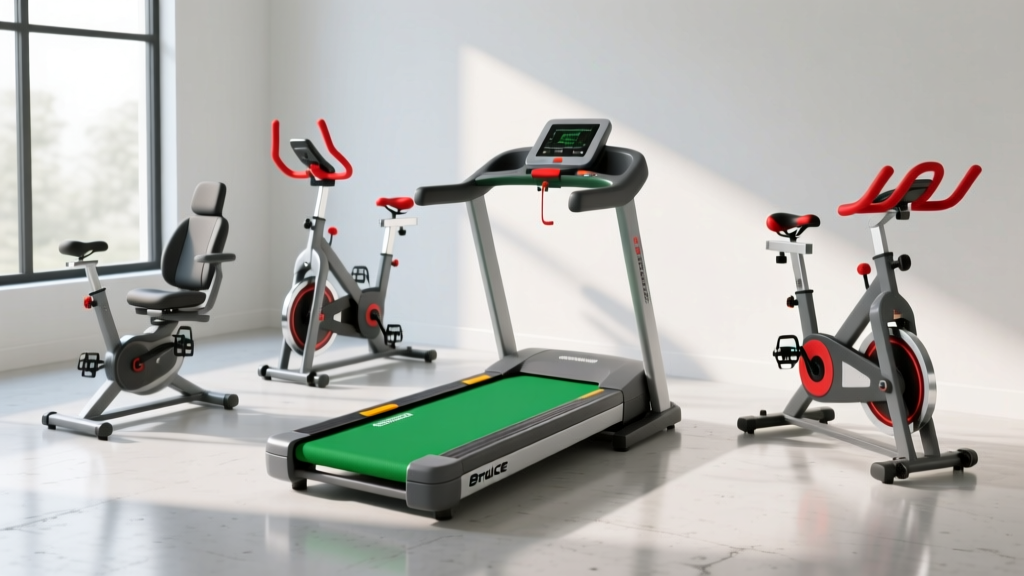
Modified Bruce Treadmill Test Protocol vs Bikes: Space Guide
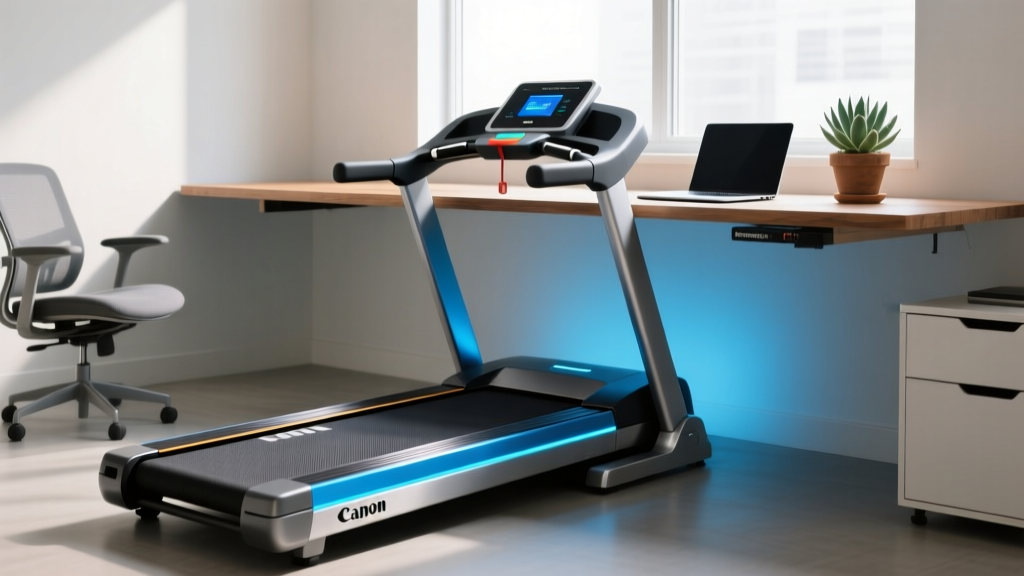
Todo Treadmill Trend 2026: Under Desk Office Reviews

Treadmill Exercises to Lose Weight: Belt Care & Space Layouts

Best Folding Treadmills for Small Spaces & Treadmill Lubricant
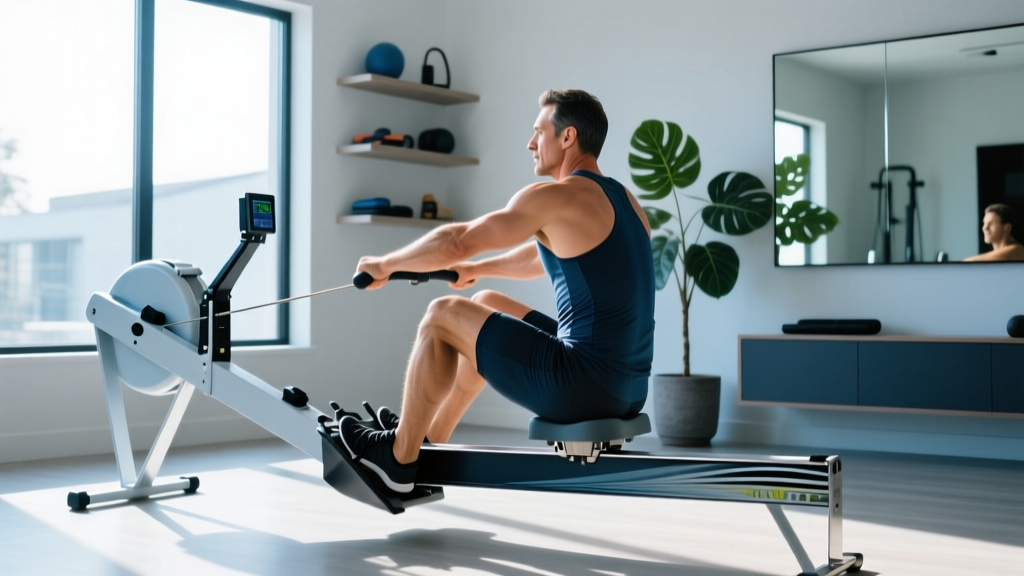
Rowing Machine Buying Guide & Technique: ProForm XP Treadmill Switch
