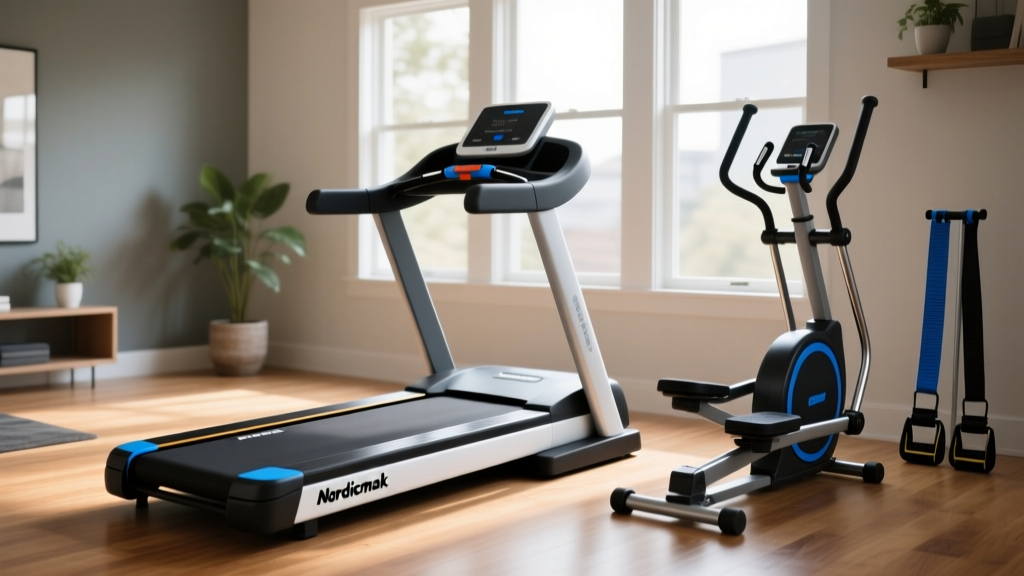
NordicTrack Series 9 Treadmill & Compact Portable Cardio Maintenance
Master longevity for your home gym. Expert maintenance tips for the NordicTrack Series 9 treadmill and compact portable cardio equipment options.

The Hybrid Home Gym: Balancing Heavy-Duty and Portable Cardio
Modern home fitness ecosystems in 2026 rarely rely on a single machine. Most dedicated enthusiasts utilize a primary anchor piece alongside a fleet of secondary gear. If your setup features the NordicTrack Series 9 treadmill as your heavyweight centerpiece, you likely supplement it with compact portable cardio equipment options—such as under-desk walking pads, foldable mini steppers, or portable air bikes—for active recovery and office-hour movement. While the footprint and price tags of these machines differ drastically, their reliance on friction-based mechanical parts means they all share a common vulnerability: neglect. According to Consumer Reports, improper maintenance is the leading cause of premature motor failure and deck warping in home cardio equipment. This comprehensive guide provides exact, actionable maintenance care and longevity tips to protect your investment across your entire cardio lineup.
Anchor Maintenance: Caring for the NordicTrack Series 9 Treadmill
The NordicTrack Series 9 treadmill is built around a 2.65 CHP Mach Z motor and an 18" x 55" running belt. While it is a folding model designed to save space, its internal components require rigorous, scheduled care to prevent the friction and heat buildup that destroy control boards.
1. Precision Belt Lubrication and Tensioning
Unlike commercial gym treadmills that use wax-infused belts, the Series 9 requires manual lubrication. You must use 100% silicone-based treadmill lubricant; petroleum-based products will melt the belt backing and ruin the MDF deck. Apply exactly 0.5 ounces of silicone under the belt on both the left and right sides every 150 miles or every three months. As noted by the experts at Treadmill Doctor, over-lubrication is just as harmful as under-lubrication, as excess silicone will sling onto the motor housing and attract dust.
Tension Test: With the machine off, lift the belt from the center of the deck. It should rise exactly 2 to 3 inches. If it lifts higher, the belt is too loose and will slip during heavy sprints. If it won't lift 2 inches, it is over-tensioned, which places immense lateral strain on the motor bearings and rear roller. Adjust using the rear roller bolts with a 3mm Allen wrench, turning only 1/4 turn at a time.
⚠️ CRITICAL SAFETY WARNING: Always unplug the NordicTrack Series 9 from the wall outlet and remove the safety key before removing the motor hood or adjusting the rear roller bolts. Capacitors inside the motor control board can hold a lethal charge even when powered down.2. Motor Hood Dust Extraction
The Series 9's motor relies on an internal cooling fan. Over time, household dust, pet hair, and micro-fibers from workout clothing are sucked into the motor hood. This creates an insulating blanket over the motor control board, leading to capacitor blowouts—a $150 to $250 repair. Every six months, remove the three Phillips-head screws on the front motor hood. Use canned compressed air (held upright to prevent liquid propellant discharge) or a leaf blower on a low setting to clear the fins and the drive motor brush housing.
Longevity Protocols for Compact Portable Cardio Equipment Options
Compact portable cardio equipment options are often treated as disposable due to their lower price points ($150–$350), but with targeted maintenance, you can easily double their lifespan. These machines suffer from unique failure modes dictated by their miniaturized components.
Walking Pads and Under-Desk Treadmills
Walking pads (like those from Urevo or WalkingPad) utilize smaller 1.5 to 2.25 HP motors and frameless belt designs. Their primary failure mode is belt mistracking and edge fraying. Because they lack traditional side rails, the belt can easily drift and chew against the plastic end-caps.
- Tracking Adjustment: If the belt drifts left, insert the provided Allen key into the right rear adjustment hole and turn it clockwise exactly 1/8th of a turn. Run the pad at 2.0 mph for two minutes to let the belt center itself. Never make large adjustments, or the belt will snap off the roller entirely.
- Weight and Speed Limits: Never exceed the manufacturer's stated weight limit (usually 220–240 lbs), and avoid running faster than 3.5 mph on models not explicitly rated for jogging. The small-diameter front rollers on walking pads generate excessive heat at high speeds, which can melt the internal belt splicing tape.
Hydraulic Mini Steppers
Mini steppers rely on dual hydraulic resistance cylinders and polyurethane drive cables. The most common complaint is a loud, rhythmic squeaking that develops after 100,000 steps.
- Pivot Joint Lubrication: Do not use standard WD-40 on the pivot ball joints; it will strip the factory grease and attract abrasive dust. Instead, apply a single drop of white lithium grease or PTFE (Teflon) dry lube to the pivot pins where the footplates meet the central steel post.
- Cylinder Pressure Loss: Hydraulic cylinders naturally lose pressure over time due to microscopic seal degradation. If one pedal drops significantly faster than the other, the cylinder has failed. Replacement cylinders cost roughly $25-$40 and are easily swapped using a 12mm wrench.
Head-to-Head Maintenance Matrix
Use this quick-reference table to schedule your home gym maintenance routines efficiently.
| Maintenance Task | NordicTrack Series 9 | Compact Walking Pad | Hydraulic Mini Stepper |
|---|---|---|---|
| Belt/Drive Lubrication | Every 150 miles (Silicone) | Every 300 miles (Silicone) | N/A (Hydraulic sealed) |
| Tension / Tracking Check | Monthly | Bi-Weekly (High drift risk) | N/A |
| Dust / Debris Clearing | Every 6 months (Motor hood) | Monthly (Under-deck vacuum) | Weekly (Wipe pivot joints) |
| Hardware Fastener Check | Annually (Upright bolts) | Annually (Console mast) | Every 3 months (Pedal nuts) |
| Estimated Part Replacement Cost | Belt: $50 / Board: $200 | Motor: $120 (Often totals unit) | Cylinders: $35 per pair |
Environmental Factors: The Invisible Equipment Killer
Where you place your compact portable cardio equipment options and your primary treadmill drastically impacts their longevity. According to guidelines referenced by ACE Fitness regarding home gym safety and equipment care, environmental control is paramount.
"Humidity is the silent destroyer of treadmill decks. If your home gym is in an unclimate-controlled garage or basement where humidity regularly exceeds 65%, the MDF (medium-density fiberboard) deck of your treadmill will absorb moisture, swell, and delaminate. This creates immense friction that will eventually stall the motor. Always maintain room humidity between 40% and 50%."
Furthermore, never store compact walking pads vertically by leaning them against a wall without securing them. The internal lubricants in the motor gearbox can pool at one end, leading to dry-starts and gear stripping when you lay the pad flat again. Always store them flat under a bed or sofa, or use the manufacturer's designated vertical storage stand.
Frequently Asked Questions (FAQ)
Can I use a walking pad on thick carpet?
No. Placing a compact walking pad on thick pile carpet blocks the underside ventilation grilles, causing the motor to overheat and trigger the internal thermal cutoff switch. Additionally, the soft surface causes the frame to flex, which misaligns the front and rear rollers, leading to rapid belt fraying. Always use a high-density EVA foam equipment mat.
How do I know if my NordicTrack Series 9 deck needs replacing?
Perform the "fingernail test." Run your fingernail across the center of the deck (under the belt). If it catches on deep grooves, or if you notice a white, chalky residue on your fingers (indicating the phenolic coating has worn through to the raw wood), the deck must be replaced. Running a new belt on a burnt deck will destroy the new belt in under 30 days.
Why is my mini stepper squeaking even after I oiled it?
If the squeak persists after lubricating the pivot joints, the noise is likely coming from the internal polyurethane drive cables rubbing against the plastic cable guides. Apply a small amount of PTFE dry lube to the cable guides where they enter the main chassis. Avoid wet oils, which will drip onto your flooring.
More gear to consider
All reviews
Gold's Gym 720 Treadmill Motor: A Beginner's HP Guide
2026 Vibration Plate Treadmill Combos for Small Spaces

Stair Climber Guide: NordicTrack vs ProForm 400 C Treadmill

Treadmill Buying Guide: Nuclear Stress Test Procedure Without Treadmill Side Effects
Elliptical vs Treadmill: Bowflex T9 Review & Value
