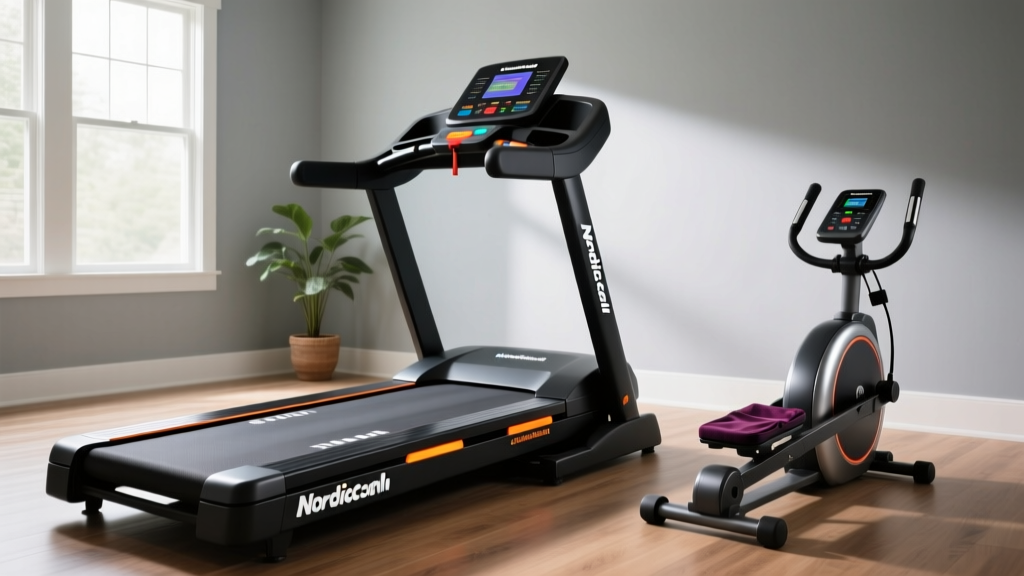
Treadmill Belt Maintenance vs Fitness Tracker Elliptical Costs
Compare the hidden 5-year costs of treadmill belt maintenance and lubrication against the long-term value of upgrading to a smart fitness tracker elliptical.

The Hidden Friction Tax: Why Treadmill Belts Drain Your Wallet
When budgeting for home cardio equipment, most buyers focus exclusively on the upfront retail price. However, a true Budget Breakdown and Value Analysis requires examining the total cost of ownership over a 5-to-10-year lifespan. In the cardio machine category, no component illustrates the hidden costs of ownership quite like the treadmill belt. Unlike magnetic resistance systems, a treadmill relies on continuous physical friction between a moving PVC belt and a stationary deck. This friction is the enemy of your wallet.
According to reliability data analyzed by Consumer Reports, treadmills consistently rank as the most failure-prone home cardio equipment, largely due to neglected belt maintenance and subsequent motor burnout. If you are weighing the ongoing costs of treadmill belt maintenance and lubrication against the prospect of upgrading to a zero-maintenance fitness tracker elliptical, you need to understand the exact financial mechanics of friction.
The Amp-Draw Diagnostic Test
Before breaking down the 5-year budget, you must understand how a dry treadmill belt destroys expensive internal components. When a treadmill belt lacks proper 100% silicone lubrication, the coefficient of friction between the belt and the deck increases exponentially. This forces the DC drive motor to work harder to maintain speed under your body weight.
- Normal Operation (Lubricated): A 175 lb user walking at 3.0 MPH will draw between 6 to 10 Amps. Running at 6.0 MPH typically draws 10 to 15 Amps.
- Dry Belt Operation (Neglected): That same user at 3.0 MPH can spike the draw to 18 to 25+ Amps.
Most residential treadmills are plugged into standard 15-Amp or 20-Amp household circuits. A dry belt will repeatedly trip your breaker or, worse, overheat and fry the MOSFETs on the lower motor control board—a replacement part that typically costs between $150 and $350 for brands like Horizon Fitness, Sole, or NordicTrack.
5-Year Budget Breakdown: Treadmill vs. Elliptical Maintenance
To properly evaluate value, we must project the mandatory maintenance costs of a mid-tier treadmill (e.g., Sole F63 or Horizon 7.4) against a modern elliptical over a 60-month period, assuming 3 hours of use per week.
| Maintenance Item | Treadmill (5-Year Cost) | Elliptical (5-Year Cost) | Notes & Frequency |
|---|---|---|---|
| Silicone Lubricant | $60.00 | $0.00 | Treadmill requires 1oz every 150 miles (~$12/bottle, 5 bottles). |
| Belt Replacement | $120.00 | $0.00 | Treadmill belts stretch and fray; expect 1 replacement in 5 years. |
| Deck Replacement | $180.00 | $0.00 | Phenolic decks warp or wear through if lubrication is delayed. |
| Control Board / Motor | $250.00 | $0.00 | Dry belts fry control boards; ellipticals use frictionless magnetic resistance. |
| Pivot Point Grease | $0.00 | $15.00 | Elliptical arm joints need white lithium grease annually. |
| Excess Electricity | $45.00 | $0.00 | Friction increases power draw by up to 15% over the machine's life. |
| TOTAL 5-YEAR UPKEEP | $655.00 | $15.00 | Treadmill upkeep equals ~35% of its original $1,800 purchase price. |
The Value of the Modern Fitness Tracker Elliptical
Looking at the matrix above, the financial argument for abandoning the treadmill belt entirely becomes compelling. This is where the fitness tracker elliptical enters the value equation. In 2026, a fitness tracker elliptical is no longer just a machine with rudimentary metal grip heart-rate sensors. Modern units (like the Bowflex Max Trainer M9 or NordicTrack FS14i) feature integrated optical biometric sensors, FTMS (Fitness Machine Service) Bluetooth protocols, and automated magnetic resistance.
Because ellipticals utilize eddy-current magnetic resistance, the flywheel never physically touches the resistance mechanism. There is no belt, no deck, and no friction-based wear and tear. The American Heart Association recommends at least 150 minutes of moderate-intensity aerobic activity per week for cardiovascular health. Achieving this on an elliptical guarantees zero belt degradation, zero deck warping, and zero motor strain from friction.
While a premium fitness tracker elliptical may carry a higher upfront retail price (often $1,500 to $2,500) compared to a budget treadmill, the 5-year total cost of ownership frequently evens out or favors the elliptical when factoring in the elimination of belt replacements, deck sanding, and control board repairs.
Masterclass: Treadmill Belt Lubrication and Tensioning
If your current budget dictates that you must keep your existing treadmill, rigorous adherence to a maintenance schedule is non-negotiable. Here is the exact, step-by-step procedure for lubricating and tensioning a standard residential treadmill belt to prevent the catastrophic failure modes outlined above.
- Power Down and Access: Unplug the treadmill from the wall. Never apply lubricant while the machine is powered on. Lift the edge of the belt on one side to access the space between the belt and the deck.
- Apply 100% Silicone: Use only 100% pure silicone treadmill lubricant (brands like Spot On, or the manufacturer's OEM lube). Never use WD-40, petroleum jelly, or household oils. Petroleum products will dissolve the phenolic coating on the MDF deck and cause the PVC belt to delaminate. Apply exactly 1 ounce (about half a standard squeeze bottle) in a zig-zag pattern across the width of the deck.
- Distribute the Lubricant: Plug the machine back in. Set the speed to 2.0 MPH. Walk on the treadmill for 3 to 5 minutes, deliberately stepping heavily on the left and right edges to spread the silicone evenly across the entire deck surface.
- Check Belt Tension: Unplug the machine again. Go to the rear of the treadmill. You should be able to lift the center of the belt exactly 2 to 3 inches off the deck.
- If it lifts more than 3 inches: The belt is too loose and will slip when you plant your foot. Tighten both rear roller bolts exactly one-quarter turn clockwise.
- If it lifts less than 2 inches: The belt is too tight, which puts excessive lateral pressure on the motor bearings. Loosen both bolts one-quarter turn counter-clockwise.
Before lubricating, run your hand flat underneath the belt and across the deck. If you feel deep grooves, ridges, or notice the black phenolic coating has worn away to reveal bare wood (MDF), do not just replace the belt. A worn deck acts like sandpaper and will destroy a brand-new $120 replacement belt in less than 30 days. If the deck is grooved, you must replace both the belt and the deck simultaneously, or upgrade your machine entirely.
Final Verdict: Repair the Belt or Upgrade to an Elliptical?
From a strict budget breakdown perspective, maintaining a treadmill belt is a recurring "friction tax" that demands both your time and your wallet. If you are diligent—lubricating every 150 miles and monitoring amp-draw—a treadmill can last a decade. However, if you find yourself facing a $200 control board replacement and a $150 belt/deck combo repair in the same year, the ROI of salvaging the machine plummets.
For users who prioritize set-it-and-forget-it convenience, joint preservation, and seamless integration with digital health ecosystems, reallocating your repair budget toward a modern fitness tracker elliptical is the superior financial and physiological move. By eliminating physical friction from the resistance equation, you effectively cap your long-term maintenance costs at near zero, allowing you to focus entirely on your cardiovascular output rather than your equipment's upkeep.
More gear to consider
All reviews
Elliptical vs Treadmill: Space Layouts for Interval Workouts

Cardio Machine Noise Level Comparison: Sprint Demon Treadmill & More

Treadmill Motor Size Guide & How to Loosen a Treadmill Belt During Setup
Home Stair Climber Setup vs ProForm 705 CST Treadmill
Decibel Showdown: Base Treadmill Noise Levels vs. Traditional Cardio Machines