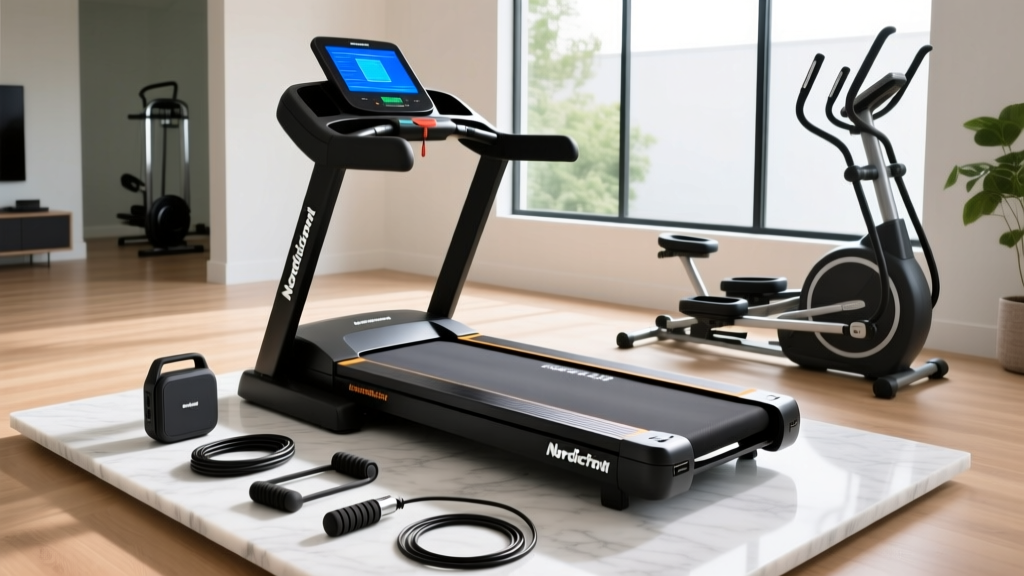
NordicTrack Intermix Acoustics 2.0 Treadmill & Portable Cardio Care
Compare maintenance for the NordicTrack Intermix Acoustics 2.0 treadmill and modern compact portable cardio equipment options to maximize longevity.

The Evolution of Home Cardio: Heavy-Duty Baselines vs. Compact Alternatives
As we navigate the home fitness landscape of 2026, a distinct bifurcation has emerged in equipment ownership. On one end of the spectrum, many dedicated enthusiasts still rely on legacy, heavy-duty machines like the NordicTrack Intermix Acoustics 2.0 treadmill. Known for its robust 2.5 CHP motor, ProShox cushioning, and integrated audio system, this machine represents the gold standard of traditional, high-impact home cardio. On the other end, the rapid advancement of spatial engineering has popularized compact portable cardio equipment options, such as 180-degree folding walking pads and under-desk magnetic ellipticals, catering to apartment dwellers and hybrid workers.
While the biomechanical benefits of both categories are well-documented by the American Council on Exercise (ACE), their maintenance protocols differ drastically. Neglecting the specific mechanical needs of either a full-sized treadmill or a micro-walker will lead to premature motor burnout, belt fraying, and control board failures. This comprehensive guide bridges the gap, providing exact, actionable maintenance frameworks to ensure maximum longevity for both your heavy-duty NordicTrack and your modern portable gear.
Mastering Maintenance: NordicTrack Intermix Acoustics 2.0 Treadmill
The NordicTrack Intermix Acoustics 2.0 treadmill is a workhorse, but its longevity is entirely dependent on mitigating friction and static electricity. The most common cause of catastrophic failure in this specific model is not the electronics, but rather an over-tightened tread belt that forces the 2.5 CHP motor to draw excessive amperage, eventually frying the lower control board (a repair that typically costs between $180 and $250).
The 2-to-3 Inch Deflection Test
To prevent motor strain, you must perform the belt deflection test every 90 days. Turn off and unplug the machine. Lift the center of the tread belt away from the wooden deck. The optimal clearance is exactly 2 to 3 inches. If the belt lifts higher, it is too loose and will slip during high-speed intervals. If it lifts less than 2 inches, it is too tight. Use a 3/16-inch Allen wrench on the rear roller adjustment bolts, turning them counter-clockwise in quarter-turn increments until the proper deflection is achieved.
Deck Lubrication and Acoustic Component Care
The Intermix Acoustics line features a specialized deck that requires 100% pure silicone lubricant (never use petroleum-based products or WD-40, which will dissolve the deck's wax coating). Apply 1 ounce of silicone gel in a zigzag pattern under the belt every 150 miles or 3 months. Furthermore, because this model features integrated acoustic speakers in the uprights, dust and debris frequently accumulate in the speaker grilles and the motor hood. Use a can of compressed air and a microfiber cloth to clear these vents monthly; blocked motor vents lead to thermal shutdowns during sustained incline workouts.
⚠️ Critical Warning: Never use a vacuum cleaner directly on the treadmill's motor housing while the hood is removed. The static discharge from the vacuum nozzle can instantly short-circuit the treadmill's sensitive PCB (Printed Circuit Board). Always use non-static compressed air or a soft brush.Longevity Protocols for Compact Portable Cardio Equipment Options
According to recent market analyses highlighted by Consumer Reports, compact portable cardio equipment options have surged in popularity due to their sub-$400 price points and minimal footprints. However, their smaller components require highly specific care to avoid rapid degradation.
Walking Pads and Micro-Treadmills
Devices like the KingSmith WalkingPad R2 or generic ultra-thin walking pads utilize smaller 1.0 to 1.5 HP DC motors and lack the heavy-duty front/rear roller systems of full-sized treadmills. Belt Alignment: Because these belts are exceptionally thin (often 1.2mm to 1.5mm), they are prone to lateral drifting. If the belt rubs against the side frame, it will fray within weeks. Adjust the rear hex screws, but never turn them more than a half-rotation at a time. Weight Limits: Exceeding the manufacturer's stated weight limit by even 10% on a compact walking pad increases the friction coefficient exponentially, leading to stripped plastic drive gears—a failure mode that is usually unrepairable and results in total unit replacement.
Under-Desk Ellipticals and Mini-Climbers
Compact ellipticals rely on magnetic resistance and small internal flywheels. The primary enemy here is not friction, but particulate intrusion. Pet hair and carpet fibers easily bypass the plastic casing seals and wrap around the internal axle bearings. Every six months, use a specialized electronics duster to blow out the side vents. If your portable elliptical utilizes a lithium-ion battery pack rather than a direct wall plug, adhere to the 20-80% charging rule to preserve the battery's chemical lifespan, preventing the dreaded 'swollen battery' issue that cracks the device's chassis.
Comparative Maintenance Matrix
To help you allocate your time and budget effectively, we have synthesized the maintenance requirements of heavy-duty legacy machines versus modern compact alternatives.
| Equipment Category | Primary Maintenance Task | Frequency | Est. Annual Cost | Most Common Failure Mode |
|---|---|---|---|---|
| Heavy-Duty Treadmill (e.g., NordicTrack Intermix 2.0) | Silicone deck lubrication & belt tensioning | Every 90 Days | $25 - $40 | Lower control board burnout due to motor over-amping |
| Compact Walking Pad | Lateral belt centering & hex-key axle adjustment | Monthly | $10 - $15 | Stripped plastic drive gears from overloading |
| Portable Magnetic Elliptical | Compressed air dusting of flywheel housing | Bi-Annually | $5 - $10 | Axle bearing seizure from pet hair intrusion |
| Folding Stationary Bike | Pedal crank tightening & sweat corrosion wipe-down | Weekly / Monthly | $0 - $5 | Pedal thread stripping due to sweat-induced rust |
Environmental Threats in Small-Space Gyms
When utilizing compact portable cardio equipment options, users frequently place them in multi-purpose rooms, home offices, or small apartments. The American Physical Therapy Association (APTA) often notes that environmental factors in these spaces can subtly alter the biomechanics of use, but they also wreak havoc on the hardware.
- Carpet Fibers: Placing a walking pad directly on a high-pile carpet allows micro-fibers to be sucked into the motor intake fan. Always use a high-density EVA foam mat (at least 3/8-inch thick) beneath any portable motorized equipment.
- Humidity Fluctuations: Small spaces often suffer from poor HVAC circulation. High humidity causes the wooden deck of a treadmill to warp, increasing friction, while low humidity increases static shock risks. Maintain your workout space between 40% and 50% relative humidity.
- Sweat Corrosion on Folding Hinges: Compact equipment relies on folding hinges (like the 180-degree hinge on folding walking pads). Sweat dripping onto these exposed metal joints causes rapid oxidation. Wipe down all hinge points with a dry microfiber cloth after every use and apply a single drop of white lithium grease to the hinge pins twice a year.
Expert Troubleshooting FAQ
Why does my NordicTrack Intermix Acoustics 2.0 treadmill shut off exactly 15 minutes into a run?
This is a classic thermal protection trip. The 2.5 CHP motor is overheating. This is almost always caused by a dry deck creating excessive friction, or a belt that has been over-tightened by the user. Perform the deflection test, lubricate the deck with 100% silicone, and ensure the room temperature is below 72°F (22°C) during intense workouts.
Can I use a standard treadmill belt replacement on a compact walking pad?
No. Compact walking pads require specialized, ultra-thin, low-friction belts that are pre-lubricated at the factory. Standard treadmill belts are too thick and heavy; installing one on a micro-walker will immediately stall the smaller 1.0 HP motor and void your warranty.
How do I store a portable elliptical to maximize its lifespan?
Store it in its original packaging or a dedicated canvas bag to prevent dust accumulation. If the unit contains a lithium battery, store it in a climate-controlled environment (around 68°F/20°C) with the battery charged to exactly 50%. Storing it fully depleted for more than three months will cause irreversible chemical degradation to the battery cells.
More gear to consider
All reviews
Does a Treadmill Work Glutes? 2026 Incline Models Compared
Air vs Assault Bike: Running on Treadmill vs Outside Alternatives

Horizon T101 Treadmills: Belt Maintenance & Lubrication

Setup Guide: Zone 2 Cardio on Treadmill (Curved vs Motorized)

Rowing Buying Guide & Technique vs. a HIIT Cardio Treadmill for Beginners
