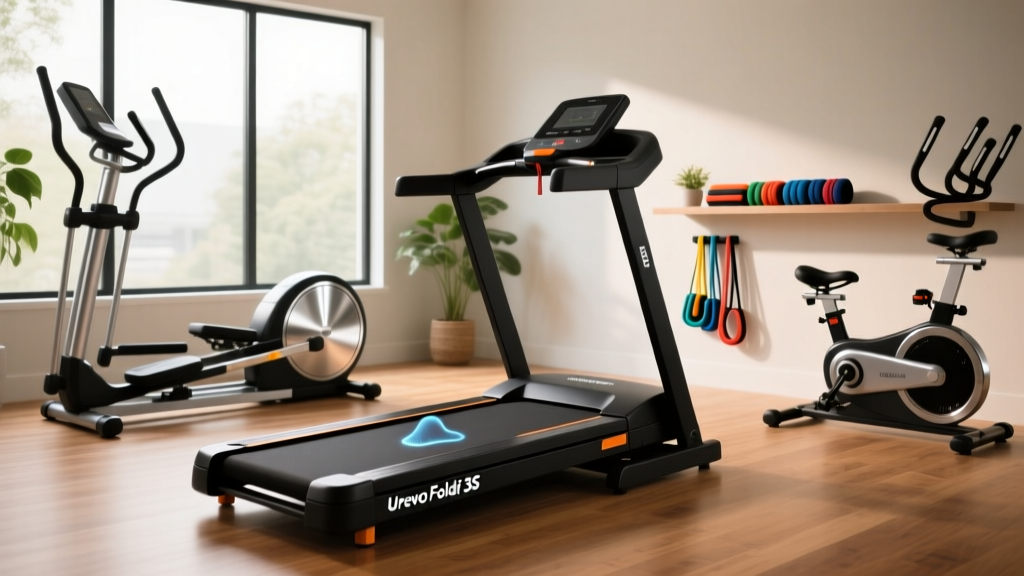
NordicTrack Treadmill Models: 2026 Small-Space Folding Review
We analyze 2026 NordicTrack treadmill models for small spaces. Discover which folding designs offer the best footprint, motor durability, and value.

The 2026 Urban Fitness Shift: Why Folding Footprints Matter
As hybrid work models permanently alter residential real estate trends in 2026, the dedicated home gym is becoming a luxury. According to recent spatial analyses by Apartment Therapy, urban dwellers and suburban downsizers are increasingly prioritizing 'invisible fitness'—equipment that integrates seamlessly into multi-use living spaces without dominating the floor plan. This macroeconomic shift has forced legacy fitness brands to rethink their engineering priorities.
When evaluating NordicTrack treadmill models through the lens of small-space living, consumers often hit a wall of confusion. NordicTrack's marketing heavily features their massive, non-folding Commercial Series (like the 1750 and 2450), leading many buyers to mistakenly assume these behemoths can be folded away. They cannot. To truly optimize for compact square footage, we must look exclusively at NordicTrack's dedicated folding lineups: the utilitarian T Series and the performance-oriented EXP Series.
Market Data Highlight: In 2026, folding treadmills account for nearly 42% of all sub-$1,000 home cardio equipment sales, driven primarily by renters and apartment owners seeking sub-30-inch folded depths.Dissecting the Folding Lineup: T Series vs. EXP Series
Not all folding mechanisms are created equal. The engineering gap between a budget-friendly walking treadmill and a compact runner's machine dictates not just the footprint, but the biomechanical safety and longevity of the unit. Here is how NordicTrack's primary folding models perform in the current market.
The T Series 8 (T8): The Budget Footprint King
The NordicTrack T8 remains the brand's most aggressive play in the entry-level folding market. Priced around $599, it is designed strictly for walkers and light joggers. The folding mechanism utilizes a basic manual lift with a hydraulic assist strut, reducing the footprint to roughly 30 x 30 inches.
- Motor: 2.0 HP (Continuous). Adequate for speeds up to 6 mph, but prone to thermal throttling if a user over 200 lbs attempts sustained running.
- Belt Dimensions: 18 x 50 inches. This is a critical limitation. As noted by ACE Fitness, a 50-inch belt restricts natural stride extension for runners taller than 5'8", forcing an unnatural, shortened gait that can lead to knee and hip strain over time.
- Failure Mode Edge Case: The T8's gas-strut hinge is rated for roughly 3,000 fold/unfold cycles. In households where the treadmill is folded daily, users report pneumatic pressure loss within 24 to 36 months, making the 130-pound deck dangerously heavy to lower manually.
The EXP 7i: The Compact Incline Innovator
For serious runners who cannot accommodate a Commercial Series, the EXP 7i (retailing near $899) bridges the gap between space-saving design and athletic performance. Unlike the T Series, the EXP 7i features a reinforced steel folding latch and a dual-pneumatic lift system that safely manages its heavier 165-pound frame.
- Motor: 2.6 CHP. The upgraded continuous horsepower ensures the motor does not overheat during 8 mph+ interval training, a common failure point in cheaper compact models.
- Belt Dimensions: 20 x 55 inches. This provides the necessary surface area for safe, full-stride running.
- Unique Market Advantage: The EXP 7i offers a -3% to 10% incline/decline range. Decline training is exceptionally rare in the sub-$1,000 folding category, giving NordicTrack a distinct edge in eccentric muscle conditioning for trail runners.
Footprint & Engineering Matrix
To understand the spatial trade-offs, we must look beyond the marketing brochures. The following matrix compares the true spatial requirements of NordicTrack's folding models against a non-folding baseline.
| Model | Folded Dimensions (W x D x H) | Required Operational Clearance | Deck Flex Rating |
|---|---|---|---|
| T Series 8 | 30" x 30" x 65" | +24" rear / +12" sides | High (Noticeable bounce at >6mph) |
| EXP 7i | 32" x 34" x 70" | +30" rear / +15" sides | Low (Rigid, commercial-style slats) |
| Commercial 1750 (Baseline) | Does Not Fold (Tilts only) | +36" rear / +20" sides | None (Solid aluminum deck) |
Critical Clearance Warning: Many small-space buyers measure only the folded footprint (e.g., 30x30 inches) and push the folded treadmill flush against a wall. This is a severe fire and mechanical hazard. Treadmill motors require active rear ventilation to dissipate heat, and the rear roller requires physical clearance. Always maintain a minimum 18-inch gap behind the motor housing, even when stored.
The Hidden Engineering Trade-offs of Folding Mechanisms
According to durability testing standards outlined by Consumer Reports, introducing a folding hinge into a treadmill chassis inherently compromises structural rigidity. When analyzing NordicTrack's folding models, three specific engineering trade-offs emerge that buyers must accept:
1. Chassis Torsion and Deck Flex
Because the front uprights must pivot, the connection point between the deck and the uprights relies on heavy-duty bolts rather than continuous welded steel. On the T8, this results in 'deck flex'—a slight trampoline effect when a user's foot strikes the belt at higher speeds. While acceptable for walking, this flex absorbs kinetic energy, making running feel less responsive and increasing calf fatigue.
2. The Console Vibration Factor
In non-folding models, the console is anchored to a solid, continuous frame. In folding models like the EXP 7i, the console is mounted to the pivoting arms. Over time, the micro-vibrations from the belt can cause the console mounting brackets to loosen, leading to screen wobble during high-incline runs. NordicTrack has mitigated this in 2026 by adding rubberized dampeners to the EXP hinge points, but it remains a maintenance checkpoint for owners.
3. Weight Capacity vs. Unit Weight
A paradox of folding treadmills is that to make them sturdy enough for running, the frame must be heavy, which defeats the purpose of easy folding. The EXP 7i weighs 165 lbs. While it has transport wheels, moving it across carpeted rooms or transitioning it over hardwood thresholds requires significant physical effort. It is a 'fold and forget' machine, not a 'roll into the closet' machine.
Practical Decision Framework: Which Model Fits Your Space?
To make a data-driven purchasing decision, evaluate your spatial constraints against your biomechanical needs using this framework:
- The Daily Walker (Under 180 lbs): If your primary use is walking at 2.5 to 4.0 mph while working at a standing desk, the T Series 8 is the optimal choice. Its 18-inch belt width is sufficient for walking, and the smaller motor will not overheat at low speeds. Ensure your ceiling height is at least 78 inches to accommodate the folded uprights.
- The Interval Runner (Over 180 lbs): If you run intervals above 6 mph or require incline/decline training, the T8 will fail you mechanically. You must invest in the EXP 7i. The 20x55 inch belt provides the necessary safety margin, and the 2.6 CHP motor handles high-torque demands without tripping standard 15-amp household breakers.
- The Space-Constrained Purist: If you require the immersive iFIT screen and heavy-duty cushioning of the Commercial Series but lack the square footage, do not buy a folding NordicTrack. Instead, look outside the brand to competitors like the Sole F85 or Horizon 7.4, which offer folding mechanisms on commercial-grade frames, or accept that NordicTrack's premium experience requires a permanent 35-square-foot floor dedication.
Final Market Verdict
In the 2026 cardio equipment landscape, NordicTrack has successfully bifurcated its lineup. They reserve their premium, space-dominating technology for the Commercial series, while treating their folding models as highly specialized, utilitarian solutions for urban and multi-use spaces. The T Series 8 remains an undisputed value leader for walkers, while the EXP 7i stands out as one of the few folding treadmills on the market that genuinely respects the biomechanical needs of a runner. By understanding the exact clearance requirements and mechanical limitations of these folding hinges, small-space dwellers can invest in equipment that enhances their home without compromising their living environment.
More gear to consider
All reviews
Rowing Guide: Skip the Long Walk Treadmill Screening Locations
Curved vs Motorized Setup: ProForm 505 CST Treadmill Specs & Install
Curved vs Motorized: Reviews on ProForm Pro 2000 Treadmill & Guide

Escaping Treadmill Slavery: Stair Climber vs Treadmill 2026 Guide

Under Desk Treadmill Review: Garmin Treadmill Walk Value Analysis