
Curved vs Motorized: LifeSmart 2301 Folding Treadmill Compared
Compare curved manual treadmills with the LifeSmart 2301 folding treadmill. Explore biomechanics, space needs, and costs to find your ideal cardio machine.

The Great Home Gym Debate: Curved Manual vs. Motorized Treadmills
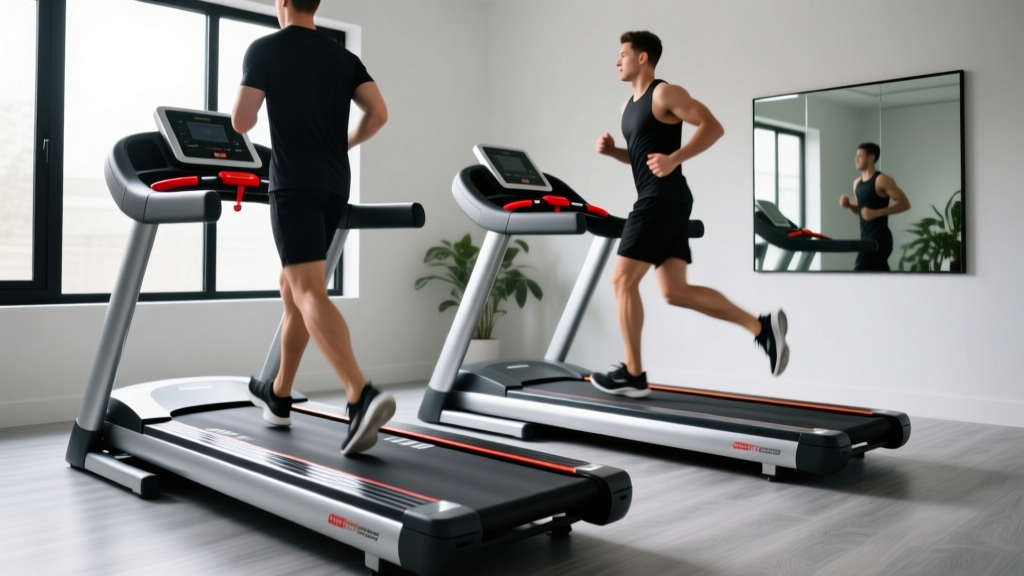
As home fitness setups evolve in 2026, cardio enthusiasts face a distinct crossroads: invest in a premium, non-motorized curved treadmill, or opt for a space-saving, budget-friendly motorized unit. On one side of the ring, we have the heavy-duty curved manual treadmills (like the AssaultRunner Elite or Technogym Skillmill), celebrated for their biomechanical purity and high-intensity interval training (HIIT) capabilities. On the other side, we have compact, motorized workhorses designed for daily steady-state cardio and small apartments. To ground this comparison in reality, we are using the highly popular LifeSmart 2301 folding treadmill as our baseline motorized benchmark. Priced around $269, it represents the quintessential entry-level motorized experience. But how does a $269 folding motorized treadmill truly stack up against a $3,500 curved manual machine? This in-depth buying guide breaks down the biomechanics, spatial requirements, long-term maintenance, and real-world failure modes to help you make an informed decision.
Biomechanics and Caloric Expenditure: The Physics of the Belt
The most significant difference between a curved manual treadmill and a motorized model like the LifeSmart 2301 lies in how the belt is propelled. On a motorized treadmill, the electric motor pulls the belt beneath your feet. Your primary biomechanical job is simply to keep up and maintain balance. Conversely, a curved manual treadmill requires the user to generate 100% of the forward momentum. The concave shape of the running surface forces you to strike the belt with the ball of your foot, driving the slats backward and propelling yourself forward.
'Because the user must overcome the inertia of the heavy slat belt and the upward curve of the deck, curved treadmills demand significantly more posterior chain engagement—specifically the hamstrings and glutes—compared to flat motorized belts.'
According to a comprehensive physiological study published in the National Institutes of Health (NIH), running on a curved non-motorized treadmill increases caloric expenditure by approximately 30% compared to a motorized treadmill at the same perceived rate of exertion. Furthermore, the NIH data indicates that heart rate and blood lactate levels are significantly higher on curved treadmills, making them vastly superior for anaerobic conditioning and VO2 max improvements. If your primary goal is maximum calorie burn in a minimal timeframe, the curved manual design wins unequivocally.
Benchmarking the Motorized Standard: LifeSmart 2301 Folding Treadmill
While curved treadmills dominate in athletic performance, they are entirely impractical for the average user seeking a casual walking or light jogging routine in a small space. This is where the LifeSmart 2301 folding treadmill carves out its massive market share. Let us look at the exact specifications and real-world performance of this motorized unit:
- Motor: 1.5 HP Peak (Continuous duty is roughly 0.75 HP)
- Running Surface: 44 inches long by 16 inches wide
- Max Speed: 7.6 MPH
- Incline: 3 manual levels (adjusted via pins on the rear feet)
- Weight Capacity: 250 lbs
- Retail Price: $249 - $289 (depending on seasonal sales)
For users focused on Low-Intensity Steady State (LISS) cardio, walking pad routines, or casual jogging while watching television, the LifeSmart 2301 provides a stable, predictable, and highly accessible platform. The motorized belt also allows for precise speed targeting, which is crucial for rehabilitation protocols or structured zone-2 heart rate training.
Head-to-Head Comparison Matrix
To visualize the stark contrasts between these two cardio machine categories, we have compiled a direct comparison matrix. We are using the AssaultRunner Elite as the representative curved manual treadmill against the LifeSmart 2301 folding treadmill.
| Feature | Curved Manual (AssaultRunner Elite) | Motorized (LifeSmart 2301) |
|---|---|---|
| Retail Price | $3,499 | ~$269 |
| Unit Weight | 280 lbs | 115 lbs |
| Folding Capability | No (Fixed frame) | Yes (Folds vertically) |
| Max Speed | Unlimited (User-dependent) | 7.6 MPH |
| Caloric Burn (Perceived) | +30% higher than flat motorized | Standard baseline |
| Power Requirement | None (100% human-powered) | Standard 110V Wall Outlet |
| Belt Width | 17 inches (Slat belt) | 16 inches (PVC multi-ply) |
Spatial Realities: Footprint and Storage
When outfitting a home gym in 2026, square footage is often the ultimate limiting factor. Curved manual treadmills are massive, rigid structures. The AssaultRunner Elite measures 70 inches long and 33 inches wide, and it weighs 280 pounds. It does not fold, it cannot be easily moved, and it will permanently dominate the room it occupies.
Conversely, the LifeSmart 2301 folding treadmill is a masterclass in spatial efficiency. When deployed, it measures roughly 61 x 26.5 inches. However, utilizing its hydraulic-assisted folding mechanism, the deck locks into a vertical position, reducing the footprint to an incredibly compact 26.5 x 26.5 x 57 inches. This allows users to roll the unit into a closet or push it flush against a bedroom wall when not in use. If you live in an apartment, a condo, or a multi-purpose living space, the motorized folding design is practically mandatory.
Long-Term Maintenance and Edge Cases
Every piece of fitness equipment requires maintenance, but the failure modes differ wildly between curved and motorized designs.
Curved Treadmill Maintenance
Because there is no motor, you eliminate the risk of electronic board failures. However, curved treadmills rely on a complex system of polyurethane slats and ball bearings.
- Belt Tensioning: Over 12 to 18 months of heavy use, the slat belt will stretch. You must manually adjust the rear tensioner bolts to prevent the slats from slipping during explosive sprints.
- Bearing Degradation: If kept in a low-humidity or highly dusty environment, the micro-bearings inside the slat wheels can seize, causing a 'stuttering' sensation underfoot. Annual silicone lubrication of the guide rails is required.
Motorized Treadmill Maintenance (LifeSmart 2301)
The LifeSmart 2301 relies on traditional friction-based belt mechanics.
- Deck Lubrication: You must apply 100% silicone treadmill lubricant between the PVC belt and the MDF deck every 3 to 6 months. Failure to do so increases friction, which forces the 1.5 HP motor to draw excess amperage, eventually tripping the internal thermal breaker.
- Drive Belt Wear: The small rubber drive belt connecting the motor to the front roller will eventually glaze or snap after 3 to 5 years of use, requiring a $30 replacement part and a 45-minute teardown.
Integrating Cardio into Your Routine
Regardless of the machine you choose, consistency is the primary driver of cardiovascular health. The Mayo Clinic heavily endorses interval training for improving aerobic capacity and metabolic health. A curved treadmill naturally facilitates these intervals, as you can transition from a dead stop to a full sprint in two seconds simply by moving to the front curve of the deck. However, you can easily replicate structured intervals on the LifeSmart 2301 by utilizing the speed dial for 1-minute push and 2-minute recovery cycles, provided you stay within the 7.6 MPH ceiling.
The Final Verdict: Which Should You Buy?
Your decision ultimately hinges on three variables: budget, available space, and training intensity.
Buy a Curved Manual Treadmill If:
- You are an athlete focused on HIIT, sprint mechanics, and maximizing VO2 max.
- You have a dedicated, permanent home gym space with no need to move the equipment.
- Your budget exceeds $3,000 and you want a zero-electricity, high-durability machine.
Buy the LifeSmart 2301 Folding Treadmill If:
- Your primary goals are daily walking, light jogging, and zone-2 steady-state cardio.
- You live in an apartment or need to fold and store the machine after every workout.
- You are working with a strict budget under $300 and require a reliable, plug-and-play motorized solution.
By understanding the distinct mechanical and spatial differences between these two cardio categories, you can confidently select the machine that aligns with your physiological goals and your living situation. Whether you are driving the heavy slats of a curved runner or folding up the LifeSmart 2301 after a brisk evening walk, the best cardio machine is the one that seamlessly integrates into your daily life.
More gear to consider
All reviews
Budget Breakdown: UREVO 2 in 1 Folding Treadmill vs Stationary Bike Types

Upright, Recumbent, Spin Care: Treadmill Walking Plan to Lose Weight

Compact Folding Treadmill Review & Treadmill Walking Video Setup

Beyond 30 Minutes on Treadmill Everyday: Home Stair Climber Guide
Curved vs Motorized Treadmills: Yrun Walking Pad Treadmill Mistakes
