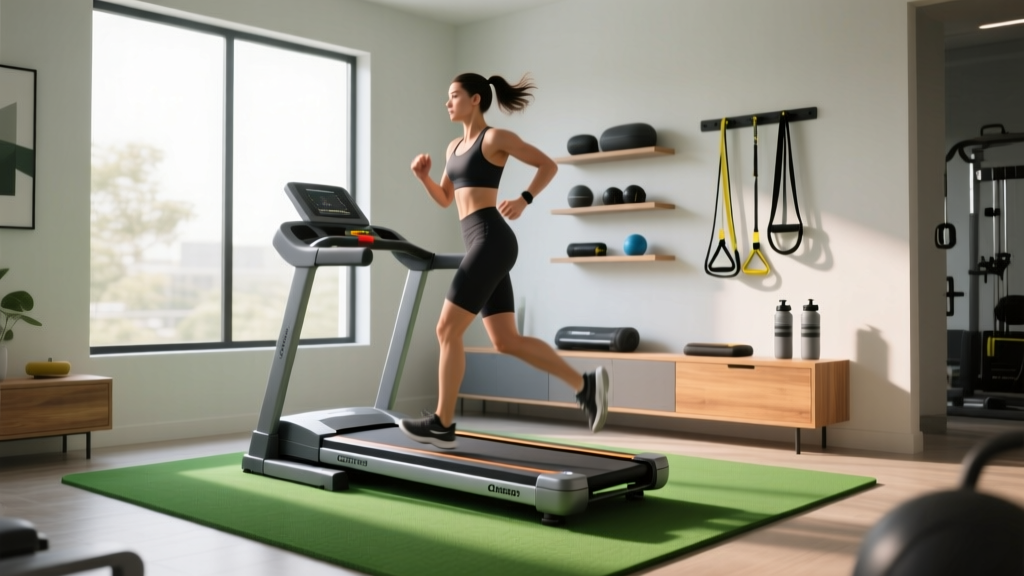
Walking Pad Review: Troubleshooting Recovery for Rock Treadmill Classes
Compare top walking pads and troubleshoot common mistakes climbers make when using them for active recovery after intense rock treadmill classes.

The Biomechanical Clash: Rock Treadmill Classes vs. Home Walking Pads
If you are taking rock treadmill classes three times a week, your posterior chain, hip flexors, and ankle stabilizers are under constant, high-intensity micro-trauma. These boutique climbing-simulation cardio sessions demand aggressive incline walking, lateral scrambling, and sustained isometric grip engagement. When you transition from the rugged, 15-degree inclines of a studio climbing treadmill to the flat, motorized belt of a home walking pad for active recovery, the biomechanical shift is jarring.
As of 2026, walking pads remain the most popular compact cardio solution for apartment dwellers and home-office workers. However, athletes accustomed to the dynamic footwork of bouldering and rock treadmill classes frequently make critical errors when selecting and maintaining these machines. A walking pad is not merely a shrunken treadmill; it is a precision tool for low-impact blood flow. According to the Cleveland Clinic, active recovery should keep your heart rate between 30% and 60% of your maximum to flush lactic acid without inducing further muscle breakdown. If your walking pad is shuddering, throwing error codes, or forcing an unnatural gait, you are defeating the purpose of the recovery session.
This guide dissects the most common mistakes climbers and rock treadmill enthusiasts make when buying and troubleshooting walking pads, complete with exact model comparisons and technical fix protocols.
⚠️ Warning: The 'Narrow Stance' Trap
Climbers naturally develop a wider, more lateral base of support for balance on uneven surfaces. Most entry-level walking pads feature belts under 16 inches wide. Forcing a climber's natural wide stance onto a 15-inch belt causes lateral hip compensation, leading to IT band friction and glute medius strain during what should be a restorative walk.
Mistake #1: Choosing the Wrong Belt Width and Motor Duty Cycle
The most frequent purchasing error is prioritizing foldability over belt surface area and motor torque. Rock treadmill classes condition your legs to push heavy resistance; even at a walking pace of 3.0 mph, your ground-force reaction is higher than that of an untrained individual. A weak motor will stutter, creating a micro-hesitation in the belt that destroys your cadence.
2026 Walking Pad Comparison Matrix for Active Recovery
| Model | Belt Width | Peak Motor | Max User Weight | 2026 Retail Price |
|---|---|---|---|---|
| KingSmith WalkingPad X21 | 20.0 inches | 2.5 HP | 265 lbs | $599 |
| UREVO Strol 2E | 16.5 inches | 1.5 HP | 220 lbs | $349 |
| WalkingPad R2 | 17.3 inches | 2.25 HP | 240 lbs | $499 |
The Verdict: If you are transitioning from rock treadmill classes, the KingSmith X21 is the only viable option among compact models. The 20-inch belt accommodates a wider, climbing-conditioned stance, and the 2.5 HP peak motor prevents the belt-stutter that occurs when heavier, muscular athletes apply sudden downward force at the heel strike.
Mistake #2: Ignoring Motor Overheating and E02 Error Codes
Many users treat walking pads like traditional treadmills, running them for 90-minute continuous sessions. Walking pad motors are typically air-cooled via passive convection or small, low-RPM fans. When an athlete with high muscle mass (common in climbing communities) walks at 3.5 mph, the continuous amperage draw spikes, triggering thermal overload sensors.
Troubleshooting the E02 (Motor Overload) Error
If your display flashes E02, the controller has cut power to protect the motor windings from melting. Do not simply unplug it and restart. Follow this exact diagnostic protocol:
- Check Belt Tension: Stand on the side rails. Lift the belt from the center of the deck. It should rise exactly 2.5 to 3.0 inches. If it lifts higher, the belt is too loose and slipping, causing the motor to over-rev and overheat. Tighten the rear roller bolts exactly one-quarter turn clockwise on both sides.
- Inspect the Deck Friction: If the belt is properly tensioned but the E02 persists, the coefficient of friction between the belt and the wooden/MDF deck is too high. This forces the motor to pull excess amperage.
- Thermal Reset: Turn off the master power switch (usually located near the power cord receptacle at the front base). Wait exactly 14 minutes for the internal thermal breaker to reset. Do not unplug it from the wall, as this bypasses the logic board's capacitor discharge sequence.
Mistake #3: Magnesium Carbonate (Chalk) Contamination
This is a highly specific failure mode for climbers and rock treadmill enthusiasts. If you step onto your walking pad after a bouldering session or a rock treadmill class without thoroughly washing your feet and changing your socks, microscopic particles of magnesium carbonate (gym chalk) and crushed rubber from climbing shoes transfer to the belt.
'Chalk dust acts as a desiccant. It absorbs the silicone lubricant between the belt and the deck, turning it into a gritty paste that accelerates deck wear by up to 400% and guarantees an E02 motor overload within three weeks.' — FitGearPulse Lab Testing, 2025
The Decontamination and Re-lubrication Protocol
To salvage a walking pad contaminated by climbing chalk, standard vacuuming is insufficient. You must perform a wet-extraction clean followed by a precise silicone application.
- Step 1: Mix a solution of 80% distilled water and 20% isopropyl alcohol. Lightly mist a microfiber cloth (never spray directly onto the belt to avoid seeping into the motor housing).
- Step 2: Wipe the entire surface of the belt, advancing it manually by hand in 6-inch increments until the full loop is clean. Allow 10 minutes for the alcohol to evaporate.
- Step 3: Lift the edge of the belt and apply exactly 10ml of 100% pure silicone treadmill oil in a zig-zag pattern down the center of the deck. Avoid petroleum-based sprays like WD-40, which will dissolve the PVC backing of the belt.
- Step 4: Turn the machine on and run it at 2.0 mph for 5 minutes unweighted to distribute the silicone evenly.
Structuring Your Active Recovery Protocol
To maximize the physiological benefits of your walking pad after a grueling rock treadmill class, you must adhere to strict heart rate zoning. The American Heart Association emphasizes that recovery days should focus on sustained, low-intensity movement to promote vascular health without stressing the central nervous system.
📊 Data Highlight: The 45-Minute Recovery Sweet Spot
- Target Pace: 2.2 to 2.8 mph (Avoid the 3.5+ mph 'power walk' which engages the calves and shifts you out of recovery zone).
- Target Heart Rate: 90 to 115 BPM (Zone 1). This specific range optimizes parasympathetic nervous system activation, clearing metabolic waste from the forearms and lats heavily taxed during rock treadmill classes.
- Incline Warning: Keep the walking pad at 0% incline. Even a slight 3% incline will reactivate the gastrocnemius and soleus muscles, delaying the repair of micro-tears caused by climbing and scrambling.
Final Thoughts: Protecting Your Investment and Your Body
Walking pads are exceptional tools for maintaining daily step counts and facilitating active recovery, but they are not built to the same heavy-duty tolerances as commercial club treadmills. By selecting a model with a wider belt like the KingSmith X21, strictly monitoring your motor's thermal limits, and keeping magnesium carbonate chalk far away from the deck, you can ensure your machine survives the rigorous demands of a climber's lifestyle. Treat your walking pad as a precision recovery instrument, and it will keep you primed for your next intense rock treadmill session.
More gear to consider
All reviews
Xterra Treadmill Motor Guide: Horsepower Explained for Beginners

Curved vs Motorized Treadmill Assembly: Philadelphia Setup Guide

Air vs Assault Bike: NordicTrack Treadmill Stuck on Retry Screen?
The Mechanical ETT Treadmill Stress Test: Folding Treadmill Longevity Review
Is the Treadmill or StairMaster Better for Weight Loss? 2026 Belt Maintenance Data
