
Walking Pad vs Treadmill: Cardiolite Treadmill Stress Test Rehab
Compare walking pads and treadmills for safe home cardio after a Cardiolite treadmill stress test. Step-by-step beginner guide for cardiac rehab.

Navigating Home Cardio After Your Diagnostic Test
Recovering from a cardiac event or managing heart health often begins in the clinic. If your cardiologist utilized a Cardiolite treadmill stress test—a highly specialized diagnostic procedure that often pairs nuclear imaging software with continuous ECG telemetry to monitor myocardial perfusion during exertion—you now have precise data regarding your cardiovascular limits. This clinical baseline is the gold standard for determining your safe Metabolic Equivalent (MET) threshold and ischemic heart rate limits.
However, transitioning from a supervised clinical environment to home-based Phase II or Phase III cardiac rehabilitation presents a unique challenge for beginners. The most common dilemma patients face is choosing the right home equipment: Should you invest in a compact walking pad or a traditional treadmill? This step-by-step guide breaks down the walking pad vs. treadmill debate specifically through the lens of post-stress test cardiac recovery, ensuring your home setup aligns with your clinical guidelines.
Step 1: Translating Clinical Limits to Home Equipment
Before comparing machines, you must understand the metrics derived from your Cardiolite treadmill stress test. During the exam, technicians typically use the Bruce Protocol, gradually increasing the treadmill's speed and incline every three minutes. Your test results will dictate two critical numbers for your home workouts:
- Target Heart Rate (THR): Usually set 10 to 15 beats per minute (BPM) below the ischemic threshold or peak heart rate achieved during your stress test.
- Safe MET Limit: 1 MET equals 3.5 ml/kg/min of oxygen consumption. Walking at 2.0 MPH on a flat surface is roughly 2.0 METs. Most early-stage rehab programs cap patients between 3.0 and 5.0 METs.
According to the American Heart Association, adhering strictly to these prescribed limits during home exercise is vital to prevent adverse cardiac events while rebuilding myocardial strength. Therefore, the equipment you choose must allow for precise speed control and, crucially, accurate heart rate monitoring.
Step 2: Walking Pad vs. Traditional Treadmill Comparison Matrix
Walking pads have surged in popularity for small spaces, but they lack certain features inherent to traditional treadmills that are critical for cardiac patients. Below is a structural comparison tailored to post-stress test rehabilitation needs.
| Feature | Walking Pad (e.g., UREVO Strol 2E) | Traditional Treadmill (e.g., Sole F63) | Impact on Cardiac Rehab |
|---|---|---|---|
| Handrails | Fixed, but lower profile | Full-length, multi-grip console rails | Traditional treadmills offer superior stability for patients prone to orthostatic hypotension (sudden blood pressure drops) post-exercise. |
| Incline Capability | None (0% fixed) | 0% to 15% motorized incline | Walking pads restrict you to flat walking, which keeps METs predictably low but limits progressive overload for later rehab phases. |
| Telemetry Integration | Rare (Basic optical sensors only) | Standard (Chest strap & Bluetooth) | Chest strap telemetry is mandatory for accurately tracking THR limits identified in your stress test. |
| Deck Length | 40 to 45 inches | 55 to 60 inches | Shorter decks on walking pads can cause stride-shortening, altering natural gait mechanics during recovery. |
Step 3: 2026 Equipment Reviews for Cardiac Rehab
Based on current market specifications and the safety requirements of cardiac rehabilitation, here is how the top contenders stack up for beginners.
The Walking Pad Contender: UREVO Strol 2E ($299)
If spatial constraints mandate a walking pad, the UREVO Strol 2E is one of the few viable options for cardiac rehab. Unlike the popular WalkingPad R2, which features a flimsy, foldable handle that offers zero stability during a presyncopal episode (dizziness), the Strol 2E includes a robust, fixed vertical handrail. Its 2.5 HP peak motor handles continuous speeds up to 3.8 MPH—more than enough to keep you within the 3.0 to 4.0 MET range prescribed for early-stage recovery. Drawback: It lacks built-in chest strap telemetry, meaning you must wear a separate smartwatch or chest monitor to track your heart rate.
The Traditional Treadmill Contender: Sole F63 ($1,199)
For patients cleared for higher MET thresholds and those requiring strict telemetry, the Sole F63 remains the gold standard for home cardiac rehab. The 3.0 CHP motor is exceptionally smooth at low speeds (starting at 0.5 MPH), allowing for gradual warm-ups. Crucially, it features built-in Bluetooth and chest strap compatibility, allowing you to set an auditory alarm if your heart rate exceeds the safe limit established by your Cardiolite treadmill stress test. The heavy-duty handrails and 56-inch belt provide the physical security necessary for patients rebuilding their confidence after a cardiac event.
Step 4: Your Beginner-Friendly 30-Minute Rehab Routine
Once you have selected your equipment and received clearance from your cardiologist, follow this step-by-step routine designed to respect your clinical limits while promoting cardiovascular conditioning. The CDC's Guide to Cardiac Rehabilitation emphasizes the importance of structured warm-ups and cool-downs to prevent arrhythmias.
- The 5-Minute Vascular Warm-Up: Begin at 1.0 to 1.5 MPH with zero incline. This allows your peripheral blood vessels to dilate gradually, reducing the initial workload on your heart.
- The 20-Minute Steady-State Phase: Increase speed to your prescribed MET equivalent (typically 2.0 to 2.8 MPH on a flat surface). Maintain a pace where you can pass the 'talk test' comfortably. Monitor your heart rate continuously; do not exceed your prescribed THR.
- The 5-Minute Venous Return Cool-Down: Slow the belt back to 1.0 MPH. Never step off a moving treadmill abruptly. Stopping suddenly causes blood to pool in your lower extremities, which can trigger a dangerous drop in blood pressure and lead to fainting.
- Post-Workout Orthostatic Check: Stand still on the side rails for 30 seconds before walking away to ensure you do not experience exercise-induced hypotension.
Step 5: Telemetry and Safety Protocols
⚠️ CRITICAL CARDIAC WARNING SIGNSWhile home cardio is highly beneficial, you must stop your workout immediately and contact your healthcare provider if you experience any of the following symptoms that mimic the ischemic markers looked for during your clinical stress test:
- Angina (chest pain, pressure, or tightness)
- Pain radiating to the left arm, neck, or jaw
- Sudden, unexplained diaphoresis (cold sweating)
- Severe dyspnea (shortness of breath) disproportionate to your walking speed
To ensure your safety, ditch the optical wrist sensors found on basic fitness trackers. Optical sensors struggle with motion artifacts and poor peripheral perfusion, which is common in cardiac patients. Instead, invest in a polarized chest strap monitor (like the Polar H10, approx. $90) that broadcasts via ANT+ or Bluetooth directly to your traditional treadmill's console or your smartphone. This ensures the heart rate data you are using to govern your workout is as clinically accurate as the telemetry monitored during your initial diagnostic exam.
'The transition from clinical monitoring to home exercise is a vulnerable period. The goal of home equipment is not to replicate the maximum exertion of a diagnostic stress test, but to provide a highly controlled, low-impact environment where the patient can safely accumulate daily cardiovascular volume without triggering ischemic events.' — Principles of Outpatient Cardiac Rehab.
Final Verdict for the Beginner
If your Cardiolite treadmill stress test revealed significant ischemic thresholds or if you are in the early stages of Phase II rehab, the Sole F63 traditional treadmill is the superior, safer investment due to its telemetry integration and robust physical support. However, if you are in later-stage recovery, have strict spatial limitations, and your cardiologist has cleared you for flat, low-velocity walking, the UREVO Strol 2E walking pad offers a highly accessible, beginner-friendly entry point to daily movement. Always prioritize stability and heart rate accuracy over compact convenience when your cardiovascular health is on the line.
More gear to consider
All reviews
Star Trac 4 Series Treadmill: Feature Comparison & Buyer Mistakes

Treadmill Motor Setup: Sizing Guide & 100 Meters on a Treadmill Test

NordicTrack 2450 Treadmill Review: 2026 Feature Comparison Guide
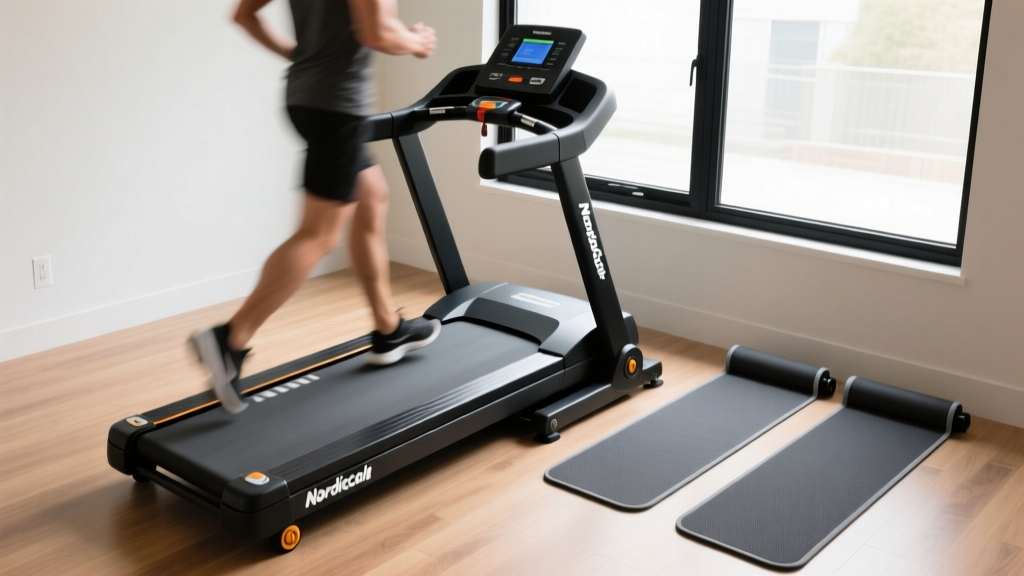
Cheapest NordicTrack Treadmill vs Walking Pads: Error Fixes

2026 Trend: ProForm Carbon Pro 2000 Treadmill vs Compact Cardio Gear
