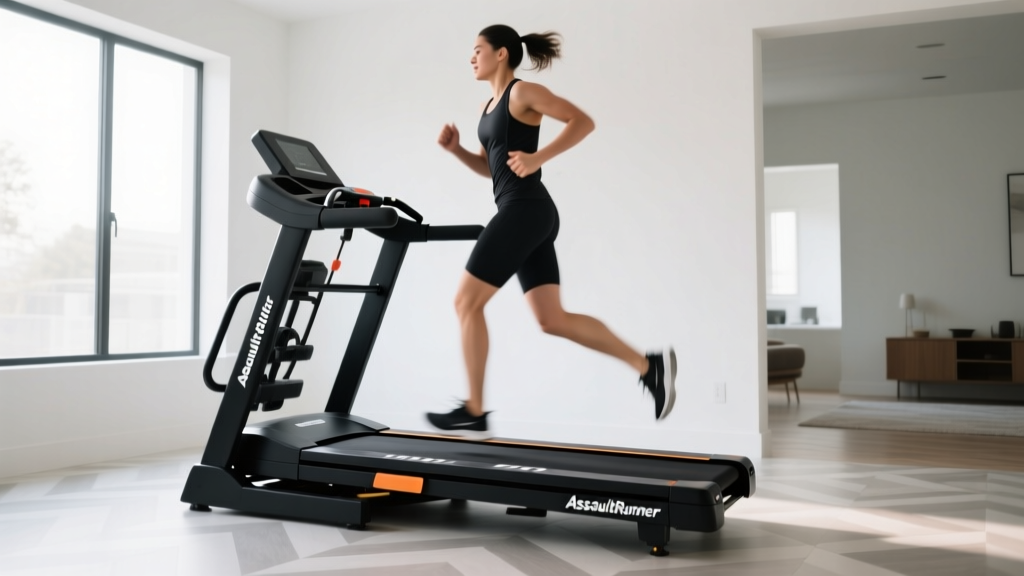
Life Fitness T3 Treadmill Review: A Motor Horsepower Guide
Explore our Life Fitness T3 treadmill review and beginner guide to treadmill motor sizes, horsepower ratings, and choosing the right CHP for your workouts.

Introduction: Why Treadmill Motors Matter More Than You Think
When shopping for a home cardio machine, it is incredibly easy to get distracted by flashy touchscreens, integrated streaming apps, and sleek folding mechanisms. However, the true heart of any treadmill is its motor. If the motor fails, the machine becomes a very expensive clothes hanger. As we navigate the fitness equipment market in 2026, supply chain stabilizations have brought premium treadmill prices back to predictable ranges, yet the entry-level market remains flooded with misleading motor specifications.
To help beginners cut through the marketing noise, we are going to use a premium benchmark: the Life Fitness T3. By conducting a deep-dive Life Fitness T3 treadmill review through the lens of motor engineering, this step-by-step guide will teach you exactly how to evaluate horsepower, understand continuous duty ratings, and match a motor to your specific biomechanical needs.
Beginner's Quick Take: Never buy a treadmill based on 'Peak Horsepower.' Always look for 'Continuous Horsepower' (CHP). The Life Fitness T3 utilizes a 3.0 CHP MaxZone motor, which is the gold standard for heavy-duty home running.Step 1: Decoding the Alphabet Soup (HP vs. CHP vs. Peak HP)
Before we can properly evaluate the Life Fitness T3, we need to establish a foundational understanding of how treadmill motors are measured. Manufacturers often use clever terminology to make underpowered machines look robust. Here is your step-by-step translation guide:
1. Peak Horsepower (Peak HP)
This is the absolute maximum power the motor can output for a fraction of a second before it overheats or trips a safety breaker. It is essentially a marketing gimmick. A cheap folding treadmill might advertise '4.0 Peak HP,' but it may only sustain 1.5 HP during an actual run.
2. Continuous Duty Horsepower (CHP)
This is the only metric that matters. CHP measures the power the motor can deliver consistently, indefinitely, under a normal load without overheating. When you see a high-end machine like the Life Fitness T3 advertising a 3.0 HP motor, they are referring to its Continuous Duty rating. According to testing standards referenced by Consumer Reports, a reliable running treadmill should have a minimum of 2.5 to 3.0 CHP.
3. Treadmill Duty (The Commercial Standard)
Commercial gym treadmills use 'Treadmill Duty' or AC (Alternating Current) motors, which run on higher voltage and never need to rest. Home treadmills like the T3 use DC (Direct Current) motors, which are quieter and run on standard 120V household outlets, but require robust internal cooling to maintain their CHP rating.
Step 2: The Benchmark Analysis (Life Fitness T3 Treadmill Review)
Let us apply our new knowledge to a real-world machine. The Life Fitness T3 is widely considered a bridge between high-end residential and light-commercial equipment. Here is a detailed breakdown of its motor and mechanical ecosystem.
- Motor Spec: 3.0 HP MaxZone Continuous Duty Motor.
- Price Point: MSRP is $3,499, though it frequently retails between $2,999 and $3,299 depending on the console package (Track+ or Explore).
- Cooling System: The MaxZone motor features an oversized internal fan and a ribbed aluminum housing that acts as a heat sink, pulling thermal energy away from the copper windings.
- Drive Mechanics: It uses a heavy-duty poly-V ribbed belt connecting the motor to a massive steel flywheel. This reduces the initial torque required to start the belt, saving the motor from micro-stress fractures during startup.
'The secret to motor longevity is not just raw power; it is how the motor handles the initial impact of a footstrike. The Life Fitness T3 pairs its 3.0 CHP motor with the FlexDeck Select shock absorption system, which reduces joint stress by up to 30% and minimizes the sudden drag on the motor caused by heavy heel strikes.'
Step 3: Matching Motor Size to Your Biomechanics
How much CHP do you actually need? A 3.0 CHP motor like the one in the T3 is overkill for a 130-pound person who only walks at 3.0 mph. Conversely, a 2.0 CHP motor will slowly destroy itself if a 240-pound runner uses it for daily marathon training. Use the matrix below to find your ideal motor size.
| Primary Activity | User Weight: Under 180 lbs | User Weight: 180 - 230 lbs | User Weight: Over 230 lbs |
|---|---|---|---|
| Walking (Under 4.0 mph) | 2.0 CHP | 2.5 CHP | 3.0 CHP |
| Jogging (4.0 - 6.0 mph) | 2.5 CHP | 3.0 CHP | 3.5 CHP |
| Running (6.0+ mph) | 3.0 CHP | 3.5 CHP | 4.0 CHP (Commercial) |
Note: If two users of different weights and activity levels share the same treadmill, always buy for the heaviest, fastest user. The Life Fitness T3's 3.0 CHP motor and 350 lb max user capacity make it a safe 'one-size-fits-most' choice for shared households.
Step 4: The Hidden Variables (Cooling, Friction, and Warranties)
Evaluating a motor does not stop at the CHP number printed on the box. As a beginner, you must look at the supporting cast of components that allow the motor to survive.
1. Belt Friction and Lubrication
The motor's job is to pull the belt over the deck. If the deck is dry, friction skyrockets. A 3.0 CHP motor pushing against a dry deck will draw excessive amperage, generate immense heat, and eventually melt the internal wiring. The T3 utilizes a low-maintenance, wax-coated belt system that minimizes this friction. If you buy a budget treadmill, you must manually apply 100% silicone lubricant every 150 miles to protect the motor.
2. Flywheel Mass
Look for treadmills with heavy steel flywheels. A heavy flywheel builds rotational momentum. Once the belt is moving, the flywheel helps keep it moving, meaning the motor does not have to work as hard to maintain speed. Budget treadmills use lightweight plastic or thin aluminum rollers, forcing the motor to do 100% of the work continuously.
3. The Thermal Cutoff Switch
Every modern DC motor has a thermal cutoff switch. If you overload a weak motor (e.g., a 220 lb runner on a 2.0 CHP machine), the internal temperature will hit roughly 212°F (100°C), and the machine will abruptly shut off to prevent a fire. This sudden stop is a massive fall hazard. Premium motors like the MaxZone in the T3 are engineered with higher thermal thresholds and superior heat dissipation, virtually eliminating the risk of mid-run shutdowns.
4. Warranty as a Proxy for Quality
Manufacturers know exactly how long their motors will last. Therefore, the motor warranty is the ultimate truth-teller. The Life Fitness T3 offers a Lifetime Warranty on the motor and frame. If a brand offers a 3.0 CHP motor but only backs it with a 1-year motor warranty, run away. They are using cheap copper windings and inferior magnets that will burn out quickly.
Step 5: Spotting Marketing Gimmicks in 2026
As you finalize your buying decision, keep an eye out for these common traps prevalent in the current market:
- The 'Incline Horsepower' Trick: Some brands advertise a secondary 'incline motor' and combine the numbers (e.g., '2.5 HP Drive + 1.0 HP Incline = 3.5 HP Total'). This is meaningless. Only the main drive CHP matters.
- Undersized Running Surfaces: A powerful motor is useless if the belt is too short. The T3 features a 60-inch by 20-inch running surface. Anything shorter than 55 inches will force you to shorten your stride, altering your natural biomechanics and placing uneven, damaging loads on the motor.
- Unrealistic Speed Claims: Budget brands claim their 2.0 HP motors can hit 12 mph. While they might reach it on a downhill slope with no user on the belt, sustaining 12 mph with a 200 lb runner requires at least 3.0 CHP to prevent voltage drops and belt stuttering.
Final Verdict: Is the Life Fitness T3 Worth the Investment?
Through the lens of our motor horsepower guide, the Life Fitness T3 stands out as a masterclass in balanced engineering. It does not rely on inflated 'Peak HP' numbers; instead, it delivers a genuine 3.0 Continuous Duty Horsepower rating backed by superior thermal management, a heavy-duty flywheel, and a lifetime warranty.
For walkers and light joggers, the T3 might be more machine than you strictly need, and a high-quality 2.5 CHP model could save you a few hundred dollars. However, for dedicated runners, heavier users, or multi-person households where the machine will see daily, varied use, the T3's motor ecosystem provides the reliability, safety, and smooth power delivery required to sustain a long-term fitness habit. By understanding the difference between marketing fluff and continuous duty mechanics, you are now equipped to invest in a treadmill that will go the distance.
More gear to consider
All reviews
Office Treadmill Review: Space vs ProForm ProShox 2 Treadmill Manual
2026 Cardio Market: Air vs Assault Bike & ProForm Sport 6.0 Review
GXT Treadmill Stress Test: Clinical Buying Guide & Setup
Prevent Treadmill Accidents: Beginner's Guide to Safety Features

Cardio Noise Comparison & HillRunner Com Treadmill Pace Conversions