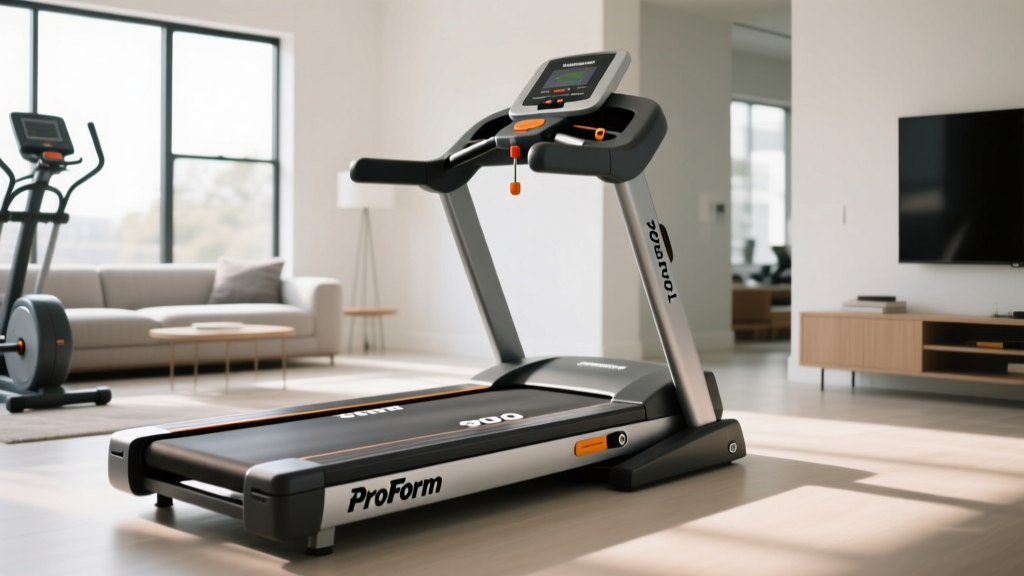
ProForm 900 Treadmill Belt Maintenance: Cost & Value Breakdown
Discover the true cost of ProForm 900 treadmill belt maintenance. We break down DIY lubrication, part replacements, and long-term value analysis.

The Financial Reality of Treadmill Friction
Owning a mid-range cardio machine like the ProForm 900 series (including the ProForm 900 CST and Performance 900) is an excellent investment in your cardiovascular health. However, from a purely financial perspective, the initial purchase price is only the beginning of the equation. The true cost of ownership is dictated by how well you manage the machine's highest-friction component: the running belt and deck assembly.
As of early 2026, the average cost to replace a burned-out lower motor control board on a ProForm 900 treadmill hovers between $160 and $240, while a complete motor replacement can exceed $350. The primary culprit behind these catastrophic failures is almost always a neglected, under-lubricated running belt. In this comprehensive value analysis, we break down the exact budget requirements for maintaining your ProForm 900 treadmill, comparing DIY costs against professional servicing, and identifying the precise point of diminishing returns for belt and deck replacements.
The Hidden Financial Drain of a Dry Treadmill Belt
To understand the value of routine maintenance, you must first understand the mechanical and electrical stress caused by friction. The ProForm 900 series typically utilizes a 2.5 to 2.75 CHP (Continuous Horsepower) Mach Z commercial motor. When the running belt is properly lubricated, the motor operates under a normal amp draw of 4 to 6 amps while a user is walking or jogging.
When the 100% silicone lubricant dries out or degrades, the coefficient of friction between the PVC belt and the phenolic-coated MDF deck increases exponentially. This forces the motor to work harder to maintain the set speed, pushing the amp draw up to 10, 12, or even 14 amps. This excessive current generates immense heat in the motor windings and the lower control board's MOSFETs (Metal-Oxide-Semiconductor Field-Effect Transistors). Eventually, the thermal breaker trips, or worse, the control board shorts out entirely. Spending $12 on a tube of silicone lubricant literally saves you from a $200+ electronic repair bill.
⚠️ CRITICAL WARNING: The WD-40 TrapNever use WD-40, petroleum-based oils, or household silicone sprays containing propellants and solvents on your ProForm 900 treadmill. These chemicals will instantly dissolve the phenolic protective coating on your wooden deck and degrade the cotton backing of the running belt, resulting in immediate, irreversible damage that voids your warranty. Always use 100% pure liquid silicone treadmill lubricant.
Budget Breakdown: DIY Maintenance vs. Professional Servicing
When analyzing the budget for treadmill upkeep, owners generally face two paths: the Do-It-Yourself (DIY) route or hiring a certified fitness equipment technician. According to maintenance guidelines outlined by ProForm Official Support, routine lubrication is classified as standard user maintenance, meaning professional servicing is rarely required unless a mechanical failure has already occurred.
| Maintenance Action | DIY Cost (2026) | Pro Service Cost | Frequency | Value Rating |
|---|---|---|---|---|
| Belt Lubrication (Silicone) | $10 - $15 | $90 - $125 (Call fee) | Every 3 months / 130 miles | ⭐⭐⭐⭐⭐ (High ROI) |
| Belt Tension & Alignment | $0 (Included w/ tools) | $90 - $125 (Call fee) | As needed | ⭐⭐⭐⭐⭐ (High ROI) |
| Running Belt Replacement | $45 - $65 (Parts) | $180 - $250 (Parts + Labor) | Every 3-5 years | ⭐⭐⭐⭐ (Good DIY savings) |
| Deck Replacement | $80 - $120 (Parts) | $250 - $350 (Parts + Labor) | Every 5-8 years | ⭐⭐⭐ (Moderate DIY difficulty) |
As highlighted in the Consumer Reports Treadmill Guide, regular user maintenance significantly extends the lifespan of mid-tier fitness equipment, often pushing a machine's viable life from four years to over eight years. The financial value of learning to lubricate and tension your own belt is undeniable, yielding a return on investment of over 1,000% when compared to paying a technician's minimum call-out fee.
Step-by-Step Value: The $12 Lubrication Protocol
Executing a proper lubrication cycle on your ProForm 900 treadmill requires minimal technical skill but demands strict adherence to measurement and tension protocols. Here is the exact, budget-friendly procedure to maximize your belt's lifespan.
Phase 1: Sourcing and Preparation
Purchase a bottle of 100% pure liquid silicone treadmill lubricant. While branded options from ICON Fitness (ProForm's parent company) are available for around $15, generic 100% pure silicone from reputable suppliers like Fitness Repair Parts or local hardware stores often costs between $8 and $12 for a 4 oz bottle with an application wand. You will also need a 6mm Allen wrench (hex key), which is usually included with the treadmill.
Phase 2: Application and Tension Calibration
- Loosen the Rear Roller: Locate the two rear end-cap adjustment bolts at the back of the treadmill. Using your 6mm Allen wrench, turn both bolts counter-clockwise by exactly three full rotations. Keep track of your turns; this ensures you can return the belt to its baseline tension later.
- Apply the Silicone: Reach under the loosened running belt on the left side, as close to the center of the deck as possible. Squeeze exactly 10 to 15 milliliters (about half an ounce) of silicone in a zig-zag pattern. Repeat this process on the right side. Do not over-apply; excess silicone will squeeze out the sides, creating a slipping hazard on your floor and attracting dust.
- Re-Tension the Belt: Turn both rear adjustment bolts clockwise by the exact same three full rotations you loosened them.
- The 'Lift Test' Calibration: Turn the treadmill on to 2 MPH. Walk on the belt to distribute the silicone. Stop the machine and check the tension. You should be able to lift the edge of the running belt in the middle of the deck by exactly 2 to 3 inches. If it lifts higher, tighten both bolts a quarter-turn. If it lifts less, loosen them a quarter-turn. Never adjust just one side, or the belt will track off-center.
Analyzing the Point of Diminishing Returns: When to Replace
No amount of $12 silicone will save a belt that has reached the end of its mechanical life. From a value analysis perspective, you must know when to stop maintaining and start replacing. The ProForm 900 utilizes a standard 20-inch by 55-inch running belt. Over time, the cotton/polyester backing of the belt wears down, and the seams begin to fray.
The Deck Factor: A Hidden Cost Multiplier
The most common mistake budget-conscious owners make is replacing a worn running belt without inspecting the deck underneath. The deck is coated with a low-friction phenolic resin. If you run a dry belt for too long, the friction literally sands this coating off, exposing the raw MDF wood. If you install a brand-new $50 running belt over a grooved, uncoated wooden deck, the new belt will be destroyed in less than three months, and the motor amp draw will remain dangerously high.
- The Fingernail Test: Remove the motor hood and reach under the belt to feel the deck. If you can feel deep grooves, or if your fingernail catches on rough wood grain, the deck is compromised.
- The Value Play: Many replacement belts sold online come as a 'Belt and Deck Combo' for roughly $90 to $110. Buying the combo is almost always the superior financial decision compared to buying a $50 belt and later realizing you also need a $100 deck, plus paying for two separate shipping fees and enduring double the downtime.
ProForm 900 Maintenance FAQ
How do I know if my ProForm 900 belt needs lubrication without taking it apart?
Perform the 'Slip Test'. Stand on the side rails, start the treadmill at 3 MPH, and step onto the belt. Plant your feet firmly and try to 'stall' the belt by pushing forward against the handrails. If the motor continues to run but the belt slips under your feet, the belt is either too loose or severely over-lubricated. If the motor bogs down and stops with the belt, it needs lubrication or the motor brushes are worn. Alternatively, check the seam of the belt; if it feels hot to the touch after a 20-minute walk, friction is too high.
Does using the iFIT interactive coaching affect my maintenance schedule?
Yes. iFIT workouts frequently utilize the ProForm 900's incline motor, changing the deck angle from 0% to 10%. Running on an incline shifts the user's weight backward, increasing the downward force and friction on the rear half of the deck. If you use iFIT incline training more than three times a week, you should shorten your lubrication interval from every 3 months to every 2 months (or roughly every 100 miles).
Can I use a silicone spray aerosol instead of liquid silicone?
From a strict budget and value perspective, aerosol sprays are a poor investment. Aerosols contain propellants (like butane or propane) and carrier solvents that evaporate quickly. These solvents can degrade the adhesives used in the belt's seam and dry out the deck coating. Liquid 100% silicone applied via a wand costs less per ounce, lasts significantly longer on the deck, and eliminates the risk of chemical degradation to your machine's components.
More gear to consider
All reviews
2026 Review: Folding Treadmills From Commercial Treadmill Brands
2026 Trends: The Folding Interval Running Workout Treadmill Review

Air Bike vs Assault Bike Guide & NordicTrack Treadmill Manuals
Home Stair Climbers 2026: Matching a 9 Min Pace on Treadmill
Walking Pad vs Horizon CST 3.5 Treadmill: Mistakes & Fixes
