Curved Manual vs Motorized Mistakes: NordicTrack EXP 10i Treadmill
Avoid common curved manual vs motorized treadmill mistakes. Expert troubleshooting guide for your NordicTrack EXP 10i treadmill to fix errors fast.

The Great Drive System Debate: Curved Manual vs. Motorized
As of 2026, the home fitness market remains sharply divided between two distinct cardio philosophies: the self-powered curved manual treadmill and the traditional motorized deck. While high-end curved models like the TrueForm Trainer and Rogue Echo Runner dominate the boutique fitness space, legacy motorized workhorses like the NordicTrack EXP 10i treadmill remain incredibly popular on the secondary and refurbished markets. Priced between $400 and $550 refurbished, the EXP 10i offers a 2.75 CHP motor and a 20-inch by 55-inch running surface that still outperforms many modern budget motorized alternatives.
However, the most common mistake home gym owners make is treating these two entirely different mechanical systems as if they require the same maintenance, troubleshooting, and running form. Applying motorized treadmill logic to a curved manual machine (or vice versa) will quickly result in ruined belts, blown control boards, and chronic joint pain. This guide breaks down the critical troubleshooting steps, maintenance errors, and biomechanical adjustments you need to master for both systems.
⚠️ Critical Maintenance Warning: The number one mistake users make is cross-applying lubricants. The NordicTrack EXP 10i requires 100% pure silicone treadmill lubricant every 150 miles to reduce deck friction. Conversely, applying any liquid silicone or petroleum-based spray to a curved manual slat belt will destroy the vulcanized rubber and seize the guide-wheel bearings, resulting in a $400+ belt replacement.NordicTrack EXP 10i Treadmill Troubleshooting: Motorized Mistakes
The NordicTrack EXP 10i utilizes ICON Health & Fitness’s standard electronic architecture. When this motorized treadmill fails, it communicates via specific console error codes. Misdiagnosing these codes is a frequent and costly mistake.
Error 1: The Dreaded Speed Sensor Failure
If your EXP 10i belt starts, runs for three seconds, and then abruptly stops while the console flashes 'Error 1' or 'E1', your speed sensor has lost connection. The console thinks the belt has stopped and cuts power to prevent runaway scenarios.
- Access the Motor Hood: Unplug the machine. Remove the three to four Phillips-head screws securing the front plastic motor hood.
- Locate the Reed Switch: Find the small black sensor zip-tied or screwed to the metal frame, pointing directly at the front roller pulley.
- Check the Magnet Gap: The front roller has a small neodymium magnet embedded in it. As the roller spins, the magnet passes the reed switch. The gap between the magnet and the sensor must be exactly 1mm to 2mm.
- The Fix: If the gap is wider than 3mm (often caused by belt tension pulling the roller forward over time), loosen the sensor mounting screw, slide it closer to the magnet, and retighten. Blow out any accumulated dust with compressed air.
Motor Overheating and Amp Spikes
A common mistake with the EXP 10i’s 2.75 CHP motor is ignoring deck friction. If you weigh over 200 lbs and run on a dry belt, the motor must draw excessive amperage to pull the belt over the wooden deck. This triggers the thermal overload switch on the lower control board. If your treadmill shuts off mid-run and smells faintly of hot ozone, the motor is overheating. The fix is not a new motor; it is a thorough deck cleaning and a fresh application of 15ml of 100% silicone lubricant, massaged evenly across the deck surface.
Curved Manual Treadmill Troubleshooting: Slat & Bearing Nightmares
Curved manual treadmills have no motor, no control board, and no power cord. Their complexity lies entirely in mechanical physics. The slat belt rides on a track of polyurethane guide wheels. Troubleshooting these machines requires a mechanical, not electrical, mindset.
Slat Belt Drifting and Tracking Errors
On a motorized treadmill like the EXP 10i, if the belt drifts to the left, you adjust the rear roller tension bolts. Never do this on a curved manual treadmill. Curved slat belts are a continuous loop tensioned by the frame's geometry. If a slat belt drifts and rubs against the side rail, the mistake is usually an unlevel floor or worn guide-wheel bearings on one side.
- Step 1: Place a carpenter's level across the treadmill frame. Even a 2-degree lateral tilt will cause the heavy slat belt to migrate toward the lower side during use.
- Step 2: If the floor is level, manually spin the belt by hand and listen. A rhythmic 'clicking' or 'grinding' noise indicates a failed sealed bearing inside one of the track wheels. You must order a replacement guide-wheel kit from the manufacturer and swap the faulty wheel.
The 'Sticky Slat' Phenomenon
Over time, the rubber slats on manual treadmills can develop micro-tears or accumulate oxidized rubber dust in the track grooves, causing a 'sticking' sensation at the apex of the curve. Users mistakenly try to sand the rubber down. Instead, use a stiff nylon brush and a mild, non-solvent degreaser (like diluted Simple Green) to scrub the track grooves, followed by a dry microfiber wipe. Never use solvent-based cleaners, which will dry out and crack the vulcanized rubber.
Maintenance & Failure Matrix: EXP 10i vs. Curved Manuals
Understanding the failure modes of your specific equipment is vital for long-term home gym planning. The table below contrasts the primary maintenance requirements and common failure points of the motorized NordicTrack EXP 10i against premium curved manual alternatives.
| Feature / Component | Motorized (NordicTrack EXP 10i) | Curved Manual (e.g., TrueForm) |
|---|---|---|
| Primary Drive | 2.75 CHP DC Motor & Lower Control Board | User-generated kinetic energy & gravity |
| Belt Type | Continuous PVC loop (Requires silicone lube) | Vulcanized rubber slats (No lube required) |
| Most Common Failure | Reed switch misalignment (Error 1) or blown motor controller due to dry deck | Seized polyurethane guide-wheel bearings |
| Repair Complexity | Moderate (Requires multimeter, soldering, or part swapping) | High (Requires specialized tensioning tools and heavy lifting) |
| Average 2026 Repair Cost | $45 - $180 (Parts only) | $150 - $450 (Slat belt or wheel kits) |
Biomechanical Mistakes: Adjusting Your Stride
Troubleshooting isn't just about fixing the machine; it's about fixing the user. The biomechanical demands of a curved manual treadmill are vastly different from a motorized deck. According to a comprehensive biomechanical analysis published in the National Institutes of Health (PMC), running on a curved non-motorized treadmill significantly increases hamstring activation and reduces ground contact time compared to motorized equivalents.
"Users transitioning from motorized to curved manual treadmills often experience acute calf and Achilles soreness. The self-propelled nature of the curve forces a mid-foot or forefoot strike, eliminating the heel-strike braking forces common on motorized belts."
The Overstriding Mistake on Motorized Decks
On the NordicTrack EXP 10i, the belt pulls your foot backward. This artificial assistance often encourages runners to overstride—reaching their lead foot too far forward, striking the heel ahead of their center of mass. This acts as a braking mechanism, sending shockwaves directly up the tibia and into the knees. To fix this on the EXP 10i, focus on increasing your cadence (steps per minute) to roughly 170-180 SPM, ensuring your foot lands directly beneath your hips.
The 'Fighting the Curve' Mistake on Manual Treadmills
Conversely, users new to curved manuals often make the mistake of trying to 'muscle' the belt by pushing aggressively with their quads while leaning too far back. This destroys the ergonomic arc of the machine. The correct technique requires a slight forward lean from the ankles, utilizing your glutes and hamstrings to pull the slats up and over the apex of the curve. As noted by fitness standards outlined by the American Council on Exercise (ACE), mastering this posterior chain engagement not only saves the machine's bearings from uneven wear but also translates to vastly improved outdoor sprinting mechanics.
Final Verdict: Choosing and Maintaining Your Path
Whether you are resurrecting a NordicTrack EXP 10i treadmill from the refurbished market or investing $3,000+ into a premium curved manual machine in 2026, success lies in respecting the engineering of your chosen drive system. Motorized treadmills demand strict electrical and friction management—keep the deck lubricated, keep the sensors clean, and respect the error codes. Curved manual treadmills demand mechanical sympathy—keep the frame level, protect the rubber slats from solvents, and adapt your running biomechanics to the curve. By avoiding these common cross-contamination mistakes, you ensure your cardio equipment remains a reliable asset rather than an expensive clothes hanger.
For further reading on optimizing your home gym layout and selecting the right equipment footprint, refer to the Consumer Reports Treadmill Buying Guide for up-to-date spatial and electrical requirements for both motorized and manual systems.
More gear to consider
All reviews
Stair Climber Guide: Difference Between Walking Pad and Treadmill
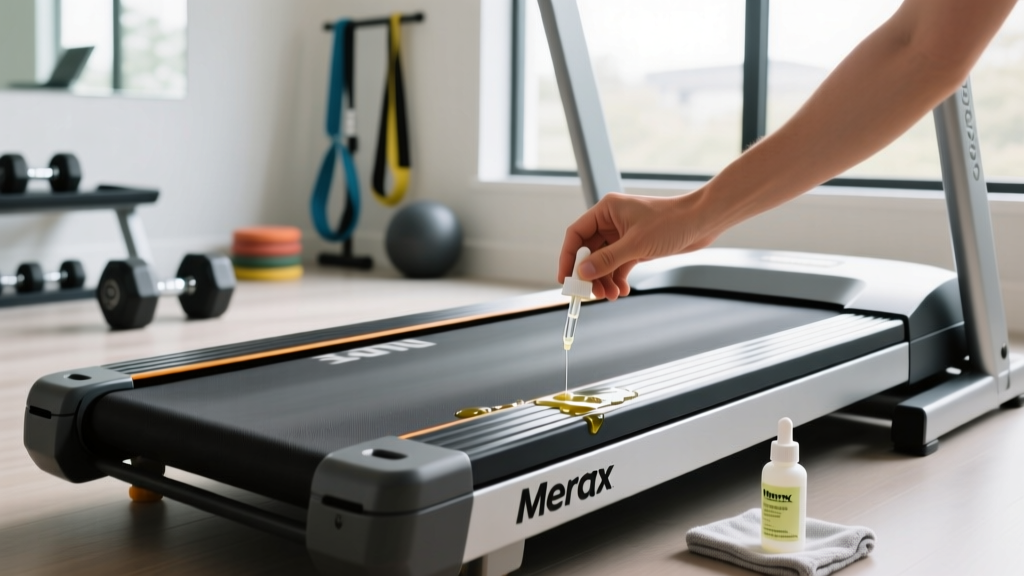
How to Lubricate a Merax Treadmill Belt for Maximum Longevity

Cardio Machine Noise Comparison: Walk Incline Treadmill Workout Fixes

How to Draw a Treadmill Floorplan: Elliptical vs Treadmill Budget

Stair Climbers vs Treadmill Running Classes: 2026 Home Guide