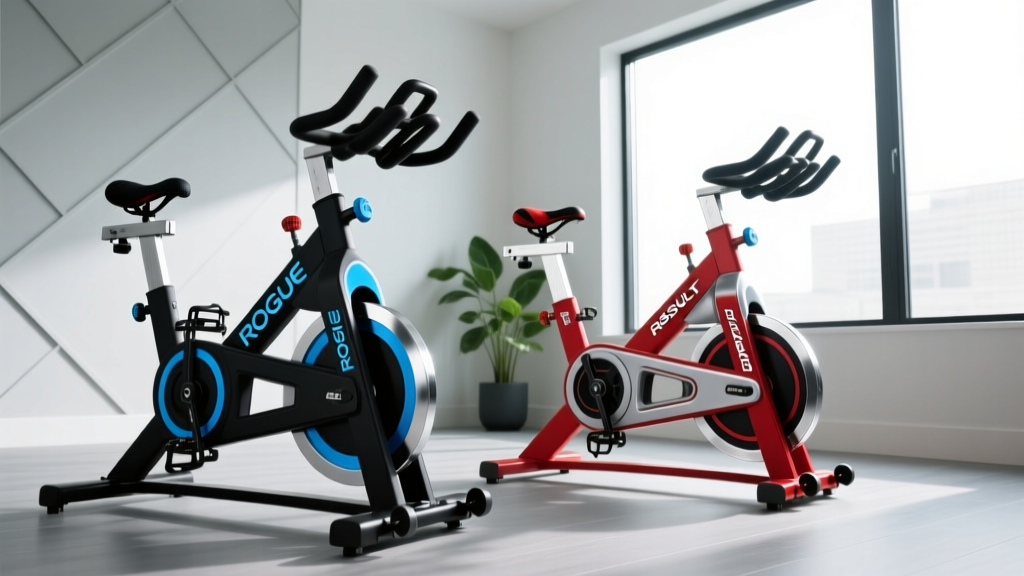
Air Bike vs Assault Bike: HIIT Training Treadmill Weight Loss & Care
Compare Rogue Echo and Assault Elite air bikes for HIIT. Learn deep maintenance tips to outlast treadmills and maximize weight loss routines.

The Shift from Treadmills to Air Bikes for HIIT
High-Intensity Interval Training (HIIT) is a cornerstone of modern cardiovascular conditioning, prized for its ability to elevate excess post-exercise oxygen consumption (EPOC). While many beginners start their fitness journey searching for hiit training treadmill weight loss protocols, they frequently abandon motorized treadmills within the first year. The reasons are twofold: repetitive impact shear on the knees and lumbar spine, and the relentless, costly maintenance required to keep a treadmill belt aligned, lubricated, and free of motor-choking dust.
Enter the air bike. By utilizing wind resistance that scales exponentially with your effort, air bikes provide a limitless ceiling for power output without the eccentric joint loading of a treadmill. In this guide, we compare the two titans of the industry—the Rogue Echo Bike and the Assault Fitness Elite—focusing strictly on maintenance care, longevity, and real-world failure modes to ensure your investment survives years of brutal Tabata and HIIT protocols.
Hardware Showdown: Rogue Echo vs. Assault Elite
According to the Mayo Clinic, interval training efficiently improves both aerobic and anaerobic fitness, but the equipment must withstand extreme torque spikes. The Rogue Echo Bike (approx. $995) and the Assault Bike Elite (approx. $1,199) both utilize belt-driven systems, a massive upgrade over older chain-driven models. However, their engineering approaches to the bottom bracket and fan hub differ significantly, dictating their respective maintenance schedules.
| Feature | Rogue Echo Bike | Assault Bike Elite | Assault Classic |
|---|---|---|---|
| Drive System | Kevlar Belt | Kevlar Belt | Steel Chain |
| Bike Weight | 78 lbs | 120 lbs | 98 lbs |
| Primary Maintenance | Belt Tension & Pedal Threads | Idler Pulley & Fan Hub | Chain Lube & Sprocket Wear |
| Retail Price (2026) | $995 | $1,199 | $799 |
Drivetrain Longevity: Belt vs. Chain Protocols
The drivetrain is where HIIT sessions inflict the most mechanical stress. Max-wattage sprints generate immense rotational force that can stretch chains and glaze belts if not properly maintained.
Belt Tensioning (Echo & Elite)
Belt drives require specific tension. Too loose, and the belt slips during standing sprints, creating a dangerous loss of resistance; too tight, and you destroy the sealed cartridge bearings in the bottom bracket. For the Rogue Echo, you need a 10mm hex key to loosen the rear axle nuts and adjust the tensioners until there is exactly 1/2 inch of vertical deflection at the midpoint of the belt. The Assault Elite uses a similar idler pulley system. Never use WD-40 or silicone spray on these belts. They are made of Kevlar-reinforced polyurethane and require zero chemical lubrication. If the belt develops a glossy sheen, it is glazed from slipping and must be replaced.
Chain Care (Assault Classic)
If you own the older Assault AirBike Classic, you must clean the chain monthly. Use a PTFE-based dry bicycle chain lube. Wet lubes attract gym dust and form a grinding paste that accelerates sprocket wear and creates a loud, metallic whine during high-RPM intervals.
⚠️ Sweat Corrosion Warning: Human sweat has a pH between 4.5 and 7.0, making it highly corrosive to carbon steel and unprotected aluminum. Always drape a microfiber towel over the fan hub and bottom bracket during use. Wipe down the frame post-workout with an enzymatic cleaner or a diluted degreaser like Simple Green Pro HD. Avoid bleach-based wipes, which accelerate oxidation and chalk the bike's powder-coated finish.Bottom Bracket & Pivot Point Preservation
The bottom bracket is the heart of the air bike. When a user complains of a 'creaking' sound during heavy pushes, 90% of the time it is not the bottom bracket itself, but the pedal threads. The repetitive push-pull motion of the arm levers and pedals causes micro-movements in the threads.
- Remove the crank arms and pedals.
- Clean the threads with a brass wire brush to remove old grease and metal shavings.
- Apply blue Loctite (243) to the pedal threads before reinstalling.
- Torque the pedals to exactly 30 Nm using a torque wrench to prevent stripping the aluminum crank arm.
If the creak persists after addressing the pedals, the sealed bearings inside the bottom bracket have likely been compromised by sweat intrusion. Replacing a standard 68mm English threaded bottom bracket costs about $25 and requires a standard bottom bracket tool and a 32mm wrench. This is a 15-minute repair that completely restores the bike's silent operation.
Biomechanical Wear Patterns & Fan Hub Care
Unlike a treadmill where the motor dictates the pace, an air bike's resistance is entirely user-generated. This leads to asymmetric wear if the user favors their dominant side. Consistently pushing harder with your right arm and right leg causes uneven lateral loading on the fan hub bearings. Over 12 to 18 months, this can cause the fan hub to develop a slight wobble.
To diagnose this, stand in front of the bike and spin the fan by hand. Watch the central retaining nut. If it wobbles in a figure-eight pattern, the hub bearings are worn, or the central nut has backed off. Tightening the central retaining nut requires a proprietary spanner wrench and should be torqued to 50 Nm. If the wobble persists, the internal cartridge bearings must be pressed out and replaced—a job best left to a local bicycle shop if you lack a bearing press.
Troubleshooting Common Failure Modes
- Console Flickering or Dead Screen: This is rarely a PCB failure. It is almost always galvanic corrosion on the AA battery contacts caused by battery acid leaks or sweat drip. Clean the contacts with white vinegar and a Q-tip, dry thoroughly, and apply a thin layer of dielectric grease to the contacts before inserting high-quality alkaline batteries.
- Arm Levers Squeaking at the Pivot: The pivot bolts on the arm levers use nylon-insert locknuts. Over time, the nylon degrades. Remove the bolt, apply a small amount of marine-grade lithium grease to the sleeve, and replace the locknut with a new nylon-insert nut (M8 thread).
- Belt Dust Accumulation: A fine black dust under the bike is normal for the first 50 hours of use as the belt seats into the pulleys. Vacuum it up. If it continues after 100 hours, your belt tension is too tight, causing abrasive wear on the pulley flanges.
Frequently Asked Questions
Can I use an air bike outdoors on a patio?
No. The LCD consoles and internal PCB boards are not IP-rated for moisture. Morning dew and ambient humidity will cause copper trace corrosion on the circuit boards within months. Keep your air bike in a climate-controlled environment with humidity below 60%.
How often should I calibrate the wattage display?
Air bikes do not require user calibration. The wattage is calculated via an internal algorithm based on fan RPM. However, if the RPM sensor (a small magnetic reed switch located near the fan hub) becomes coated in metallic dust, it will misread your speed and display inaccurate watts. Wipe the sensor with a dry cloth every six months.
Is an air bike better than a treadmill for joint health?
Yes. Because air bikes are closed-chain, zero-impact machines, they eliminate the ground reaction forces associated with running. This makes them the preferred modality for athletes recovering from meniscus tears, Achilles tendinopathy, or lumbar disc issues while still allowing for maximum cardiovascular output.
More gear to consider
All reviews
NordicTrack C2150 Treadmill Motor Guide: HP & Size Explained
Curved vs Motorized: NordicTrack T Series 8 Review Guide
Complete In10ct Treadmill Setup & Motor Power Guide

ProForm 400i Treadmill Review: Is It the Best Compact Cardio?

Curved vs Motorized Treadmills: Best Treadmill Running App Setup
