2026 Value: Togogym Treadmill vs Upright, Recumbent & Spin Bikes
Compare the 2026 value of a Togogym treadmill against upright, recumbent, and spin bikes. Expert budget breakdown, maintenance costs, and ROI analysis.

The 2026 Home Cardio Dilemma: Walking Pads vs. Cycling
As home fitness budgets tighten and living spaces shrink, the 2026 cardio equipment market is defined by a distinct battleground: compact walking treadmills versus traditional stationary cycles. For consumers allocating $250 to $800 for a home gym, the decision often comes down to whether a space-saving walking pad offers better long-term value than a dedicated cycling machine. In this comprehensive budget breakdown, we establish the baseline value of the highly searched Togogym treadmill and pit it against the three primary stationary bike types: upright, recumbent, and spin. By analyzing upfront costs, hidden maintenance fees, spatial footprints, and specific failure modes, we will determine which machine delivers the highest return on investment for your specific physiological needs.
Togogym Treadmill Value Breakdown: The Compact Baseline
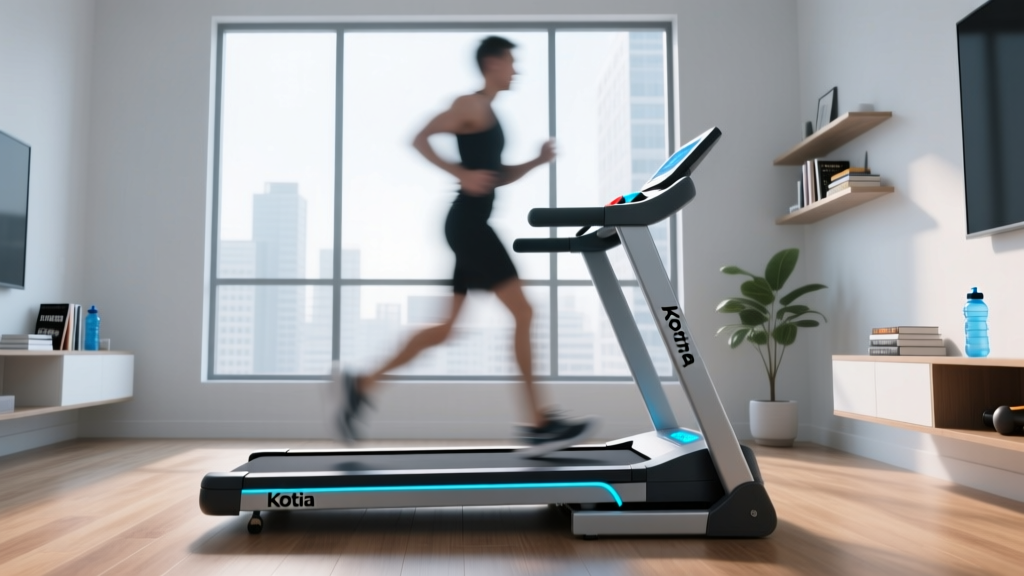
The Togogym treadmill lineup, particularly their flagship folding walking pads, has dominated the budget cardio space. Priced between $189 and $279, these units offer a 2.25 HP peak motor, a top speed of 7.6 mph, and a footprint of roughly 4.5 square feet when stored vertically. From a pure NEAT (Non-Exercise Activity Thermogenesis) perspective, the value is undeniable. You can easily accumulate 8,000 steps a day while working at a standing desk.
However, evaluating the Togogym treadmill strictly as a high-intensity cardio machine reveals limitations. The running deck is typically 40 inches long and 16 inches wide, which restricts natural stride lengths for users over 5 feet 8 inches. Furthermore, a common failure mode in budget walking pads is motor controller burnout. If a 220-pound user runs at 7.0 mph for more than 45 continuous minutes, the amp draw spikes, often tripping the internal thermal fuse. For brisk walking and light jogging, the Togogym is a phenomenal sub-$300 investment, but it cannot replace high-resistance cardiovascular conditioning.
Stationary Bike Types: Upright, Recumbent, and Spin
If your goal extends beyond daily step counts into targeted heart-rate zone training, stationary bikes offer superior resistance profiles. According to Harvard Health Publishing, vigorous stationary cycling can burn between 315 and 441 calories per 30 minutes, significantly outpacing the caloric expenditure of walking on a compact treadmill. Let us break down the three distinct bike categories.
Upright Bikes: The Traditional Middle-Ground
Upright bikes mimic the geometry of a standard outdoor bicycle but feature a wider, cushioned seat and a heavier frame. A market staple like the Schwinn 130 Upright Bike retails for approximately $399. It features 16 levels of eddy current magnetic resistance and a 13-pound flywheel.
Value Insight: Upright bikes offer the best balance of upper and lower body engagement among the cycling types. Because you are supporting your own torso, core activation is roughly 15% higher than on a recumbent model. However, the small saddle can cause perineal numbness for beginners during sessions exceeding 45 minutes.From a maintenance perspective, upright bikes are largely sealed. The primary long-term cost is replacing the AA batteries for the console or upgrading to an AC adapter ($25). The magnetic resistance system is virtually frictionless, meaning the internal brake pad will easily outlast a 10-year lifespan.
Recumbent Bikes: Ergonomic Investment
Recumbent bikes feature a bucket seat with a full backrest and front-mounted pedals. This design shifts the user's weight from the sit bones and wrists to the lumbar and gluteal regions. The Mayo Clinic frequently recommends low-impact, supported aerobic exercises for individuals managing joint pain or recovering from lower-body injuries.
Budget recumbents, such as the Sunny Health & Fitness SF-RB4631, start around $249, but they often suffer from wobbly frames and poorly calibrated tension straps. To get true value, you must look at the $600 to $850 tier, like the Nautilus R618 ($799). The Nautilus offers a walk-through design, a 25-pound flywheel, and a ventilated lumbar mesh. The specific failure mode to watch for in budget recumbents is the tearing of the seat mesh after 18 to 24 months of daily use, which requires a $60 to $90 aftermarket replacement.
Spin Bikes: High-Intensity Value
Spin bikes (or indoor cycling bikes) are designed for high-cadence, high-resistance interval training. They feature a heavy flywheel (often 30 to 45 pounds) and a geometry that allows the rider to stand out of the saddle. Budget spin bikes like the Sunny SF-B1851 cost around $249 and utilize a friction-pad resistance system. Premium models like the NordicTrack S22i push past $1,500 with magnetic resistance and integrated screens.
The budget friction spin bike offers incredible raw value for HIIT (High-Intensity Interval Training) enthusiasts, but it comes with strict maintenance demands. The friction pad wears down every 6 to 9 months and costs $15 to replace. More critically, sweat corrosion is the number one killer of budget spin bikes. If the handlebars and flywheel are not wiped down with a non-corrosive cleaner after every ride, sweat drips directly into the bottom bracket bearing, causing it to seize within two years.
Hidden Costs and Space Footprint Analysis
When calculating the true cost of home cardio equipment, the purchase price is only the beginning. Below is a breakdown of the spatial and financial overhead required for each machine type over a 5-year period.
- Togogym Treadmill: Requires silicone belt lubrication every 3 months ($12 per bottle). Stores vertically in 4.5 sq ft, but requires 12 sq ft when in use to allow for rear stride clearance.
- Upright Bike: Zero routine maintenance. Occupies a permanent 8 sq ft footprint. Difficult to move due to a 60 lb total weight and awkward center of gravity.
- Recumbent Bike: Zero routine maintenance. Demands a massive 18 sq ft permanent footprint. Not suitable for multi-use living rooms or small apartments.
- Spin Bike (Friction): Requires friction pad replacements ($30/year) and bottom bracket servicing ($45 every 3 years). Occupies 6 sq ft and features transport wheels for easy relocation.
Cost-Per-Use and Long-Term Maintenance Matrix
To visualize the 5-year ROI, we have modeled the cost-per-use assuming the user exercises 4 days a week (1,040 sessions over 5 years). We have included the base price, estimated 5-year maintenance, and the resulting cost-per-session.
| Equipment Type | Avg. Upfront Cost | 5-Yr Maintenance | Cost Per Session | Best Demographic |
|---|---|---|---|---|
| Togogym Treadmill | $229 | $60 (Lube/Belt) | $0.27 | Remote workers, walkers |
| Upright Bike | $399 | $25 (Adapter) | $0.40 | General fitness, core |
| Recumbent Bike | $799 | $0 | $0.76 | Seniors, rehab, back pain |
| Spin Bike (Budget) | $249 | $75 (Pads/Service) | $0.31 | HIIT, athletes, cyclists |
Final Verdict: Where Should Your Budget Go?
The choice between a Togogym treadmill and a stationary bike ultimately hinges on your primary physiological objective and spatial constraints. If your goal is to combat the sedentary nature of a desk job, increase daily caloric expenditure through low-impact movement, and maintain a clutter-free apartment, the Togogym treadmill remains the undisputed champion of spatial efficiency and step-based value.
However, if your objective is cardiovascular conditioning, VO2 max improvement, or lower-body muscular endurance, a stationary bike is mandatory. For users with joint limitations or lower back issues, the $799 investment in a premium recumbent bike pays dividends in joint preservation and daily comfort. For those seeking maximum caloric burn and high-intensity conditioning on a strict budget, a friction-based spin bike offers the lowest barrier to entry, provided you are diligent about sweat cleanup and friction pad replacements. Evaluate your space, respect the maintenance schedules, and your 2026 cardio investment will yield years of measurable health returns.
More gear to consider
All reviews
Air Bike vs Assault Bike: What's Better, StairMaster or Treadmill?
Compact Folding Treadmill: Is a Treadmill With Curved Base Viable?
Cardio Machine Noise Levels & pawg on treadmill Troubleshooting

2026 Trends: Matrix TX3 Treadmill vs. Upright, Recumbent & Spin

NordicTrack Commercial 2950 Treadmill Review & Stationary Bike Types