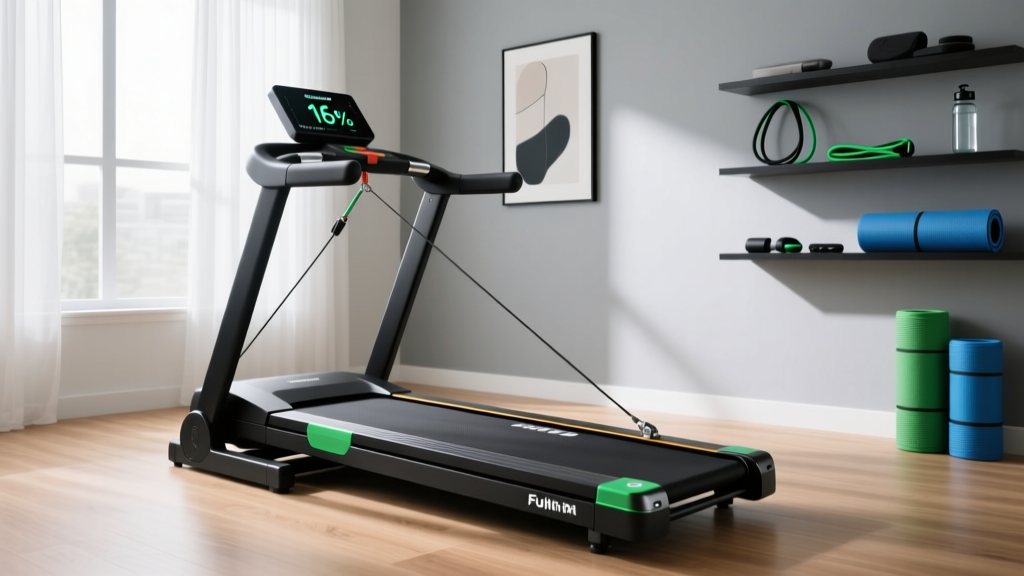
3.5 HP Treadmill Motor Guide: Common Sizing Mistakes and Fixes
Discover if a 3.5 HP treadmill fits your home gym. Learn motor sizing mistakes, amp-draw troubleshooting, and how to prevent controller burnout.

When outfitting a home gym, the motor is the undisputed heart of your cardio equipment. Yet, the search for a reliable 3.5 hp treadmill is fraught with marketing deception, misunderstood specifications, and costly sizing errors. A motor that is underpowered for your specific biomechanics and usage patterns will not only stutter during heavy foot-strikes but will inevitably lead to catastrophic lower control board failures.
As a senior equipment analyst, I see the same troubleshooting tickets year after year: burnt-out pulse width modulation (PWM) controllers, tripped thermal cutoffs, and fried stators. This guide cuts through the marketing jargon to explain what a 3.5 HP motor actually means, the most common sizing mistakes buyers make, and how to troubleshoot your machine before a minor friction issue turns into a $400 repair bill.
The Great Horsepower Deception: Peak vs. Continuous Duty
The most pervasive mistake in the fitness equipment industry is the intentional blurring of Peak Horsepower (HP) and Continuous Duty Horsepower (CHP). According to equipment testing guidelines highlighted by Consumer Reports, a motor's continuous rating is the only metric that matters for sustained exercise.
⚠️ The Marketing Trap: A treadmill advertised as a '3.5 HP treadmill' might only possess a 1.75 CHP motor. Peak HP measures the absolute maximum output the motor can achieve for a fraction of a second before overheating. CHP measures what the motor can sustain indefinitely without thermal degradation. Always verify the Continuous Duty rating on the manufacturer's spec sheet.True 3.5 CHP treadmills, such as the highly rated Sole F80 (priced around $1,299) or the ProForm Pro 9000 (3.6 CHP, ~$1,599), utilize heavier copper windings, larger flywheels, and advanced cooling fans. Budget models claiming '3.5 Peak HP' often use smaller, cheaper aluminum components that degrade rapidly under load.
Top 4 Motor Sizing Mistakes Buyers Make
1. Ignoring the Weight Multiplier Effect
Treadmill motors do not just move the belt; they must overcome the downward force of your foot-strike. Biomechanical studies show that running generates ground reaction forces equivalent to 2.5 to 3 times your body weight. If a 220 lb runner is sprinting, the motor is momentarily resisting over 600 lbs of downward friction. The Rule: If you weigh over 200 lbs, you need a minimum of 3.0 CHP for walking and a true 3.5 CHP for running. Undersizing here causes the belt to 'hesitate' or 'slip' upon foot impact.
2. The Incline Amperage Spike
Running at a 0% incline requires baseline torque. Pushing that same treadmill to a 15% incline increases the amp draw on the motor by up to 40%. Many buyers select a 2.5 CHP motor, assuming they will only use the incline occasionally. When they do engage the incline, the motor controller pushes past its safe amperage threshold, eventually melting the solder joints on the lower control board.
3. Neglecting the 15-Amp vs. 20-Amp Circuit Reality
A robust 3.5 CHP treadmill requires significant electrical current, especially during startup and heavy incline intervals. Plugging a high-end treadmill into a shared 15-amp household circuit (alongside a TV, fan, or space heater) causes voltage drops. This voltage starvation forces the motor to draw more amps to maintain wattage (Watts = Volts x Amps), leading to premature motor burnout. A dedicated 20-amp circuit is non-negotiable for true 3.5 CHP machines.
4. Misjudging Belt Width and Deck Friction
Wider belts (22 inches) are standard on premium 3.5 CHP models. However, a wider belt creates more surface area contact with the deck, increasing baseline friction. If you buy a 3.5 CHP treadmill but fail to maintain the deck lubrication, the motor works 30% harder just to turn the empty belt, entirely negating the benefit of the larger motor.
Diagnostic Matrix: Troubleshooting Your 3.5 HP Treadmill
When your treadmill begins to act up, the motor is rarely the first component to fail. Usually, it is a symptom of peripheral friction or electrical starvation. Use this diagnostic matrix before ordering replacement parts.
| Symptom | Likely Culprit | Diagnostic Step & Fix |
|---|---|---|
| Belt hesitates or 'stutters' exactly when your foot strikes. | Worn drive belt or loose motor mount. | Remove the motor hood. Check the V-belt tension. If it deflects more than 1/2 inch, tighten the motor mount adjustment bolt. |
| Machine shuts down abruptly after 30-45 minutes of use. | Thermal cutoff switch tripping due to blocked airflow. | Vacuum the motor shroud and cooling fan. Ensure the machine is not pushed flush against a wall (leave 12 inches of clearance). |
| Burning 'ozone' or hot plastic smell during heavy running. | Excessive deck friction overloading the PWM controller. | Perform an amp-draw test (see below). Apply 100% silicone treadmill lubricant if amp draw is high. |
| Console flickers or resets when the incline motor engages. | Voltage drop on a shared 15-amp circuit. | Move the treadmill to a dedicated 20-amp breaker. Do not use standard extension cords. |
The Amp-Draw Test: Your Ultimate Troubleshooting Tool
If you want to know the true health of your 3.5 hp treadmill motor, you must measure its amp draw. According to repair experts featured in Wired's treadmill gear guides, monitoring electrical draw is the best way to predict motor and controller failure before it happens.
Step-by-Step Amp-Draw Testing
- Acquire an AC Clamp Meter: You need a multimeter with a clamp attachment to measure AC current without cutting wires.
- Access the Lower Board: Unplug the machine, remove the front motor hood, and locate the main power cord entering the lower control board.
- Clamp the Hot Wire: Clamp only the black (hot) wire. Clamping the entire cord will result in a zero reading due to magnetic field cancellation.
- Establish Baselines: Plug the machine in and run it empty (no user) at 3 MPH. A healthy 3.5 CHP motor should draw between 1.5 and 3.0 Amps.
- Test Under Load: Have a user walk at 3 MPH. The draw should jump to 3.0 to 5.0 Amps. Running at 6 MPH should sit between 5.0 and 8.0 Amps.
Real-World Failure Modes: When 3.5 CHP Isn't Enough
Even a premium 3.5 CHP motor has physical limits. Consider the edge case of HIIT (High-Intensity Interval Training) sprinting. When a user rapidly accelerates from 2 MPH to 12 MPH, the motor requires a massive surge of starting torque. If the treadmill's flywheel is lightweight (under 4 lbs), the motor controller must supply all that torque electrically, causing immense heat generation in the MOSFETs (transistors) on the control board.
This is why serious runners and athletes over 220 lbs are often advised to look at commercial-grade 4.0 CHP or 4.5 CHP AC motors (found in club-grade machines like the Life Fitness Club Series, which can exceed $4,000). AC motors generate torque differently than the DC motors found in 95% of home treadmills, offering vastly superior heat dissipation during interval surges. If your budget is capped at the $1,500 mark, a high-quality 3.5 CHP DC motor (like the Sole F80) is the absolute ceiling for reliable home use, provided you maintain the deck.
Maintenance Matrix to Extend Motor Lifespan
A 3.5 hp treadmill motor can last 10 to 15 years if the peripheral friction is managed. Use this maintenance schedule to protect your investment.
- Every 150 Miles (or 3 Months): Apply 100% liquid silicone lubricant under the belt. Avoid aerosol sprays containing petroleum distillates, which dissolve the belt backing.
- Every 6 Months: Check belt tension. If you can lift the belt more than 3 inches off the deck at the midpoint, tighten the rear roller bolts by a quarter-turn on each side.
- Annually: Remove the motor hood and use compressed air to blow out carbon dust from the motor brushes and cooling fan. Carbon buildup can cause short circuits on the lower board.
- Ongoing: Keep the room temperature below 75°F. Treadmill cooling fans pull in ambient air; if the room is hot and humid, the motor's internal thermal switch will trip prematurely.
Expert Verdict
A true 3.5 CHP treadmill is the sweet spot for serious home runners, offering the torque necessary to handle 10%+ inclines and users up to 300 lbs without stuttering. However, the market is saturated with 'Peak HP' imposters. By verifying the continuous duty rating, installing a dedicated 20-amp circuit, and performing routine amp-draw tests, you can bypass the most common sizing mistakes and ensure your cardio equipment survives years of heavy mileage.
More gear to consider
All reviews
XTERRA TRX3500 vs Stationary Bikes: Upright, Recumbent, or Spin?

Walking Pad Treadmill Comparison: NordicTrack C 990 in 2026

Under Desk Treadmills: Value & Treadmill Workout Programs
Air Bike vs Assault Bike Guide & Spirit XT285 Treadmill Reviews
Walking Pad vs Treadmill: Setup & Free Treadmill Removal Near Me