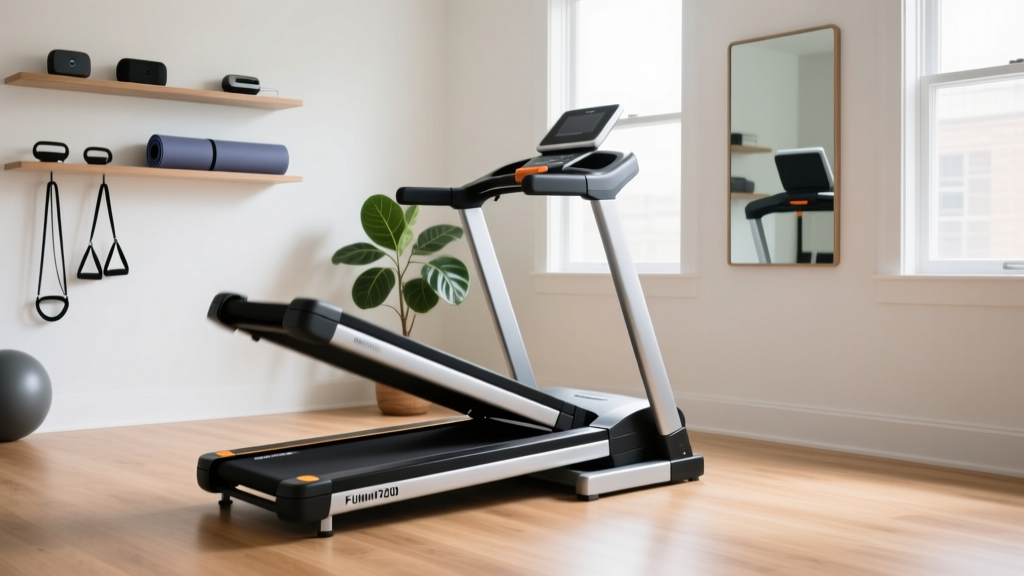
Curved Manual vs Motorized: Gold's Gym Crosswalk 570 Treadmill Guide
Compare curved manual treadmills to motorized models like the Gold's Gym Crosswalk 570. Expert insights on biomechanics, cost, and home gym fit.

The Biomechanical Divide: How Curved and Motorized Belts Differ
As we navigate the 2026 home fitness landscape, the treadmill market has sharply bifurcated into two distinct philosophies: the traditional motorized belt and the self-powered curved manual treadmill. For home gym builders, understanding the biomechanical differences between these two formats is critical before dropping hundreds—or thousands—of dollars on equipment. Motorized treadmills pull your feet backward via a drive motor, which can sometimes lead to a slightly altered gait and reduced posterior chain engagement. In contrast, curved manual treadmills require the user to actively drive the belt downward and backward using their hamstrings and glutes, closely mimicking overground running mechanics.
According to the American Heart Association, adults should aim for at least 150 minutes of moderate-intensity or 75 minutes of vigorous aerobic activity per week. Both treadmill types can help you achieve these cardiovascular benchmarks, but they do so through vastly different mechanical pathways, price points, and spatial footprints. To ground this comparison in reality, we are using one of the most popular entry-level motorized models on the market—the Gold's Gym Crosswalk 570 treadmill—as our baseline motorized benchmark, pitting it against premium curved manual alternatives like the AssaultRunner Elite and TrueForm Trainer.
Baseline Motorized Analysis: Gold's Gym Crosswalk 570 Treadmill Deep Dive
The Gold's Gym Crosswalk 570 treadmill has long been a staple in the budget fitness category, typically retailing between $299 and $349. It represents the quintessential 'apartment-friendly' motorized treadmill, designed primarily for walkers and light joggers rather than serious distance runners.
Gold's Gym Crosswalk 570: Core Specifications
- Motor: 2.5 HP (Peak) / Estimated 1.25 CHP (Continuous)
- Running Surface: 15 inches wide x 50 inches long
- Speed Range: 0 to 10 MPH
- Incline: Manual 10% max (fixed adjustment, not on-the-fly)
- Weight Capacity: 250 lbs
- Footprint: 64.5" L x 26.5" W (Folding capable)
While the price point is undeniably attractive, the 570's physical dimensions dictate its use case. The 15-inch belt width is exceptionally narrow. For users over 5'8", this width restricts natural lateral foot splay and arm swing, forcing a tight, constrained gait. Over extended sessions, this unnatural biomechanical restriction can lead to IT band friction and hip flexor tightness. Furthermore, the 50-inch belt length is insufficient for runners with a stride length exceeding 45 inches, making it strictly a walking or very light jogging machine. The 2.5 HP peak motor is adequate for a 180 lb user walking at 3.5 MPH, but it will experience severe voltage sag and belt hesitation if pushed to 6+ MPH by a heavier user.
The Curved Manual Alternative: Biomechanics and Caloric Output
On the opposite end of the spectrum are curved manual treadmills, such as the AssaultRunner Elite (approx. $3,499) or the TrueForm Trainer (approx. $4,995). These machines feature a slatted rubber belt that rides on curved guide rails, completely eliminating the need for an electrical motor. Speed is dictated entirely by the user's stride mechanics and foot placement on the curve.
The primary advantage of the curved design is the significant increase in metabolic demand. Because the user must generate all the kinetic energy to move the belt, studies indicate that running on a curved manual treadmill can increase caloric expenditure by up to 30% compared to a standard motorized treadmill at the same perceived pace. This aligns perfectly with Centers for Disease Control and Prevention guidelines for maximizing vigorous-intensity exercise in shorter time windows. By engaging the glutes, hamstrings, and calves to pull the belt down the curve, runners naturally adopt a forefoot or midfoot strike, which drastically reduces the harsh heel-strike impact forces transmitted through the tibia and knees.
Head-to-Head Comparison Matrix
Below is a direct comparison between the budget motorized category (represented by the Gold's Gym Crosswalk 570) and the premium curved manual category.
| Feature | Curved Manual (e.g., AssaultRunner) | Budget Motorized (Gold's Gym 570) |
|---|---|---|
| Retail Price Range | $2,999 - $5,500 | $299 - $399 |
| Drive Mechanism | User-powered (Magnetic/Slat friction) | Electric DC Motor (Belt driven) |
| Belt Dimensions | 17" W x 60"+ L (Curved surface) | 15" W x 50" L (Flat surface) |
| Max User Weight | 350 - 400 lbs | 250 lbs |
| Speed Limitation | Unlimited (User dependent) | Capped at 10 MPH |
| Power Requirement | None (Zero electricity) | Standard 120V Wall Outlet |
Real-World Failure Modes and Maintenance Edge Cases
When investing in cardio equipment, understanding how the machine will fail over a 5-to-10-year lifespan is just as important as its initial specs. Motorized and manual treadmills suffer from entirely different mechanical vulnerabilities.
Motorized Failure Modes (Gold's Gym Crosswalk 570)
- Motor Controller Burnout: The most common point of failure in budget treadmills is the lower control board. When users exceed the 250 lb weight limit or run at high speeds without properly lubricating the deck, friction increases. The motor draws excess amperage to compensate, eventually frying the controller board's capacitors.
- Drive Belt Snapping: The small ribbed drive belt connecting the motor to the front roller can stretch and snap after 300-500 miles of use, especially if the roller alignment drifts out of parallel.
- Deck Delamination: The 570 uses a standard MDF (medium-density fiberboard) deck. If the user neglects to apply silicone lubricant every 40 hours of use, the friction will literally melt the top phenolic layer of the deck, causing the belt to seize.
Curved Manual Failure Modes
- Guide Wheel Bearing Seizure: Curved treadmills rely on dozens of small polyurethane guide wheels to keep the slat belt tracking smoothly. If dust, pet hair, and debris are not vacuumed from the undercarriage monthly, these bearings will grind to a halt, creating a loud, rhythmic clicking noise and increasing rolling resistance.
- Slat Belt Tension Loss: Over years of heavy sprinting, the rubber slats can stretch, causing the belt to slip on the drive gears. This requires a manual tensioning adjustment using the rear-axle hex bolts.
Decision Framework: Which Treadmill Belongs in Your Home Gym?
Choosing between a curved manual treadmill and a budget motorized model like the Gold's Gym Crosswalk 570 comes down to three variables: your biomechanics, your budget, and your training intent.
The 2026 FitGearPulse Verdict: If your primary goal is achieving the Mayo Clinic's recommended daily movement through brisk walking while watching television, and you are under 6 feet tall, the Gold's Gym Crosswalk 570 is a highly economical, space-saving solution. However, if you are training for 5K/10K races, require high-intensity interval training (HIIT), or suffer from knee pain due to heel-striking, the investment in a curved manual treadmill is non-negotiable for long-term joint health and athletic performance.
Do not buy the Crosswalk 570 if you intend to run at paces faster than 9 minutes per mile. The 15-inch width and 50-inch length will physically restrict your stride, turning a natural run into an awkward, injury-inducing shuffle. Conversely, if you have the $3,000+ budget and the floor space (curved treadmills do not fold and weigh upwards of 280 lbs), a curved manual treadmill will outlast three generations of budget motorized treadmills while providing a vastly superior, joint-friendly cardiovascular stimulus.
More gear to consider
All reviews
NordicTrack T Series 5 Treadmill Reviews: Setup & Noise Guide
Is 12 MPH a Good Running Speed on Treadmill? 2026 Model Comparison

Zero Gravity Treadmill Noise: Head-to-Head Comparison

Elliptical vs Treadmill for Home Cardio & Donate Treadmill Pickup

Nordic Track Commercial 2450 Treadmill vs Elliptical Care